The Hippo: October 6, 2016

FEATURED HEADLINES

Food: A Battle of Sweets


FEATURED FOOD 

A Battle of Sweets

Local Bakers Compete in Cupcake Challenge

Written by Angie Sykeny  (asykeny@hippopress.com)

Images: Annie Holt Photography


See professional bakers in action and taste their creations at the Clash of the Cupcakes on Friday, Oct. 14, at The Puritan Backroom in Manchester. Eight local bakeries will each send one or a team of two of their best bakers to compete in a challenge for the title of Best Cupcake and People’s Choice Cupcake.

The event was started five years ago to raise money for the Southern New Hampshire Services’ Retired and Senior Volunteer Program.
 
“The staff was brainstorming different ideas about new fundraisers, and it basically boiled down to, ‘Well, who doesn’t love cupcakes?’” said SNHS volunteer services director Jennifer Sanders.
 
This year’s competitors include past winners Benson’s Bakery & Cafe, Cupcakes 101 and Milltown Cakes, and a couple newcomers: The Bakeshop on Kelley Street and Wicked Sweet Sugar Boutique.
 
Each baker or team will bring 175 baked, unfrosted cupcakes along with their chosen frosting and toppings. Then, they’ll be given 45 minutes to decorate and complete their cupcakes. During the competition, noncompeting guests can take part in some raffles and enjoy hors d’oeuvres like chicken fingers, scallops wrapped in bacon, cheeseburger sliders, dips, cheese and veggie platters. The Puritan’s bar will be open for drinks.
 

Courtesy Photo

Guests are also invited to engage with the bakers as they work.
 
“You can watch them compete, interact and ask them questions,” Sanders said. “It’s definitely not a traditional seated event. We want people to be walking around, participating and interacting.”
 
When 45 minutes is up, the finished cupcakes will be presented to a judging panel, which will consist of Kathleen Palmer, features editor at the Nashua Telegraph, Cathy Allen, executive pastry chef at T-Bones, and one judge who hasn’t been announced. Cupcakes will be scored based on taste, texture, overall appearance and presentation, creativity and structure. The winner will be named Best Cupcake of 2016. Last year’s winner was a bourbon butterbeer cupcake made with honey bourbon chocolate cake with a butterscotch ganache filling and caramel bourbon buttercream.
 
Guests will have the chance to taste each cupcake and vote for their favorites to win the title of People’s Choice Cupcake. Everyone will get two whole cupcakes to take home at the end of the event.


Clash of the Cupcakes

This year’s event is sold out, but tickets for next year’s event will go on sale in July 2017. To learn more about Clash of the Cupcakes, purchase tickets for next year’s event and find out who this year’s winners are, visit snhs.org or facebook.com/SNHSVolunteerServices.
 
Cupcake Competitors
 
The Bakeshop on Kelley Street (Manchester)
Bakers: Denise Nickerson (owner and pastry chef) and Catherine Rodriguez (pastry chef)
Cupcake: Cannoli
Try it: Available occasionally at the bakery and anytime by special order.
 
Benson’s Bakery & Cafe (Hudson)
Bakers: Sara Mercier (decorator) and Allison Grebloski (baker)
Cupcake: Aztec chili chocolate
Try it: Available at the bakery for a month or until supplies lasts after the event.
 
The Cake Fairy (Hooksett)
Bakers: Lisa Lucciano and Brianna Lucciano (owners)
Cupcake: “The Energizer” mocha cupcake with fudge filling and espresso buttercream
Try it: Available at the bakery a few days a week.
 
Cupcakes 101 (Bedford)
Bakers: Andy Thibodeau and Kristen MacIsaac (owners)
Cupcake: Mudslide
Try it: Available at the bakery.
 
Frost This Cakes (Greenville)
Baker: Diann Hall (owner)
Cupcake: Maple bacon beer
Try it: Call 774-262-6131 for availability.
 
Milltown Cakes (Milford)
Bakers: Kathleen Barlow and Brad Barlow (owners)
Cupcake: Chocolate peanut butter
Try it: Call 494-9120 for availability.
 
Sophisticakes (Windham)
Bakers: Allison Arsenault (owner) and Amy (manager)
Cupcake: Apple crisp
Try it: Available at the bakery.
 
The Wicked Sweet Sugar Boutique (Hampton)
Baker: Danielle Thibodeau
Cupcake: Salted caramel mocha
Try it: Call 601-7204 for availability.

News: Opposing Judgment


FEATURED NEWS

Opposing Judgment

Gubernatorial Candidates Were on Opposite Sides of Vote

Written by Ryan Lessard  (news@hippopress.com)

Images: Courtesy Photo


The two remaining contenders for the state’s corner office — Democrat Colin Van Ostern and Republican Chris Sununu — took part in a controversial vote that resulted in a rare rejection of a judicial nominee; one voted for the nominee, the other against. Now, the legal community, Republicans and Democrats alike, fears that this has set a bad precedent with ripple effects into the future.


The Strange Case 

On Nov. 4, 2015, the governor and the executive council performed one of their more mundane tasks: voting on court appointments. Normally this is perfunctory and unanimous, and executive councilors rarely find cause for dissent. While the nominees are officially named by the governor, they’ve been vetted and selected for the past several years by an independent commission.
 
When it came time to consider appointing Dorothy Graham a Superior Court judge, the majority of councilors said no on a party line vote.
 
“Up until that point, it was almost a non-event. I think everyone would’ve expected that it would go straight through,” said Anna Zimmerman, president of the New Hampshire Association for Justice.
 
Zimmerman said the legal community was shocked and blindsided by the vote, which she said has no precedent in recent memory.
 

Courtesy Photo

“It is pretty abnormal,” Zimmerman said. “I’m not aware of it ever having happened on these, having a judge nomination be turned down, on these types of grounds.”
 
The three Republicans on the council who voted against Graham’s appointment each cited her background in defense. Graham had served 20 years as a public defender in Manchester.
 
Councilor Joe Kenney said publicly that he voted nay because of Graham’s role defending sex offenders in appellate court and that he grew concerned with the appointment after reading an Oct. 16 article in the Washington Free Beacon, a right-wing newspaper. The article targeted Gov.
 
Maggie Hassan for nominating Graham, someone who tried to get “child rapists off on technicalities,” according to the article.
The story quotes another Republican Executive Councilor, David Wheeler, saying he found the claim “disturbing.”
 
Chris Sununu, a newly announced candidate for governor by the time of the vote, said he would have liked to see a resume with more variety beyond just defense.
“My guess is she does a pretty darn good job at what she does but there’s lots of folks out there who could be judges and I’d like to see somebody with a more varied background to make the best decisions on the bench,” said Sununu in a recent phone interview.
 

The Response

Graham had some strong references ahead of the vote, including a letter written by Manchester Police Chief Nick Willard, which is noteworthy since police are by nature on the side of the prosecution.
 
And as a public defender, she did not choose her clients and it was her duty to defend them zealously just the same.
 
So, when she was rejected, the outcry was loud. The Washington Post published an opinion by a regular columnist and law professor highly critical of the decision, saying Wheeler didn’t understand how the justice system works.
 
The Concord Monitor published its own critical op-ed, penned by a local defense attorney. The New Hampshire Bar Association bought half-page ads in the Monitor and the Union Leader to print an open letter signed by 27 past presidents, calling for a revote and expressing concern that the reasons given for the rejection amounted to a condemnation of defenders and a disregard for the constitutional right to a defense.
 
“The general consensus was that it was very surprising and upsetting that someone would be prevented from holding an office like that, not because of character or because of judicial decorum concerns or qualification concerns, but for doing her job as a public defender,” Zimmerman said. “I can say that, across the board, on the [NHAJ] board and the people that I spoke to, I didn’t run into anyone who thought it was appropriate, that someone be barred because they worked for the Public Defender’s office.”
She said such a reason seems “patently unfair and wrong.”
 
Graham is now working in the New England office of the Federal Public Defender. Reached by phone, she declined to comment for this story.
Democratic Executive Councilors Colin Van Ostern and Chris Pappas both voted in favor of appointing Graham, and Pappas led the charge to revisit the vote. None of the Republicans opted to change their votes.
 
“I think that was a wrong-headed decision,” Pappas said.
 
“What bothered me about that vote was that it was just one more example of how politics have held us back as a state,” Van Ostern said.
 

Courtesy Photo

Van Ostern said in a recent interview that, if elected, he would continue to put forth judicial nominees vetted by the Independent Judicial Selection Commission.
And if the commission decided to submit Graham for consideration during a Van Ostern administration, he said Graham would get a fair shake.
 
“If they did, I think she’s very well qualified and I’d give her every consideration,” Van Ostern said.
 
Even some Republican candidates for Executive Council believe Graham’s rejection was ill-advised. Joe Kelly Levasseur, who is running to unseat Pappas this November, is a lawyer himself and would like to see more diversity in the courts.
 
“It seems that most of the people that are getting those jobs are people who are prosecutors,” Levasseur said. “Public defenders understand the legality and the law and probably plea out 95 percent of their cases, which is exactly the record that a prosecutor would have.”
 
Zimmerman said Graham’s rejection could mean fewer defense attorneys applying for judgeships and fewer law school graduates getting into defense if they want to become judges someday.
 
“I can certainly see it having a chilling effect on others potentially,” Zimmerman said.
 
Ultimately, Hassan put forward a new nominee for the Superior Court spot in December: David Ruoff, a practicing defense attorney and law professor at UNH who has experience both as a public defender and a prosecutor. The Executive Council confirmed him unanimously in late January.
 
Ruoff was defense attorney for Beatrice Munyenyezi, a refugee who was sentenced to 10 years by a federal judge for her role in the Rwandan genocide.

Arts: New Blood


FEATURED ARTS

New Blood

Currier Director Alan Chong Talks Museums

Written by Kelly Sennott  (ksennott@hippopress.com)

Images: Courtesy Photo


The Currier Museum of Art’s new director and CEO, Alan Chong, started work Sept. 8 after a year-long international search by a committee composed of board members and the museum’s executive team, plus Opportunity Resources, New York.

Chong comes to New Hampshire after serving as director of the Asian Civilizations Museum and the Peranakan Museum in Singapore from 2010 to 2016, and as curator at the Isabella Stewart Gardner Museum in Boston from 1999 to 2010.
 
Three weeks into his new job, he talked about his experience so far and what he’s looking forward to.
 
 
Why’d you want to take the job? 
I’ve always loved the Currier Museum, and I like Manchester. I came up here during one of those presidential campaigns as a college student, like a lot of people do. I remember it being very, very cold. … Manchester is a city on the rise. … And it’s a city with this great textile mill past. … The museum is small but [has] a strong endowment with a committed audience. And it’s got a great collection.
 
Was coming back close to Boston a draw? 
Not really. People have assumed that because, of course, it is nearby. But I had moved out of Boston not expecting to return. There are good museums scattered everywhere around the world. It might sound corny, but I see it as my personal mission to help museums.
 

Courtesy Photo

During an interview last year, former Director Susan Strickler said she wanted to be a hands-off former director — but did she give you any advice?
I think the best directors are the ones who sort of say, ‘I’ve done my stint. I’ve got to leave it to my successor.’ I’ve done that in Singapore. I’ve got a great successor there. I’m available to help whenever I’m needed, but I’m not going to be checking up. … Susan has been absolutely wonderful. We will call on her, because we will need her advice and help. … I regard her as a friend now.
 
What was your experience like as director of the Asian Civilizations Museum in Singapore?
Museums are very similar institutions. We face many of the same problems. Almost any community can be divided up of people who love art, who know know nothing about art, who go to museums, who don’t think of going to museums. … It was a big challenge in Singapore, where there are people who’ve recently risen from fairly hard circumstances and are now only beginning to discover culture and art. … Singapore was a very technological society. Everyone has a smartphone. So we tried to deliver information to everyone’s own device in as creative a means as possible, through gaming, through virtual reality. … We did, essentially, treasure hunts in the museum. … We don’t want to alienate our traditional audiences, but we’ve got to reach out to new people, and [using] smartphones is a wonderful way of doing it. … The other thing I learned is that museums can be social places. … They can bring people together for intellectual events — like exhibitions and lectures and workshops — but they can also just be fun places.
 
Do you have any specific interests or specialties?
I have a background as a curator, and I was trained as an art historian. I’ve done a lot of writing, editing and curating of shows. … More recently I’ve tried to turn my attention to marketing, audience, fundraising, governance and all those other things that need to happen in a museum. But at the end of the day I love art. … The content of the museum — I want that to be the foundation. … We’re here to reveal some of the wonders of creativity. … I’m also very interested in global art. Artists around the world have been, for thousands of years, creating things, and we can understand other cultures and other civilizations through art. … There’s a lot of tension with the Islamic world now. But when you look at Islamic art, science, poetry and philosophy, you will see that our values are very common.
 
What are the challenges the museum faces in the future?
I think many cultural institutions around the world face financial challenges, and I wouldn’t say it’s a big challenge [at the Currier], but it’s there. Sometimes people regard the Currier as an old, dignified institution that’s very grand and has got great finances. And to a certain extent, that’s true — we’ve got a great foundation. But we’ve got some challenges in the near future in terms of funds.
 
What needs to happen for it to continue to succeed?
The Currier Museum has to echo Manchester. We’re only as good as our environment. We have a good audience. We have to make them love us [and] come more often. … The museum itself needs to be nimble. … We also have to show people … what’s happening in the art world universally. … We’re not a big museum. We don’t have a huge collection, and we’re not going to do massive exhibitions. But that nimbleness should give us a sense of freedom, experimentation and, hopefully, creativity as well.
 
Are there any upcoming exhibitions you’re particularly excited about?
We’re opening a really interesting exhibition in a few days on Mount Washington. It’s an innovative new look at a familiar subject. … The curator, Andrew Spahr, has really given it a social twist. He’s looked at tourism, the development of the railroad and the development of science and technology, and how all this facilitated the discovery of Mount Washington. … Coming up next is a paper cut exhibition. … Paper cutting was a big thing in the Renaissance up until the 19th century. … [It] was an art form like drawing or making textiles. … It kind of disappeared for about a century, but recently, contemporary artists have taken it up again in very creative ways. … I think it will excite people who are interested in contemporary art, but it also has a historic foundation.
 

Music: Festive Fall


FEATURED MUSIC

Festive Fall

Warner Fall Foliage Festival Returns for its 69th Year

Written by Matt Ingersoll  (listings@hippopress.com)

Images: Courtesy Photo


The Warner Fall Foliage Festival returns to its original spot in downtown Warner this year, with midway rides, food and craft vendors, live music and entertainment and a parade helping ring in its 69th year.

The Columbus Day Weekend tradition kicks off on Friday, Oct. 7, from 6 to 9 p.m., and continues on Saturday, Oct. 8, from 9 a.m. to 8 p.m. and Sunday, Oct. 9, from 9 a.m. to 7 p.m., before ending with the designated cleanup day on Columbus Day.
 
Ray Martin, president of the festival’s board of directors, said the event began way back in 1947 when Warner’s town residents wanted to welcome outsiders into the community.
“In the mid-1930s, there were probably six or eight country inns [in New Hampshire] that would get together to promote some of the ski trains that were around here,” Martin said. “They would hire a train to bring up to 1,000 people up to ski in town, and then various organizations provided them with a meal. … These same groups said, ‘Let’s have a fall foliage festival’ in 1947, so [the event] originated from the outgrowth of the Warner ski trains.”
 
Since then, Martin said, the festival has evolved into a community and volunteer-based event.
 
“It’s a community effort to put on the festival, and at the end all of the profits are distributed to local nonprofit organizations … so it goes to things like uniforms for our Little League sports teams, it goes to the music park here in town, and once in a while it goes toward the Town of Warner,” he said.
 
The festivities will begin with a performance by Emma Cook & Questionable Company at the Jim Mitchell Community Park Amphitheater on Friday night, when the midway rides also open.
 

Courtesy Photo

Oxen pull and woodsmen’s competitions will be hosted at a newly renovated space behind Main Street and the Foothills Restaurant beginning on Saturday.
At 9:30 a.m. on Saturday, the Warner Fall Foliage 5-Mile Road Race will kick off, with registration starting at 8:30 a.m. A Kids Fun Run will follow at 9:30 a.m. on Sunday, with registration at 9 a.m. in the Warner Post Office parking lot.
 
A lobster and chicken barbecue will be offered from 11 a.m. to 1:30 p.m. on Saturday. Other food and craft vendors will be available along the downtown area of Main Street.
“There will be the typical fair food, you know, french fries, cotton candy, fried dough, those types of things,” Martin said, “and then we’ll have a vendor selling some Jamaican jerky beef, and I know one who is coming back this year with an old fashioned peanut roaster.”
 
At 1 p.m. on Sunday, get ready for The Grand Parade, a longtime festival tradition. The theme of this year’s parade will be “Celebrating Rural Life.” Festival-goers interested in checking out the parade are encouraged to arrive at the festival at least an hour before it kicks off to get ample parking.
 
“Food vendors will be here and music performances will be going on all day,” Martin said. “Some come in from out of town, though there are a few locals … That part is really growing — we’ve been attracting some decent acts and all kinds of bands.”
 
Martin said in previous years the festival has offered a cash raffle with cash prizes of $500, $200 and $100. This year those raffle prizes will be combined with booster tickets, which are available for purchase at any time during the festival. Other smaller prizes will be available to win, including gift certificates to several Warner-area restaurants and coffee shops.
 
“You can buy one [booster] ticket for $5, and you’ll get a shot at the cash and certificate prizes, but then you’ll also get a big goodie basket with all kinds of lesser prizes and samples from local businesses,” Martin said.


Warner Fall Foliage Festival

When: Friday, Oct. 7, 6 to 9 p.m.; Saturday, Oct. 8, 9 a.m. to 8 p.m.; and Sunday, Oct. 9, 9 a.m. to 7 p.m.
Where: Downtown Warner (surrounding Warner Town Hall, 5 E. Main St.)
Cost: There is no price of admission to get into the festival, but there is a $5 parking fee at both East Main and West Main streets, about a half mile away from the festivities. A free shuttle bus will be on hand to transport people from the parking lot to the festival. Additional costs may apply for food and raffle items.
Visit: wfff.org
 

Film: Well-Oiled Machine


FEATURED FILM

Well-Oiled Machine

NH Film Festival Returns to Portsmouth

Written by Kelly Sennott  (ksennott@hippopress.com)

Images: Courtesy Photo


The 16th New Hampshire Film Festival promises 100 films, including 38 New Hampshire-affiliated titles, that patrons can check out Thursday, Oct. 13, through Sunday, Oct. 16, in downtown Portsmouth.

“Much of the festival is like a well-oiled machine. The films change every year, partnerships change every year, but the foundation is there,” NHFF Executive Director Nicole Gregg said via phone.
 
In addition to screenings, the four-day event features workshops, panels and parties, which happen at the same venues as the 2015 festival: The Discover Portsmouth Center, The Music Hall, The Music Hall Loft, The Moffatt-Ladd House and 3S Artspace.
 
But Gregg did note a few additions, like a virtuality lounge at festival headquarters — the Discover Portsmouth Center — featuring camera and lighting equipment and new filmmaking technology. It’s also hosting the first technical-based workshop NHFF has seen in a while.
 
And, Gregg said, the 2016 NHFF contains a new “women in film” panel in honor of the Saturday night feature, Equity, about a woman on Wall Street threatened by a financial scandal who must untangle a web of corruption.
 

Courtesy Photo

“It’s still, unfortunately, a male-dominated industry,” Gregg said. “I think a lot of female filmmakers are making an effort to create roles that offer a stronger presence for women.”
Attendees can keep their eye out for this year’s celebrity guests, who include John Michael Higgins (Seinfeld, Arrested Development, Pitch Perfect and Best in Show), Tom Bergeron, host of ABC’s Dancing with the Stars, and TV and film actress Alicia Witt.
 
Many filmmakers with New Hampshire ties see NHFF as a homecoming of sorts. They travel back to the Granite State to get exposure, see their projects on the big screen and rub elbows with other industry professionals, but it’s also a draw to see friends and family still living in the area.
 
One of these filmmakers is Robert Scott Wildes, director and co-writer of the feature narrative Poor Boy, a Western about two misfit brothers hustling cash and chasing dreams in the desert. It screened at the Tribeca Film Festival this spring, and at the time of the phone call, he was in negotiations with distributors.
 
Wildes lived in Bedford and Merrimack as a kid and went to The Derryfield School in Manchester, and this is his third film in the festival. NHFF, he said, has been very supportive of his career; it’s the first one he ever got into back in 2007, and he’s happy to see how much it’s grown.
 
“I have filmmaker friends who’ve had their movies screen there, and they had great experiences. It’s cool to see the [festival’s] reputation gaining momentum throughout the country. And Portsmouth in October — how can you pass that up? It’s like the most beautiful place in America,” Wildes said.
 
This is also the third NHFF for filmmaker Tara Price, who wrote and directed Earworm and grew up in Hampton. Hers is a “creepy, unsettling” film, according to its description, a short about a reclusive man who’s repeatedly woken up over the course of a night by severe headaches accompanied by musical repetition from an unknown source. A high school friend, Brian James, composed the song that plays a large role in the movie.
 
Justin Connor, who grew up in Manchester, presents his premiere feature, The Golden Age, which he directed, produced, starred in and wrote the music for. It’s a fictitious documentary about a subversive pop star, Maya O’Malley (played by Connor) who, after a string of incendiary remarks in the press, gets dropped from his music label. He said via phone that making the film was a long process but a labor of love.
 
“The fact that anybody ever completes a film is sort of a miracle. I really worked tirelessly over a number of years on this, and I’m so proud of it,” Connor said. “It will be good to celebrate other filmmakers’ films as much as mine.”


New Hampshire Film Festival

Where: Discover Portsmouth Center, 10 Middle St., Portsmouth; The Music Hall, 28 Chestnut St., Portsmouth; The Music Hall Loft, 131 Congress St., Portsmouth; The Moffatt-Ladd House & Garden, 154 Market St., Portsmouth; 3S Artspace, 319 Vaughan St., Portsmouth
When: Thursday, Oct. 13, through Sunday, Oct. 16
Admission: VIP pass $200, weekend pass $75, Thursday pass $20, Friday, Saturday or Sunday pass $35

Pop: NH, Center of the Contra Dancing Universe *


FEATURED POP  -   * COVER STORY *

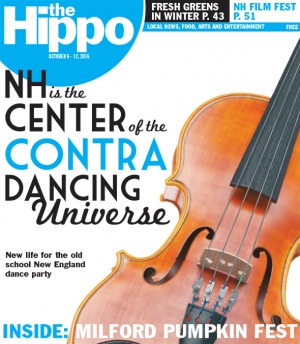
NH, Center of the Contra Dancing Universe

New Life for the Old School New England Dance Party

Written by Kelly Sennott  (ksennott@hippopress.com)

Images: Courtesy Photo


Some people hate Mondays. Naomi and Lydia Hannon love them.

The 21- and 22-year-old sisters regularly attend the Monday night contra dance in Nelson Town Hall, a 150-year-old building seemingly nestled in the middle of nowhere. On a warm September night, the only lights and sounds come from inside — fiddlers play, feet stomp, dancers laugh and the caller announces: “Circle to the left!” “Circle to the right” “Ladies change!” “With your partner, bounce and swing!”
 
Inside, it smells of fresh-baked cookies and wood, and it’s warm from the 50-plus participants. Many women wear skirts that move as they twirl, and a large portion of dancers don’t wear shoes at all in an effort to preserve the floors. The youngest are students from Kroka Expeditions, an alternative high school in Marlow, and the oldest are regulars who’ve been contra dancing for 30-plus years.
 
The Hannons, who’ve been attending the Nelson contra dance four years now, first attended at a friend’s suggestion.
 
“It was magical, which sounds kind of cheesy, but it was! Everyone was so friendly, and we were terrible — we had no idea what we were doing,” Lydia Hannon said. “People came up and asked us to dance, and I was terrified. I was like, ‘I can’t dance!’ They were like, ‘Oh, you’ll be fine! Just smile and have fun!’”
 
Nelson is known worldwide for its contra dance, having hosted noted callers like Ralph Page and Dudley Laufman, plus musicians like Bob McQuillen, but it’s one of about 20 contra dances occurring regularly statewide. And, like all the state’s contra dances, it’s looking for new people to take the floor and carry on the New Hampshire tradition.
 
“The dance survives because of new people coming in,” said David Millstone, a contra dance caller and historian. “I often say, if I look out on a dance floor and I know everyone there, the dance is dying. You need new blood. You need new people to constantly keep it alive.”
 

Contra What?

If you’ve never heard of contra dancing, you’re not alone.
 
In recent years, many New Hampshire dances were having difficulty getting the word out, and to address the issue, the New Hampshire State Council on the Arts created a brochure about New Hampshire contra dances and gave a grant to the Monadnock Folklore Society and the Monadnock Center for History and Culture to help put together an exhibit in 2015, “Traditional Dance and Music in New Hampshire: 1750-Today,” which traveled the state. Most recently, the Council reached out to young professional groups and offered to sponsor contra dances in the regions they represent.
 
The contra dance is a descendent of the English country dance, which dates back to the mid-1600s.
 
“If you’ve seen any of the Jane Austen movies, you’ve seen English country dancing,” Millstone said.
 

Courtesy Photo

But before it came to the United States, it made its way across Europe — the name “contra dance” dates back to 17th-century French dance masters who called these English country dances contredanses (“opposite dances”). When the dance arrived in America, it was especially popular in rural pockets of New England, including New Hampshire, where in some regions it stuck for centuries.
 
“Who knows why?” Millstone said. “Part of it may be that these are rural areas, which tend to be more conservative. This is total speculation. Part of it may be that in the cities you’ll find people interested in keeping up with the latest trends.”
 
Contra dancing has the same traditional folk roots as square dancing, but whereas a square dance consists of four couples, a contra dance set is unlimited, made up of long lines of couples who constantly change partners.
 
“When you first start telling people about it, they think it’s weird. But dancing with people you don’t know is actually not that strange,” Naomi Hannon said. “It’s cool to meet people this way. We’ve become friends with people we just otherwise never would have met.”
 
Contra dance aficionados also praise the dance for its accessibility. A caller with a microphone explains the steps before the start of the music, which is usually played live on the fiddle, piano, accordion, harmonica or guitar.
 

NH Notables

Contra dancing became especially popular in the mid-20th century thanks to a handful of influential contra dance callers and musicians from New Hampshire. Millstone noted two individuals in particular: Ralph Page and Dudley Laufman.
 
Page, who was born in Munsonville — a village in Nelson — was one of the first to take contra dance calling on as a career.
 
“Ralph was known as a singing caller. He had a very rhythmic lilt to his calls, and he called regularly for 25 years,” Millstone said.
 
Page called at the New York World’s Fair in 1939, and by the 1940s he was traveling to call at the Boston YWCA each week and setting up tours that went as far as Japan. Page also composed dances, which Millstone said was prompted by an ad he’d read in the paper — it said Page would be teaching a new dance that night, which Page knew nothing about. Regardless, he whipped one up quickly and continued to compose dances throughout his career.
 
Page was a strict caller, said Laufman, now 85, during an interview in his Canterbury home. He wouldn’t tolerate things like bare feet or pants on women.
 
“When he was in Port Townsend one time — there were a bunch of cowboys out there — girls were coming in jeans and the guys were coming in with bare feet or boots. Page got to the microphone and said, ‘I want you women to go put on dresses and skirts, and the guys to put on clean trousers. And I’m not going to call a note until you do.’ And then he went and stood behind the curtain and lit a cigar, and they mostly left,” Laufman said.
 
Millstone said Page was considered the “dean of New England callers” by the time of his death — he taught a generation of people to contra dance, including Laufman, who first attended one of Page’s dances as a teen.
 
“I pretty much fashioned myself after Ralph Page. … He was a curmudgeon. Very strict,” Laufman said. “But he was the best. His voice was marvelous. He had a great way of calling.”
 
Laufman became popular, in part, because he was more open and flexible with the dances he called than his predecessors. People called them Dudley Dances, and he had an open-stage policy, often inviting young musicians, like fiddlers Liz Faiella and Jordan Tirrell-Wysocki, up on stage with him when they were kids.
“I would show up to a dance, and he’d say, ‘Did you bring your fiddle?’ Even if I was just playing a couple of notes, it was really fun and made me feel like I was part of the dance,” said Faiella, now 26.
 

Spreading The Love

There are a couple reasons Millstone credits Page and Laufman for spreading contra dance popularity.
 
One, of course, was that they traveled. Their dances were also popular with young people. Events in the Monadnock region and western Massachusetts usually attracted students — i.e., temporary residents — from Smith College, the University of Massachusetts and Hampshire College. (In fact, one of the biggest, youngest contra dances happening today is in Greenfield, Massachusetts, near these schools.)
 
And then these students moved away.
 
“Young people were eager to recreate the experience they had of dancing in the small New Hampshire halls. They’d take the dances with them, and the tunes, and start up their own dances,” Millstone said.
 
Some of them succeeded without help. Others called Laufman and invited him to their new homes in Michigan, Washington or California to do the heavy lifting. Laufman never set up tours, but he was invited to travel a lot, and many of those dances still exist today, Millstone said.
 

Nelson Dance

As the reputation of Nelson’s callers and musicians grew, so did the town’s, as the place that started it all. McQuillen — who composed contra dance tunes, played with Page and Laufman and was a National Heritage Fellow — once called it the “contra dance capital of the world.”
 
Lisa Sieverts, a regular Nelson caller, said contra dancers from around the country will stop in if they’re in the area; the most recent visitor was a woman from Homer, Alaska. (Conversely, Nelson residents traveling to other contra dances wearing Nelson garb can become instant celebrities, Sieverts said.)
 
The dance is also of high prestige because of its age; contra dances have been happening here a little more than 35 years, but the town hall has been hosting events much longer.
“There has been a regularly scheduled dance in the Nelson Town Hall since it was built, in about 1850. And there are records of dances in Nelson going even further back,” Sieverts said.
 
Today, the Monday night Nelson dance remains largely unchanged — in fact, attending is almost like stepping back in time. Nobody’s on the phone, nobody’s texting.
“We tend to do the same dances every week, and we tend to do the more traditional dances,” Sieverts said. “We’ve never paid our performers. The joke is that everybody performs for cookies. We always have homemade cookies at the dance.”
 
It tends to be more popular from June to August, when summer residents are in town and kids are home from school, but for a weekly Monday dance, it’s booming, with crowds ranging from 25 to 100. Most contra dances will have one caller and one musician or band a night, but Nelson has several, as per tradition.
 
It’s one of the only weeknight dances there is, so people travel miles to attend — like Lloyd Carr, who was playing the piano at a recent dance and had driven from Candia. Fiddler Roger Treat had driven from Putney, Vermont, that night.
 
Advice for new dancers, courtesy of Millstone: Don’t wear shoes with heels. Dress comfortably, and dress in layers for when you start moving. Some venues offer beginner lessons beforehand, but all those interviewed said the best way to learn is to jump in.
 

Evolving Styles

Much about contra dancing has remained the same. The venues, for one — they’ve always been in town or grange halls.
 
But there have been some changes.
 
“Basically, it’s the same now as it was then, except the dances themselves are different. … The dancers and the atmosphere were the same, but the dances [today] have to be taught. … And the music has a different sound. It’s played faster,” Laufman said.
 
Many venues have spiced things up, with techno dances and black lights and musicians who play brass instruments or electric guitars.
 
“Definitely, the music has changed. If you look at articles in the newspapers from the 1950s — even the 1920s or the late 1800s — it’s always talking about how it’s adapting to the popular music of the time. It’s becoming jazzier, or becoming more rock ’n’ roll or more techno. It’s a story that repeats itself over and over again,” Sieverts said. “There’s nothing new about the fact that it’s still changing. It’s been changing since 1800.”
 
Other organizations have begun hosting hot contra dances, which essentially means faster-paced. Some encourage more freestyling, some more gender fluidity — women dance the men’s parts and vice versa.
 
“But most everyone says they don’t want that to replace traditional acoustic music — that it’s just fun to have something different to dance to,” Millstone said.
Faiella has seen these variations too, but for the most part she thinks the New Hampshire dances remain pretty traditional compared to those outside the state. Not that this variety is a bad thing.
 
“I think that variety can actually bring more people in,” Faiella said. “Contra dancing doesn’t fit in one box; it is this very traditional … kind of thing, but it’s also very relevant now because of the renovations that are happening in terms of music and dance.”
 
One of the biggest modifications, Millstone said, has nothing to do with style, but rather the attention given to the musician.
 
“There are now bands that are touring and making a living from playing this kind of music. In many instances, the music has gotten much more professionalized, more polished,” Millstone said. “Another thing is, the bands are now being featured more than the callers are.”
 
This change opens doors for people like Faiella, who performs at contra dances with her brother, Dan Faiella, around the region, and Jordan Tirrell-Wysocki, who just stepped back into the folk music world. Both started attending contra dances as kids.
 
“It feels almost like returning home, when I go to play this music I learned 20 years ago, and I see people dancing the same dances I remember as a kid,” he said. “One of the great things about the contra dance community in New Hampshire is that it’s so welcoming to people of all levels of experience, whether you’re musicians or dancers.”

 

Courtesy Photo

Skipping Generations

Contra dance popularity often occurs in waves, skipping generations. In New Hampshire, the crowds are mostly made up of middle-aged or older folks, but in some pockets of the state and region — Dover, New Hampshire; Portland, Maine; Greenfield, Massachusetts, and Montpelier, Vermont — you’ll see younger faces as well.
 
“The thing that was funniest to me was that, over and over again, even well back into the 1800s, you would see something in the newspaper, and it was essentially someone saying, isn’t this interesting? We’re still doing these dances that our grandparents did!” Sieverts said. “People are looking for a way to get their heads out of their cell phone and actually meet people in real life, and contra dancing is really good for that.”
 
Tirrell-Wysocki said he sees more young callers, at least compared to when he was a kid.
 
“I think these younger callers are, for the most part, very respectful of the tradition,” Tirrell-Wysocki said.
 
Faiella said she can’t tell if it’s become “cool” again, but suggested it might be getting there.
 
“It still has a counter-cultural feeling. It’s not necessarily something that I would say is universally cool among people our age,” Faiella said. “But I do think it is actually getting there. It’s expanding slowly and offering more appeal to people.”
 

Social Dance

Today, contra dances present a way to meet people — in fact, this July, Glamour magazine listed it as the No. 1 thing to do on a date without alcohol.
 
“I think it’s such a communal event. When people are dancing, you feel like a piece of a big machine. Everybody’s smiling, everybody’s out of breath. The music’s so cheerful, and in many ways so simple. And there’s a beauty to that simplicity. It helps people lock into it, and the whole room is breathing and stepping together. It’s really something,” Tirrell-Wysocki said.
 
Gordon Peery doesn’t dance anymore because it makes him dizzy, but when he’s not playing the piano at the Nelson dance, he’ll hang out and talk with people.
 
“It’s a broadly accepting scene. If you’re a shy person, or if you’re a little bit weird, you can come and kind of find acceptance,” Peery said. “There is this whole social aspect to it. … It’s almost — and I have to be careful how I say this — it’s almost like a church in that way. People go to church, and they might not necessarily be there for the religion, but they’re there for the community, and I think that kind of thing happens here, too.”

 

MORE HEADLINES

High Stakes Interview


High Stakes Interview

In Honor of Election Season, MAP Presents Frost/Nixon

Written by Kelly Sennott  (ksennott@hippopress.com)

Images: Courtesy Photo


Vicky Sandin first proposed Frost/Nixon to the Milford Area Players play reading committee for the 2015-2016 season, but members decided to put it off until this fall, to coincide with the election.

The 90-minute play by Peter Morgan hits the Amato Center for the Performing Arts Oct. 14 through Oct. 23 and is based on a series of television interviews former President Richard Nixon granted broadcaster David Frost in 1977, three years after he resigned due to his role in the Watergate scandal.
 
Frost/Nixon premiered in London in 2006 and starred Michael Sheen as the talk-show host and Frank Langella as the former president, the same duo that eventually starred in the 2008 film of the same name directed by Ron Howard. Sandin saw the play performed off-Broadway about eight years ago.
 
“It’s the first time Nixon actually addresses the Watergate controversy and sheds light on what’s on his mind about it,” said Sandin, who directs the Milford show. “It was just the most fascinating character study of two men, played by phenomenal actors who had to fight against each other using their words and their legacies to come out on top. … I love plays featuring complicated people, and these two men are very complicated.”
 

Courtesy Photo

At the time of the interviews, both men were at low points in their life. Nixon was broke — one of the reasons he granted the interviews to Frost, in return for a large sum of money — and Frost’s New York-based talk show had recently been canceled. There were 12 interviews, three per week over the course of four weeks, which were edited down to four 90-minute programs.
 
Starring in the leading roles are Michael Coppola as Nixon and Eric Skoglund as Frost, who’ve been meeting outside rehearsals to go through lines and flesh out characters and conversations.
 
“Michael doesn’t look like Nixon, and Eric doesn’t look like Frost, but once they start talking, that will all go away. You’ll see two people trying to climb to the top in politics and television. And I think that’s going to be kind of cool,” Sandin said.
 
Coppola was attracted to the role for the challenge and the historical element. But of course, when you’re playing a real person people know and remember, it ups the stakes. But he did his research, reading about and watching videos featuring the 37th president.
 
Most of what Coppola knew of Nixon came from history classes and the news, and he was surprised when he realized he knew little of Nixon’s successes — for instance, he was the first to open diplomatic relations with China and initiated détente and the Anti-Ballistic Missile Treaty with the Soviet Union.
 
“He did a lot of great things that were overshadowed because of one mistake he made,” Coppola said. “That also interested me — that I wasn’t just going to play Nixon the crook. He was a good president, and it really was unfortunate the way he ended. … And if you actually think about what he did … if it were today, people would have just glanced right over it.”
 
The play features period costumes — Coppola wears a navy suit, but Skoglund sports ’70s garb, from plaid and flared pants to shirts with long collars —and basic sets.
It’s the type of drama, Skoglund said, hardly done in southern New Hampshire and northern Massachusetts. The characters are meaty, the story significant.
 
“People know the term Watergate because the term ‘gate’ is used at the end of every scandal now, but I think people have forgotten what happened 40 years ago. And I think it’s important not to forget,” Skoglund said.


See Frost/Nixon

Where: Amato Center for the Performing Arts, 56 Mont Vernon St., Milford
When: Oct. 14 through Oct. 23, Fridays and Saturdays at 8 p.m., Sundays at 2 p.m.
Admission: $10 to $15

Pumpkin Mania


Pumpkin Mania

Milford Pumpkin Festival Returns

Written by Matt Ingersoll (listings@hippopress.com)

Images: Courtesy Photo


Stuff your own scarecrow and catapult pumpkins at the Milford Pumpkin Festival, where you can also sample local food and beer, watch fireworks and a talent show, paint pumpkins, walk along a haunted trail and go on carnival rides.

The Milford Pumpkin Festival — with  free admission, parking and free shuttle buses — returns to several locations across town from Friday, Oct. 7, through Sunday, Oct. 9, for its 27th year.
 
“There’s plenty to do in the downtown area without having to spend a dime,” said Wendy Hunt, executive director of the Milford Improvement Team, which has organized the festival since 2000. “Everything is within walking distance.”
 
The festivities begin on Friday, at 5 p.m., with various activities and food and craft vendors along Middle Street and at the Oval. From 5:30 to 9 p.m., a beer, wine and spirit tent will be set up at the Community House Lawn.
 
“We’ll have almost 20 vendors that will bring their [beers and wines] to sample, and then we’ll have live music by Murphy’s Blues,” Hunt said.
An opening ceremony will kick off at the Oval with the presentation of Milford’s Citizen of the Year Award and the pumpkin runner and Town Hall lighting at 6:45 p.m., followed by fireworks at 8:45 p.m.
 
The haunted trail will return on Friday and Saturday night from 6 to 9:30 p.m. at Emerson Park. The trail features a walk filled with Halloween-themed sets and creatures and costs $5 per person. The trail is suitable for most ages, though kids under the age of 12 must be accompanied by an adult.
 

Courtesy Photo

Several ongoing activities will be held at several locations throughout the weekend, including carnival rides, bouncy houses, a climbing wall and more. At the Community House Lawn, enjoy pumpkin painting, face painting and live music.
 
“The scarecrow-making tent is one of my favorites,” Hunt said. “People will stuff these scarecrows and cruise around them on strollers and wagons during the festival. … We usually have 300 to 400 of them made over the course of the weekend.”
 
Try your hand at the Pumpkin Catapult by hitting floating scarecrow targets in the Railroad Pond on South Street both Saturday and Sunday.
The Great Pumpkin Contest Weigh-In will be Saturday afternoon at the Oval, where the largest Milford-grown pumpkin and the largest pumpkin overall will both be awarded with cash prizes.
 
“Last year, we had one of the heaviest ones [ever],” Hunt said. “It’s a lot of fun. We borrow a big forklift from Granite Industrial Trucks and people take crazy selfies with [the pumpkins]. There’s no limit on how many pumpkins can come to the contest.”
 
The annual talent show, a staple of the festival that features several unknown talents of Milford and beyond, will return to the Amato Center for the Performing Arts on Mont Vernon Road on Saturday at 7 p.m.
 
“We always have all types of talents from singers and bands to jugglers and comedians,” Hunt said. “It’s always fun for the audiences, participants and judges.”
The festival will also be partnering with Crotched Mountain once again in sponsoring a raffle to win two adult and two youth season passes for the upcoming 2016-2017 season. Raffle tickets to enter to win can be purchased online or by mail at $6 each or five for $22. Mailed entries should be sent to the Milford Improvement Team and ticket sales will close on Sunday, Oct. 9, at 3 p.m.
 
“I actually used to teach ski lessons [at Crotched Mountain], so I’ve had a really good relationship with them and said I’d love to get involved with them,” Hunt said. “They are one of the biggest sponsors.”
 
Though nearly every activity at the festival is free, Hunt said profits generated from sponsors and vendor fees by local groups and nonprofits will benefit the Milford Improvement Team.
 
“We really try to focus on the local nonprofits and community organizations, who make up about a third of all the vendors,” Hunt said. “For the high school band, the Rotary Club and the Lions Club, and some of the church groups and scout groups, this is the biggest fundraiser of the year … Not only that, but the festival drives people to Milford who have never been here before, so I also think there is an economic benefit.”


Milford Pumpkin Festival

When: Friday, Oct. 7, Saturday, Oct. 8, and Sunday, Oct. 9
Where: Various locations in Milford; parking is available at Milford High School (100 West St.) and Milford Middle School (33 Osgood Road), which are both within walking distance
Cost: Free admission, parking and shuttle buses (some activities require a small fee)

Ongoing Activities:

Amusement Rides: Fri., 5 to 8:45 p.m., Sat., 10 a.m. to 9 p.m., and Sun., 10 a.m. to 3 p.m.
Live Music: Fri., 5 to 9:30 p.m., Sat., 11 a.m. to 9:30 p.m., and Sun., 11 a.m. to 3 p.m.
Emerson Park activities: Fri., 6 to 8:45 p.m., Sat., 10 a.m. to 4 p.m., and Sun., 10 a.m. to 3 p.m.
Middle St. and Oval activities: Fri., 5 to 9:30 p.m., Sat., 10 a.m. to 9 p.m., and Sun., 10 a.m. to 3 p.m.
Community House Lawn Activities: Sat., 10 a.m. to 4 p.m., and Sun., 10 a.m. to 3 p.m.
Craft Fair: Sat., 10 a.m. to 8 p.m., and Sun., 10 a.m. to 3 p.m.
Haunted Trail: Fri. & Sat., 6 to 9:30 p.m.
Pumpkin Catapult: Sat. & Sun., 10 a.m. to 2 p.m.
 

Special Events:

Beer, Wine & Spirit Tasting: Fri., 5:30 to 9 p.m.
Opening Ceremony: Fri., 6:45 p.m.
Fireworks: Fri., 8:45 p.m.
“Stories from the Stone” Historic Tours: Sat., 11 a.m. & 2 p.m.
Great Pumpkin Contest Weigh-In: Sat., noon
Zombie Walk: Sat., 6 to 9 p.m.
Pumpkin Lighting: Sat., 7 to 7:30 p.m.
Talent Show: Sat., 7 p.m. 

Walk Among Wine


Walk Among Wine

Tasting Features Wine & Food with Italian flair

Written by Angie Sykeny (asykeny@hippopress.com)

Images: Courtesy Photo


Sample wines Italian style when the Tuscan Market in Salem hosts its fifth La Passeggiata dei Sapori on Thursday, Oct. 13, at 5:30 p.m. The fall tasting will feature more than 60 regional Italian and world wines from a dozen different distributors, as well as food samples by Tuscan Catering.

Joseph Comforti, Tuscan Brands wine director and creator of the event, said he was inspired after researching Italian culture and experiencing it firsthand during a trip to Italy. La Passeggiata dei Sapori, which translates to English as “The Stroll of Flavors,” is a spin on the Italian tradition of La Passeggiata, an evening stroll taken after dinner.
 
“In America, after mealtime we sit down, relax and watch TV, but in Italy, people go for a slow stroll and visit with their neighbors. ...The cities are opening up at 9 at night, everything is al fresco and it’s beautiful,” Comforti said. “So, I thought, why don’t we create that experience at the market, and people can stroll from table to table tasting different wines.”
 

Courtesy Photo

The featured wines will be from the major wine regions of Italy and other places around the world, including California, New Zealand, Australia and France. The selection has been curated to highlight wines that are fitting for fall and the holiday season; red wines make up the majority, followed by white wines and a few sparkling wines.
 
“Sweet wines, dry wines — there’s a little something for everyone’s palate,” Comforti said. “It’s all about the guests getting to experience something different and becoming immersed in a world of wines they haven’t tried before.”
 
About half of the featured wines will be varieties currently part of the Tuscan Market’s inventory, while the other half will be “new and exciting wines,” he said, which he chose himself.
 
Averaging in the $12 to $15 range, prosecco has recently been trending in the U.S. as a cheaper and more versatile alternative to Champagne. There will be eight to 10 varieties of prosecco available at the tasting, from brut to extra dry to dry.
 
“This is the golden age of prosecco. It’s the value of the decade,” Comforti said. “You can have it as a standalone drink at the beginning of a meal, at the end of a meal or with dessert. Because it’s a palate-cleanser, it’s great for Thanksgiving. It complements the food without overpowering it.”
 
In addition to the wines, there will be samples of a variety of foods from the Tuscan Catering menu, including antipasti like crostini, breads, cheeses and meats, and sweet treats like gelato and pastries.
 
Comforti, who will serve as the master of ceremonies, will greet guests at the door as they arrive and give them tours around the market. He and the wine distributors will also offer their expertise and guidance to help each guest discover the wines that best suit his or her taste.
 
A tip to help guests get the most out of the tasting, Comforti said, is to move from light to heavy wines.
 
“You wouldn’t start off a meal with the roast turkey and gravy, so it’s the same with wine. Don’t assault your palate right away with a heavy red wine,” he said. “Start with the proseccos and moscatos and sweeter white wines, then transition to heavier whites and then to the reds.” 

Winter Greens


Winter Greens

New Hydroponic Farm Grows Lettuce Year Round

Written by Angie Sykeny (asykeny@hippopress.com)


While many New Hampshire farmers are wrapping things up for the season, Sarah and Chris Ward of Oasis Springs Farm in Nashua are just getting started. That’s because they practice hydroponics, a method of indoor farming that uses nutrient-infused water rather than soil.

In a 40-by-8-foot recycled shipping container in their backyard, the Wards grow a variety of lettuces, including butterhead, oakleaf, romaine, bibb and a mixed green blend; greens such as kale, Swiss chard, arugula, mustard greens, sorrel and Kalettes; and herbs like cilantro, thyme, oregano, dill, mint, shiso, parsley and basil.
 
“The idea started last winter,” Sarah Ward said. “I’ve always loved eating local … and [Chris] likes to have activities during the winter to stay busy, so we started experimenting with home hydroponics and fell in love with it … and wanted to take what we learned to a higher level and share it with the community.”
 
There are several different methods of hydroponics. Oasis Springs uses a setup in which the plants grow in vertical towers while the water runs along the top and drips down into the crops. The water is recycled through the system for up to 12 weeks, making the hydroponic farm more conservative with water than most regular farms. A high-tech system measures and controls the temperature, humidity, carbon dioxide levels and LED “sunlight,” as well as the quality, temperature and pH levels of the water to ensure ideal growing conditions.
 
Since there is no soil and no bugs, the produce comes out completely clean and free of herbicides or pesticides. According to Ward, it tastes better, too.
 
“Hydroponic lettuce is different. It has a nice, deep color and it’s very crisp which people like,” she said. “It’s not true for everything — romaine is always going to be romaine — but for something like arugula, it’s definitely different and has a stronger bite to it.”
 
Since reaping their first harvest in early September, the Wards have been participating in the Nashua and Merrimack farmers markets selling heads of lettuce and premade salad mixes in regular, spicy (includes mustard greens) and sweet (includes sorrel) varieties. They’re currently accepting registrants for a 10-week share program, which will run October through December.
 
“The big thing is that we can do it year round. I think it’s huge for New Hampshire to have that resource,” Ward said. “Now we just want to see how things go and see what kind of feedback we get from the community.”


Oasis Springs Farm 

Fall/Winter Share Program 
Program runs for 10 weeks, Oct. 17 through Dec. 19, with weekly pickup. For more information and to sign up, visit oasisspringsfarm.com.
 
Packages:
• A full share includes five mini or full heads of lettuce, two bags of kale, chard or salad mix, and one bunch of the herb of the week. $20/week ($200 total).
• A half share includes three mini or full heads of lettuce, one bag of kale, chard or salad mix, and one bunch of the herb of the week. $15/week ($150 total).
• A just-lettuce share includes five heads of lettuce and a bag of salad mix. $15/week ($150 total).
 
Pickup Locations & Times: 
• Nashua YMCA (24 Stadium Drive, Nashua) on Wednesdays, from 4 to 6 p.m.
• Great Harvest Bread Company (4 Sunapee St., Nashua) on Sundays, from 9 a.m. to 3 p.m., and Mondays, from 7 a.m. to 5:30 p.m.
 
Find them at the farmers market:
(Check facebook.com/oasisspringsfarm for updates.)
Nashua: Sundays, Oct. 9 and Oct. 16, 10 a.m. to 2 p.m., on Main Street
Merrimack: Wednesdays, Oct. 5 and Oct. 12, 3 to 6 p.m., at 526 Daniel Webster Hwy.
 
How to Use Winter Greens
Since there isn’t a lot of other local produce available during the colder months to complement the greens, Ward suggests incorporating them into more wintery dishes. Shred them up and mix into a hot soup, saute them and use as a side with a roasted meat, or try them in an egg bake like this one:
 
Breakfast Egg Bake 
Courtesy of Sarah Ward 
Dozen eggs
½ cup water
Kale or Swiss chard
Onions
Feta cheese
Olive oil
Salt and pepper
Saute onions in olive oil until slightly brown.
Add greens until wilted.
Whisk eggs and water and pour into 9x13 buttered glass pan.
Add in kale and onions and top with feta cheese, salt and pepper.
Bake at 275 degrees for 25 minutes.

Weekly Review - Away & More


Weekly Review: Away & More

Written by Eric Saeger  (news@hippopress.com)
Images: Album Art


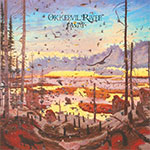
Okkervil River, Away (ATO Records)
Courtesy Photo

Head north for what seems like forever and take a left at the giant nest of groundhogs and you’ll be in Meriden, N.H., home of the private boarding school Kimball Union Academy, the boyhood stomping grounds of this band’s leader, songwriter, multi-instrumentalist and sole constant, Will Sheff, now of New York after finding Austin not quite annoyingly hip enough. This eighth album from the band is promoted as a sonic departure from previous efforts, which makes perfect sense being that it’s a whole new crew aside from Sheff. Last time out, in 2013’s The Silver Gymnasium, Sheff mixed together Ben Folds, Train, Ryan Adams and a stripped-down, indie version of Springsteen in a collection of decent but not terribly meaty tunes, Sheff’s Elvis Costello-like tenor finding good footing most of the time. Alternatively a mawkish and deeply cool mixed bag of highs and lows, this LP begins with the drippy acoustic guitar ballad “Okkervil River R.I.P.,” a mournful piece dedicated to a handful of people close to Sheff who’ve died recently, the tune itself coming off like Eels in Americana mode. “Call Yourself Renee” is a flash of genius, built around a slipstream melody and a super-nice chord progression; “The Industry” phones in some 1970s-radio asphalt; and “Judey on a Street” microwaves a Winston Giles arena-hipster groove.
 

Grade: B


Loamlands, Sweet High Rise (Middle West Records)
Courtesy Photo

North Carolina is a giant sloshing jar of nitroglycerine as I write this, shortly after the shooting of yet another black man by a police officer, this on top of the fallout from the “Bathroom Bill,” which, for all its incredibly shortsighted pandering, has netted nothing other than getting the entire state boycotted by everyone from Dow Chemical to Ringo Starr. These boycotts haven’t just hurt the redneck types; in June, the Washington Post ran an article covering the crushing financial blowback against businesses in Asheville, which was until then a Bernie-supporting, LGBT-friendly place that had climbed to the top of the hipster must-visit charts. Enter Raleigh’s Kym Register, ready to abandon her punk-folk approach for something that might actually give her some personal release by singing about old and new injustices. The first LP from Register’s Loamlands project does just that, her Kellie Pickler-like voice buoyed by general-issue Sheryl Crow fedora-hat blues-folk, its curveball being the lyrical subject matter, such as “Little River,” which examines the 1981 murder of two gay men at a Durham swimming hole, a last-straw event that launched the gay pride movement in the state. Not particularly original — just saying — but there’s literally nothing that could be more timely.

Grade: A

Film Review: Miss Peregrine's Home for Peculiar Children


Weekly Film Review

Miss Peregrine's Home for Peculiar Children

Written by Amy Diaz  (adiaz@hippopress.com)

Images: Screenshot from Miss Peregrine's


Director Tim Burton delivers the movie adaptation of the popular novel with Miss Peregrine’s Home for Peculiar Children, a decent enough adventure story occasionally smothered by exposition. 

Jake (Asa Butterfield) is a late high school-aged teenager who works at a drugstore and helps to care for his beloved but fading grandfather Abe (Terence Stamp). One day, when it seems like his grandpa is having some sort of episode, Jake heads to his house to check on him. When he arrives, he finds the house disheveled, the fence torn open as if by a large animal, and his grandfather, eyeless and dying, outside. Jake also sees a big terrifying something in the dark, a monster not unlike the one described by Abe years earlier in spooky bedtime stories he told Jake.
 

Courtesy Photo

Or were they just stories? Abe told Jake tales of children with extraordinary abilities and a school on an island off the coast of Wales where he once lived with them. As he grows older, Jake starts to believe his father’s (Chris O’Dowd) version of events — that Abe wasn’t sent to this school because he was an extraordinary child being chased by monsters but because he was a child escaping World War II-era Poland. But still, we can tell by Jake’s conversations with his therapist (Allison Janney) — to whom he is sent after his grandfather’s death — he’s not completely convinced Abe’s stories were all metaphor and fairy tale. The therapist suggests that Jake visit the school to find some closure and his father reluctantly agrees to take him.
 
Once on the island, Jake finds the children Abe told him about and follows them into a “loop,” basically a portal to1940s Wales that repeats one day, the 24-hour period before the school where they live is bombed by Germans, over and over. The children don’t age but do appear to remember the decades they’ve spent living the one day. They are protected by — and the time loop is kept alive by — Miss Peregrine (Eva Green), the woman who runs the school. She, like the other headmistress-types of her kind, can manipulate time and also turn into a bird, the former thing seeming like a way bigger deal than the latter.
 
The kids at the school include an invisible boy (Cameron King), a girl who can make things grow quickly (Georgia Pemberton), a bunch of other kids with assorted powers and Emma Bloom (Ella Purnell), a Jake-aged teenage girl who fills the requisite Burton movie slot of a girl with blonde hair, very pale skin and big eyes. She’s less cartoony-looking than previous versions of this Burton girl, but still, there she is, along with the twins (what’s his deal with twins?), the creepy Frankensteined dolls and stylized use of color — though I will say, the general Burton-ness of this movie is fairly dialed down.
 
All these kids — who have been at this school? At this school and in this one day? Or something?  — who have been with Miss Peregrine for ages knew Abe. Now they help Jake to discover that he, like Abe before him, is also “peculiar,” as the specially-skilled kids are known. He can see the monsters, tall and spiky-toothed, that hunt peculiars. When he learns about Barron (Samuel L. Jackson), a leader of the monsters, Jake realizes that not only were the stories his grandfather told him true, but the thing he saw when his grandfather died was also quite real.
 
Miss Peregrine’s has to do a lot of world-building. A. Lot. Well past an hour into this movie, elements of the whole peculiar-children universe were still being explained. And a lot of these details don’t exactly hang together on further reflection — which is not surprising. Any time a story plays with ideas of time and time travel, “but, wait, how...” becomes inevitable. But for a movie to have to fit this many pieces together and still have plot holes accentuates the feeling that the movie is just spinning its wheels, fluffing out the run time with a bunch of details that go nowhere and characters that don’t amount to much, before we get to the meat of the story, which happens in the last 40 percent or so of the movie when the school and its occupants come under attack.
 
The more the movie gets down to the business of magical children fighting monsters, the better the movie works. There are two kids-versus-monsters battles and, while I still didn’t totally understand the rules of this universe or the bad guys in it, the way the kids defend themselves by using their various abilities is cute. The movie balances otherworldliness (of their powers, their appearance, Wales) and adventure well, and the 1940s setting allows for a certain amount of an old-timey-fairy-tale quality.
 
Though the movie is overly packed with kids and brief examples of their peculiarness — introduced and then used mostly as scene-filler — the main characters bring enough liveliness to their roles to help pull us through all the explanation and get to the action. I didn’t particularly care about the budding romance of Jake and Emma (who was his grandfather’s sweetheart? It’s implied but not really addressed) but Jake generally makes for a good hero, a nice blend of modern goofus and boy with special powers. I’m not clamoring for anybody’s further adventures, but I was basically satisfied with this one.
 

Grade: B