

FEATURED HEADLINES
Food: Breakfast For Champions
FEATURED FOOD
Breakfast For Champions
Quick Fixes To Start Your Day Right
Written By Matt Ingersol (listings@hippopress.com)
Images: Stock Photo
Every morning you have a chance to start your day with healthy food choices. Here are a few quick ways to make that happen.
Plenty of Protein
It’s OK to eat carbohydrate-rich foods like bagels or toast for breakfast, but even better to supplement those foods with a great source of protein, like eggs or milk.
“Protein takes longer to digest than carbohydrates, so it helps to sustain you and make you full longer,” said Julie Izsak, owner of Bedford Nutrition and a registered dietician. “If you’re already eating protein foods for lunch and dinner too, then eating protein foods for breakfast will also help to keep your energy level constant throughout the day. … The problem with [eating just] carbohydrates is that it makes your energy level go up and come right back down, and you crash.”
There are tons of ways to make eggs, and turkey sausage or turkey bacon can up your protein too. If you really want that toast or bagel, top it with a nut butter instead of jelly.
And if you’re in a hurry, Izsak said yogurt is also an excellent source of protein — especially Greek yogurt, which often has double the amount of protein of regular yogurt.
Don’t Sugarcoat It
If you do reach for yogurt, stay away from syrupy flavored yogurts, Izsak said, because they can be loaded with sugar. Foods with processed sweeteners like high-fructose corn syrup can often contain excessive levels of sugar and make you hungrier again faster.
“The best thing to do would be to go with a plain or a vanilla flavored yogurt and then add your own fruits or nuts to it,” Izsak said. “You can mix it with either fresh or frozen juice, or chopped up nuts or granola, which makes a quick and healthy breakfast, or add a small amount of organic maple syrup if you want to sweeten it a bit.”
Traci Komorek of Fresh Roots Nutrition in Concord said about four to six grams of sugar per serving is a good rule of thumb when selecting any type of cereal or granola for breakfast.
“Foods like instant oatmeal and processed cereals … often will only increase your appetite for sugar,” Komorek said. “A meal should make you full for three to four hours or it’s not balanced or significant enough.”
If you need a little sweetness, you can add fruit to your meal — but that means real fruit.
While both fresh fruit and fruit juices contain natural sugar, Izsak said using fruit in its natural state is better when making recipes like fruit smoothies for breakfast.
“It’s very easy to drink four ounces of juice, but you’re not getting fiber that would be in fresh or frozen fruit to help you slow down your digestion, and so you get hungry quicker,” she said.

Izsak said another tip is to stay away from “juice drinks” like Hi-C because of the added sugar in them. She suggested looking for labels on juices that say “no added sugars” or “all natural sugar” and limiting your intake to four ounces per day.
Cereal Succession
Cereal may be one of the quickest and most accessible options for breakfast, but it’s not always the healthiest.
“The more processed the food is, the faster it is to digest, and it raises your blood sugar faster,” said Kim Dorval, owner of Nutrition in Motion. “The problem with cereal is that it is very lightweight and you can easily overeat it. … One serving of most cereals, which you can hold in your hands, is like 30 grams, and that can be contrasted with, say, a quart of strawberries. So it’s not just the processing, but the weight of it.”
Dorval said choosing a cereal with added protein or added fiber, like Kashi or Special K, helps to slow your digestion down. But, she said, whole unprocessed foods like eggs or fruits are still better than any kind of cereal.
“You can even sprinkle cereal on top of yogurt if you still want to eat it but also want to control your intake amount,” she said.
News: Granite State of Wine *
FEATURED NEWS - * COVER STORY *
Granite State of Wine
A Look At New Hampshire Wine Week
Written By Angie Sykeny (asykeny@hippopress.com)
Images: Courtesy Photos
More than 60 wine personalities from around the globe make the wintry voyage to the Granite State every year to participate in New Hampshire Wine Week, providing an opportunity for wine aficionados, casual wine drinkers and the wine-curious to learn from the winemakers themselves about what’s available in New Hampshire.
“We have a large wine consumer base in New Hampshire that really enjoys wine, and people in the wine industry from around the world are taking notice,” said Nicole Brassard-Jordan, director of marketing, merchandising and warehousing for the New Hampshire Liquor Commission, which organizes the event. “Winemakers feel like our consumers are genuinely interested in how the wines are made and the stories behind them, so they enjoy spending time here at Wine Week, and they feel like it’s time well spent.”
From Monday, Jan. 23, through Sunday, Jan. 29, there will be wine tastings, wine pairing dinners, bottle signings, educational seminars and more happening throughout the state.
Spectacular Event
The week centers around the annual Easterseals Winter Wine Spectacular, an expo-style grand tasting of wine and food, on Thursday, Jan. 26, at the Radisson Hotel Manchester Downtown. With over 1,300 wines and 1,500 attendees last year, the Winter Wine Spectacular has become the largest wine event in northern New England, and it’s going to be even bigger this year.
“We’ll be expanding [from the ballroom] into the big expo room, which means we have space for more guests and wine and restaurant tables,” Easterseals New Hampshire Senior Director of Events and Corporate Relations Christine Pederson said. “So everyone who attended in the past, come this year and you are going to see more wine and food than ever before.”

A wide spectrum of wines will be represented at the Winter Wine Spectacular, including red, white, rosé, sparkling and fruit wines from big and small producers, from various wine regions and in a range of prices.
The event will also feature silent auctions and raffles for wine-related and other items, plus the Bellman Cellar Select VIP tasting room (sold out), where a limited number of guests will be granted exclusive access to some of the most high-end wines and food from local restaurants that are not available in the main tasting room.
Pederson said she’s especially excited about the lineup of winemakers who will be at the event talking with consumers.
“We get some really wonderful personalities, and they’re so passionate about wine. There are some who are fourth- or fifth-generation winemakers at a winery and they like to come talk about that family history behind it,” she said. “I think it’s amazing this New Hampshire event held in the dead of winter is attracting these wine all-stars from around the world.”
A Look At The Winemakers
Christof Hoepler of Hoepler Winery in Austria will be attending New Hampshire Wine Week for the first time this year. Since he took over the winery from his father 10 years ago he’s been involved in every aspect of the business, and he’s excited to come talk about everything that goes into producing the Hoepler wines that New Hampshire consumers enjoy.
“I am a farmer, a businessman, the CEO, a salesman, head winemaker, chief strategist, head of technology, head of customer service, manager of 15 employees,” he said, “and throughout all of this I can never forget the soil, the grapes, the seasons and every minute detail and sensitivity that is required to connect these dots together to produce excellent wines.”
Austrian wines are made in a cool climate and are typically light and fresh with high acidity. Because Austria doesn’t mass-produce its wines, Hoepler said, they are a truer reflection of the climate, region and year in which they’re produced than wines produced in many other regions. Hoepler Winery’s location on the Leithaberg Hills and banks of Lake Neusiedl has a unique climate and many different soil profiles, which allows Hoepler to harvest a variety of grapes to produce white, red, dessert and rosé wines, all at a high quality level. Most wineries in Austria, Hoepler said, can only produce a narrow selection of wines.
Historically, Austrian wines haven’t had much of a presence on the international market, but Brassard-Jordan said she’s seen a recent influx of Austrian wines in New Hampshire that a small but growing customer base is excited about. Hoepler said now is an opportune time for people to start exploring Austrian wines.
“The lack of awareness of both our [Austrian] wine heritage and quality by global consumers means that those in the know or open to trying something new get a fantastic price-quality payback,” he said.
Fans of California wines will find a number of brands at New Hampshire Wine Week. Chris Benziger of Benziger Family Winery in Sonoma County will be returning for his second year at the event and said he’s looking forward to sharing his wine knowledge.
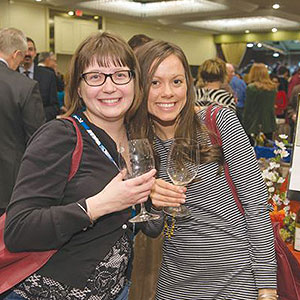
“There will be a lot of agents and sales reps there, but if you want to talk to the real deal — someone who has been in the business for 35 years, who grew up farming and has dirt under their fingernails, so to speak — this is your chance to,” he said.
Jon Emmerich of Silverado Vineyards will be coming from the other major wine region of California, the Napa Valley. He said he brings a unique perspective to Wine Week because he and his small staff do every step of their wine production in-house, from growing the grapes to producing and bottling the wines, a practice not typical of wineries the size of Silverado, which has an annual production of 75,000 cases.
What will distinguish California winemakers from those of other regions at Wine Week, Emmerich said, is their innovative spirit.
“In general, California winemakers are willing to look at new ideas and embrace new technology and new processes quickly,” he said. “I think that sets us apart. We aren’t stuck in a certain mindset and beholden to stodgy ideas about how wine should be made like some of the older wine regions. Many wine regions from around the world look at California and say, ‘Wow, those guys are dynamic.’”
For Benziger, California is “the land of milk and honey” for making wine.
“I don’t mean to sound arrogant, but we can make everything well here,” he said. “We have this incredible weather, and our geography is second to none for growing high-quality grapes.”
New Hampshire Wine Week will feature wines produced locally, too.
Lewis Eaton, president of the New Hampshire Winery Association, said many local wineries look forward to Wine Week as their pinnacle event of the year.
“It’s a big focus for us,” he said. “We talk about it in our meetings, about how important it is participate and to showcase local wines. It’s a good time to pump up all the Winery Association members, which is cool. I love that.”
Eaton is also the owner and winemaker of Sweet Baby Vineyard in Hampstead and has been part of New Hampshire Wine Week since he opened the business in 2008. He said that in his experience with the event, he has seen New Hampshire winemakers contribute a style of wine that no other winemakers bring to the event.
“People see a lot of varietals that they recognize, but when they see our fruit wines, they’re usually a little surprised but eager to try them out because it’s something different,” he said. “We grow great native fruits here with a lot of flavor. It can’t be compared to anything else in the world. I think our fruit wines have as much character as our weather.”
Trends To Watch For
One of the biggest trends in the wine world that Emmerich expects to see played out at New Hampshire Wine Week is a new and enthusiastic interest in the origin of wines, particularly a wine’s terroir and how capturing that can allow the consumer to experience another part of the world.
“There are always these waves that go through the wine industry,” he said. “In the past it was all about superstar winemakers, but right now the focus seems to be on feeling a sense of place. I think you’ll see when you talk to the winemakers how they’re trying to give that to people. They’re telling their story and trying to capture what is unique about their little space in the world and reflect that in a bottle.”
Benziger said that he too has noticed people’s growing curiosity about the backstory of the wines they’re drinking, particularly related to the farming and winemaking practices used to produce the wines.

He’ll give a seminar during Wine Week about his winery’s method of biodynamic farming, a type of organic farming that aims to coexist with the natural state of the land.
“We want to give our wine a deeper sense of place and a true sense of authenticity,” Benziger said. “We want it to have the fingerprint of where it’s grown while never taking away from the land. I think that kind of sustainability [practice] will become more prevalent and will be a continuing trend.”
Eaton said people’s desire to feel a sense of place with a wine, along with a shift in priorities when it comes to cost, has been great for local wineries, which have often struggled because of their higher prices.
“Consumers are definitely becoming more concerned with where their food and drinks come from, and more people are seeking out local products,” he said. “The other part of that trend is, people don’t mind spending on a quality product. They understand that it costs a little more for a local product to be produced, but they like knowing that their money is going to a place that they can go visit.”
As people look for additional ways to experience and engage with wine, wine and food pairings are also growing in popularity. Hoepler said he has noticed lighter wines, particularly rosé wines, come to the forefront to complement current food trends.
“The consumer is more and more eager to learn and experiment,” he said. “They enjoy pairing wines with food, and as food becomes more healthy and fresh, this plays to a fresher, lighter wine that enhances, not dominates the meal.”
New Hampshire Wine Week
Monday, Jan. 23,
through Sunday, Jan. 29
For more information about this year’s winemakers and the most up to date schedule of Wine Week events happening throughout the state, visit nhwineweek.com.
Easterseals Winter Wine Spectacular
When: Thursday, Jan. 26, 6 to 9 p.m.
Where: Radisson Hotel Manchester Downtown, 700 Elm St., Manchester
Cost: $65. Purchase online.
Visit: easterseals.com/nh
Arts: Community Theater
FEATURED ARTS
Community Theater
Push Continued For Colonial Theatre Revitalization
Written By Kelly Sennott (ksennott@hippopress.com)
Images: Courtesy Photo
Most people involved with the Colonial Theatre block development project in downtown Laconia are locals, from the engineering consultants to the construction manager. Architects Rob Turpin and Sonya Misiaszek can see the 102-year-old theater from their office window.
“It’s been wonderful to have this core group of local people working on the project,” Misiaszek said via phone.
This focused effort is a promising sign for David Bownes, a local attorney, city councilor and self-described theater geek who can remember seeing films like The Ten Commandments at the Colonial Theatre as a kid.
“That building has been the elephant in downtown Laconia for years,” Bownes, who lives about five minutes from downtown, said via phone. “It wasn’t producing anything. The building was starting to show its age.”
The restoration project began in the summer of 2015, when the City of Laconia loaned the Belknap Economic Development Council $1.4 million to buy the theater, with the goal of restoring it to be as financially stable and practical as it was when it opened in 1914.
“What’s going to make this successful is that the city has bought into it 100 percent,” Bownes said.
BEDC has since been deep in planning, with the goal of raising the required $14.5 million to renovate the whole block (which also includes apartments and retail space) before construction begins sometime in 2017.
Progress remains steady, and the website, 609mainstreet.org, chronicles the most recent project breakthroughs — mostly financial, including tax credits, donations and grants. This past December the biggest was a $500,000 grant from New Hampshire’s Land and Community Heritage Investment Program.

The Colonial Theatre, which features approximately 750 seats, is reminiscent of many other hundred-year-old New Hampshire theaters that saw renaissances in the last couple decades, like the Palace Theatre in Manchester and the Colonial Theatre in Keene. Justin Slattery, executive director of BEDC, hopes the revitalization will provide Laconia with more cultural opportunities, which will in turn boost the local economy by bringing more people downtown.
“It’s a project that’s been looked at many times in the past. The timing presented itself — partners were able to move it along, and that’s where the opportunity came from,” Slattery said.
“It would be an anchor [to downtown] if it re-opened.”
There’s still a lot to do. Turpin and Misiaszek, who did work with the Winnipesaukee Playhouse nearby, are orchestrating the new design, which is difficult due to the building’s age. It means their plans have to meet approval from multiple entities, including the city, state and national park services. Misiaszek said the theater will be nominated for the National Register of Historic Places, so they’ve hired a preservationist and conservator to help.
Many 1914 details are still present, from the painting and plaster work to the floor finishes, but they also need to update the building to modern-day code and make it adaptable for a wide range of programming — lectures, music festivals, theater productions, films, conferences and shows courtesy of the Putnam Fund, which has seen capacity issues in the past.
“The building has gone through some transformation, but not a lot. It still has a lot of original systems and pieces in it, which is good, because it’s helpful in our restoration, but there’s a lot of asbestos and other hazardous materials in the building. We have to deal with all that as well since there were no real substantial modern upgrades,” Turpin said.
The restoration effort will include the block’s apartments and retail space. BEDC will act as the landlord, renting to tenants, but the city will run the theater.
Slattery said he’s encouraged also by the local, state and federal partners that have been “great to work with.” The project has also generated a great deal of excitement from the community; they’ve attended open houses at the theater and brought in old photos, posters, documents and memories of the place.
“It’s going to be just gorgeous,” Bownes said. “The main challenge now is funding.”
More On The Colonial Theatre
Visit 609mainstreet.org or facebook.com/609mainstreet.
Music: Riffy Jam Pop
FEATURED MUSIC
Riffy Jam Pop
People Skills Return To Concord
Written By Michael Witthaus (music@hippopress.com)
Images: Courtesy Photo
Replacing a bass player is hard for any band, even more so a trio and especially when the remaining members are sister and brother. But when People Skills lost its bassist of five years in late 2015, their list of candidates was short and sweet.
“There was one name on it: Eric Reingold,” guitarist, singer and band leader Chelsea Paolini said in a recent Skype interview of the search she and Andrew Paolini made for a third member. “We couldn’t think of another person.”
Reingold is a rhythm anchor, with a resume that’s a who’s who of New Hampshire’s music scene. JamAntics, Greenlights and Cold Engines are a few of the bands he’s worked with over the years. Fortunately, Reingold was already a big People Skills fan.
“I never thought I’d be the bass player,” he said. “I just loved the songs.”
His shakedown cruise was really a trip around the harbor. He knew their groovy, loping song “Lucy” note for note, and slipstreamed easily into the rest of a catalog built over five years.

“The transition was not human, in a good way,” Chelsea Paolini said. “Eric learned so quick, and it’s only gotten better.”
Chelsea and Andrew Paolini first played out together in a high school ska band, but the siblings made music long before then.
“We’ve been playing together forever,” Chelsea Paolini said. “I was jealous because even though I’m two years older, anything I could play Andrew could learn and play better. We grew up both playing piano and guitar but then he started playing drums — he said, ‘Everyone needs a drummer.’ It turns out he was really good at that too.”
The band’s chemistry was chronicled by filmmaker Jared Parisi in his documentary, A Long Way From Home: 11 Days on the Road with People Skills, released in November. Parisi followed the group on an ambitious summer tour that began in Albany, New York, circled down into the Deep South then back up to Brooklyn, New York, and ended in front of a hometown crowd at Portsmouth’s Press Room.
From the highs of radio interviews and fans eager to enjoy their genre-bending sound — Chelsea Paolini calls it “riffy jam pop” — to playing in an empty small-town Kentucky bar on a Monday night, Parisi’s film tracks the highs and lows of scraping by in the modern music business. The Paolinis and Reingold stay exuberant throughout.
“We love the traveling aspect, even if we don’t make any money,” Chelsea Paolini said. “If you live modestly as I do, it’s enough to get by with some shifts at a couple of sh***y jobs. As for other rewards, if people tell you they love you and your music, that’s really cool — it’s something we created.”
As Reingold begins his second year with People Skills, the band is preparing its third album, Distractions, for summer release. It’s actually the second time they’ve recorded it; personal and professional differences caused them to scrap sessions from spring 2016.
After a quiet December, the three are looking forward to a busy 2017. When the new record comes out, they’ll head out on tour again. In the interim, there are several local shows scheduled, including one on Jan. 14 at Penuche’s Ale House in Concord. They’ve been a solid draw in the Capitol City for a few years now.
“What happened first is we played True Brew, opening for Amorphous Band,” Chelsea Paolini said. “Chris O’Neill from that band is someone we know from the Seacoast area. Then we played Granite State Music Festival. A lot of people saw us there, and that really kind of got us into the scene. It also introduced us to just how awesome Concord is.”
An Evening With People Skills
When: Saturday, Jan. 14, 9 p.m.
Where: Penuche’s Ale House, Bicentennial Square, Concord
More: peopleskills.com
Film: Hidden Figures
FEATURED FILM
Film Review
Hidden Figures (PG)
Written By Amy Diaz (adiaz@hippopress.com)
Images: Movie Screenshot
Katherine G. Johnson, Dorothy Vaughan and Mary Jackson worked on complex math for NASA but still dealt with several flavors of workplace discrimination in Hidden Figures, a look at the African-American female mathematicians who worked in the space program.
Always way ahead of her peers in math, Katherine (Taraji P. Henson), in the late 1950s and early 1960s, is a “computer” — one of a group of women who did the complex math required for the still-young space program. Or, actually, she is one of two groups of women, since the computers are segregated by race, like everything else at the Langley campus in Virginia where they work.
Dorothy Vaughan (Octavia Spencer) runs the African-American computer pool, even though her title as supervisor is unofficial, as she frequently reminds Vivian Mitchell (Kirsten Dunst), her boss. While Dorothy argues for her rightful promotion, she also helps to promote the careers of women like Katherine and Mary Jackson (Janelle Monáe), a fellow computer whose true desire is to become an engineer. Mary is called in to work with the team perfecting the capsule for manned space flight and Katherine is sent to work with the team trying to figure out exactly how to get that capsule into space and then bring it back.

Meanwhile, as the massive new IBM is moved into the building, Dorothy decides to learn how to program it — teaching herself from a book she has to smuggle out of the “white” section of the town’s library — so that she and her computers can stay employable.
Though we see all three women work to secure advancement at an agency that doesn’t seem particularly welcome to either women or African-Americans, the movie’s central focus is Katherine, who works on launch and landing for Project Mercury. Al Harrison (Kevin Costner) is the beleaguered boss of her department, which is taking heat for the failures of early test launches and especially when the Russians successfully get Yuri Gagarin into space.
Hidden Figures is a likeable, above-average movie that tells a fascinating story about fascinating people. Which is to say, the movie isn’t quite as good as everything the movie is about. And the “everything” might be part of the problem. In order to give us the stories of all three women, a lot of information is crammed into the movie that gets in the way of streamlined storytelling and of giving much depth to any one character. The movie can really only give us the surface of the career and family struggles of these women; it’s on the actresses, through facial expression or body language, to provide any of the little glimpses we get into their interior lives.
I don’t totally fault the movie for this. I was interested in Mary’s and Dorothy’s stories and I don’t think I’d want to lose any bits of them, even if it would make for a cleaner narrative. A subplot about Katherine, called Katherine Goble as the movie starts, meeting her second husband (her first husband has died a few years earlier when the movie starts) could have been a place to trim but I can also understand wanting to give a full picture of the woman.
The movie does indulge in some Hollywood shorthand that I could have done without. Costner’s character and Jim Parsons, who shows up to play a one-note “prejudiced scientist,” both feel more like hasty writing than real people. And the movie is can feel a little “Cliffs Notes on Civil Rights” for how it deals with race, tending to tell not show about the role race plays in the women’s lives.
But I can forgive this. The women at the center of Hidden Figures are interesting people I want to know more about. If sitting through a little Hollywooding is what it takes to get us the story of their lives, I am willing to make that trade.
Grade: B+
Pop: Ski & Celebrate
FEATURED POP
Ski & Celebrate
Pat's Peak Holds 16th Annual Diversity Day
Written By Matt Ingersol (listings@hippopress.com)
Images: Stock Photo
Pats Peak will celebrate its 16th Diversity Day, with international music and dancing, presentations and more, on Monday, Jan. 16.
Festivities are open to the public, and the event also includes Pats Peak’s POP (Pay One Price) package, offering group discounts on mountain lift tickets and rental equipment.
Pats Peak’s director of services, Jim Wall, started the event back in 2001.
“[The event] is meant to provide an atmosphere to bring individual skiing, snowboarding and snowtubing to people who may think it’s out of their reach,” said Lori Rowell, Pats Peak’s director of marketing and sales. “It also focuses on different cultures throughout the world.”

Rowell said there will be world music and dancing complete with a DJ who will be set up in the lodge from 4:30 to 6:30 p.m. There will also be a special commemorative ceremony led by Pats Peak staff members on what Martin Luther King Jr. Day is all about.
More than 200 youth and teen members of the Youth Enrichment Services organization in Boston make the trip up to Pats Peak by bus each year for the event. YES students will kick off the event at 4:30 p.m. by performing a makeshift “torch-light parade” down Pats Peak’s bunny slope toward the lodge, using glowstick necklaces with rainbow colors.
Concord DJ Franklyn Rosario of The Room Records, who is from the Dominican Republic, will be providing the music.
“Jim works with the YES program, so between him and them, some of the students of the program might do their own presentations, or he might speak,” Rowell said.
Wall said this year’s presentations will include words from himself as well as YES Executive Director Bryan Van Dorpe. Memoirist Zoie Little, author of Black, White or Other, will also be speaking. (Little, who was born and raised in Concord, will also be appearing at Gibson’s Bookstore on Jan. 15 to present her book.)
“Some representatives from Pats Peak … will address the audience in several different languages,” Wall added.
Presentations will be wrapped up by about 6:15 p.m., Wall said, but the special discounts to use the slopes will be available until 9 p.m.
The cafeteria and Sled Pub will also be open for the duration of Diversity Day.
Diversity Day at Pats Peak
When: Monday, Jan. 16; POP discount program available from 3 to 9 p.m.; Martin Luther King Jr. Day festivities from 4:30 to 6:30 p.m.
Where: Pats Peak, 686 Flanders Road, Henniker
Cost: $49 per person or $44 per person for groups of 15 or more; includes skiing, snowboarding, snowtubing, lessons, and admission to attend the celebration at the lodge
Visit: patspeak.com
MORE HEADLINES
Protecting NH's Wood Turtles
Protecting NH's Wood Turtles
Plan Aims To Keep Species From Becoming Threatened
Written By Ryan Lessard (news@hippopress.com)
Images: Courtesy/Stock Photo
Larger than the painted turtle, smaller than the snapping turtle, New Hampshire’s wood turtle has been a protected species since 2008. Now, efforts are underway to ensure the shelled amphibian doesn’t get upgraded from “species of concern” to “threatened species.”
New Hampshire Fish and Game wildlife biologist Michael Marchand specializes in nongame and endangered species in the state. He said that while wood turtles have some healthy populations in parts of the state, their numbers have dropped significantly over the years due largely to human interference either through road and agricultural development or through poaching.
“There are old historic records of wood turtles being among the most abundant turtles in New Hampshire and New England. That’s just not the case anymore,” Marchand said.
He said the 9-inch-long wood turtles are moderately sized by New Hampshire standards with a bright orange neck and legs.
“People consider them pretty attractive, which also gets them into trouble,” Marchand said.
Poachers have been known to collect wood turtles to sell them out of state to people who want them as pets. Owning or collecting wood turtles is illegal in New Hampshire and many other Northeast states.

They are different from most other turtle species in the area in that they prefer to live in and around rivers and streams. Other species can be less picky about which types of watersheds they take up residence in.
Wood turtles also prefer low-level plant cover in the forests where they tend to roam during the summer months.
“If you picture a turtle being six inches off the ground, they’re looking to be very concealed and hide,” Marchand said.
So when a river or stream is obstructed by development or shrubs are mowed to make way for farmland, their habitat shrinks.
The constraints on their habitat are half of the problem. Turtles are evolved to live long adult lives and reproduce frequently, while a small fraction of turtle babies survive into adulthood. They live long lives, to as old as 60 to 90 years, and they’re reproducing that whole time.
“The reason they’re in such trouble is they depend on extremely high survival rates for the adults,” Marchand said. “They can lay eggs up until the point they die. … So an 80-year-old female turtle can lay as many or more eggs than a 20-year-old turtle.”
So if even one adult turtle is struck by an automobile or stolen by a poacher, that can have far-reaching and long-lasting impacts on the larger turtle population.
Marchand said the habitats in the states south of New Hampshire have been greatly diminished. Some have suffered here too, but more remain.
“New Hampshire and Maine have some of the best remaining habitats in the Northeast. So we have a really high responsibility for the species at a global level,” Marchand said.
To make sure existing wood turtle populations thrive and grow, Marchand is working with counterparts in neighboring states to gather data that can be used to develop a regional conservation plan for the species due later this year. That includes studying populations — there are at least five thriving populations identified with about 30 individual turtles each in the state — and analyzing the genetic profile of each population.
The latter will help them understand the relative uniqueness and diversity of populations, which will be critical in determining whether to relocate any turtles and, if so, to what destinations.
Officials will also likely work with landowners to make sure habitats are safe by adding buffers along rivers and perhaps creating new conservation land.
Supercharge Your Diet
Supercharge Your Diet
How To Make The Most Of Superfoods
Written By Angie Sykeny (asykeny@hippopress.com)
Images: Stock Photo
You don’t have to adopt a whole new diet to eat healthier this year. Simple modifications like adding a handful of berries to your yogurt can go a long way, especially if you know what foods give you the most bang for your buck.
More than just “healthy” foods, superfoods are especially dense in one or multiple types of vitamins, minerals, antioxidants and polyphenols.
“They’re considered ‘super’ because they provide a variety of health benefits such as prolonged life, provide you with more energy and reduce and avoid diseases,” said health coach Allison Lellos of Allison Lellos Holistic Wellness in New Hampshire. “Any kind of produce or non-packaged food can be beneficial, but superfoods pack a little extra punch of nutritional benefit.”
What They Are
Lellos said many people associate superfoods with exotic or specialty items like matcha and acai, but most superfoods are actually common items that you can find at any grocery store. They may even be a part of your diet already.
Some “staple superfoods” that are commonly available and easy to add to any diet include fruits like blueberries, strawberries, watermelon, tomatoes and avocados; veggies like spinach and kale, lentils and black beans, sweet potatoes, mushrooms and broccoli; and other nutrient-dense foods like quinoa and chia, almonds, oats, garlic, green tea, Greek yogurt and salmon.
“It’s a huge misconception that superfoods are too rare and unattainable or out of our reach. Some of them are right under our noses,” Lellos said.
How To Use Them
Naturally, it’s easier to pair superfoods with a healthy diet than an unhealthy diet, so the best approach, Lellos said, is to focus on having a healthy and balanced diet first, then work superfoods into that mold. For example, if your goal is to eat five servings of fruits and vegetables every day, think about ways you can fulfill some of those using superfoods. That way, you’re getting the basic benefits of eating a sufficient amount of fruits and vegetables in addition to the benefits from the superfoods.
Also keep in mind that different superfoods provide different kinds of nutrition, so you need to eat a variety of them to reap the full range of health benefits.

“You could get your antioxidants from blueberries or green tea, but your probiotics from Greek yogurt and your iron and calcium from kale,” Lellos said. “They all have different qualities, so it’s important to mix them up. We need a multitude of color on our plates, even with superfood.”
The best strategy for maintaining superfoods in your diet long term, Lellos said, is to make them convenient to use, stick with small changes and keep your diet fresh and exciting.
Try dedicating one day a week to preparing superfoods in bulk so that they’re accessible to you throughout the week and easy to mix and match with your regular meals. You can make things even simpler by planning meals like stir-frys, salads, soups and stews, which are easy to add superfood ingredients to.
One of the perks of superfoods, Lellos said, is that you don’t have to make drastic changes to your diet or come up with elaborate new recipes to get the health benefits. And if you start falling into a rut with the same foods, she said, it’s easy enough to get creative with new ways to use superfoods.
A Day of Superfood
Check out these recipes featuring superfoods, courtesy of Allison Lellos.
Breakfast: Christmas Morning Crockpot Oatmeal
1½ cups steel-cut oats
4 cups water (or 2 cups water, 2 cups almond milk)
¼ cup almonds
¼ cup walnuts
½ teaspoon cinnamon
½ teaspoon nutmeg
1 cup blueberries and/or diced apple
Lightly spray the bottom and sides of crockpot.
Add all dry ingredients to the crockpot.
Add liquid ingredients to the crockpot (water and/or almond milk).
Gently stir to mix.
Cover the crockpot and set to low. Allow to cook on low for at least 8 hours.
If crockpot runs warmer or liquid is absorbed by 4 hours, add more water and stir.
Lunch: Not Your Average Spinach Salad
1½ to 2 cups spinach
¼ cup black beans
¼ cup corn
½ to 1 cup cucumber
¼ cup cooked quinoa
½ cup shredded carrots
¼ cup diced avocado
½ cup salsa
Prepare quinoa (as directed on box) early in the week and refrigerate.
Rinse and dry spinach in paper towel.
Remove excess sodium by rinsing and straining the beans and corn (if from a can).
Rinse, dry and dice/shred cucumber and carrots.
Dice avocado and store remains in airtight container or ziplock bag.
Combine all ingredients and top with salsa.
A few crumbled blue corn chips or ¼ cup of shredded cheese can be added on top if more salad excitement is desired.
Dinner: Set It and Forget It Stovetop Lentils
1 to 2 tablespoons olive oil
1 tablespoon minced garlic
1 to 2 cups dry lentils
2 to 3 cups water
½ cup diced carrots
½ cup broccoli
Handful of rinsed spinach
1 teaspoon oregano
In a medium-sized pot, heat olive oil on medium.
Add garlic and let simmer for 1 to 2 minutes.
Add water and lentils to the pot and bring to a boil.
Add carrots, broccoli and oregano.
Stir, cover the pot and set to low for approximately 20 to 30 minutes, or until liquid is gone (stirring occasionally). If lentils are not tender, add 1 cup of water and continue cooking on low.
Once lentils are tender, add handful of spinach, stir and cover the pot until spinach has softened.
Serve with a dash of cheese on top if you like, and add salt to taste.
Feeling Good
Feeling Good
Get Your Body Back With A Detox
Written By Kelly Sennott (ksennott@hippopress.com)
Images: Stock Photo
For people looking to quickly revamp their diet, one way to start fresh is with what experts call a detox.
“[Clients] see immediate results,” Jaclyn Lee, a registered dietician with Nutrition in Motion in Bedford, said via phone. “They have less bloating. They’re thinking clearer, sleeping better at night and have more energy.”
She said clients typically come to her about detoxing because they want to get their cravings under control.
“Their food choices haven’t been great for some length of time, and it’s snowballed,” Lee said via phone. “Lots of people going through our weight watcher program start with a detox. … It’s because if you detox with carbs, protein and fat, it will normalize your blood sugar, and you won’t have the spikes and falls.”
What To Eat

What you eat on a detox can be flexible, Lee said, but generally, it involves eating simple, natural foods with a balance of healthy protein, carbohydrates and fats.
Eliminate processed foods or foods that may cause inflammation for some people, such as gluten, dairy and sugar, Lee said.
Detoxes should also be high in fiber (through fruits and vegetables, particularly ones rich in vitamins and sulfur) and water — about half your body weight in ounces per day.
They can last anywhere from a couple days to a couple weeks, though both dietitians advised getting professional advice before detoxing, as it could have a negative effect depending on health history and the medication or supplements you’re taking. Some people can jump right in, while others need to make slow adjustments.
“It’s a much safer way to detox than juicing or fasting. In those, you’re not giving your body a balance of the three macronutrients — carbs, fat, protein,” Lee said. “What I see out there is that there are more detoxes out there that are a bit heavy on the carbs. … For example, juicing is all carbohydrates.”
Heather Taylor, registered dietitian and owner of Eat Well and Beyond in Manchester, said some of her clients like including protein shakes in their detoxes, which is fine; the best ones include no dairy and are full of vitamins and minerals.
The Effect
The first couple days can be rough, particularly if you’re abstaining from caffeine (which is what Taylor advises; Lee said she typically limits clients to one black coffee a day). By Day 3 or 4, you should see a result.
“A lot of people talk about how they had great sleep with vivid dreams,” Taylor said. “The biggest thing is their energy level that comes back. They might not be having cravings for sugar and carbs. Pain in their joints — that’s gone. I’ve also heard of women who had less cramping and lighter periods.”
Both women advised limiting detoxes to a couple times a year. Afterward, it’s important to phase foods back in slowly.
“The only thing you don’t want to do is follow a detox for two days and then on the third day go totally off it and have sweets or do something dramatically different,” Lee said.
Cheers To Four Years
Cheers To Four Years
Henniker Brewing Celebrates With New Beer
Written By Angie Sykeny (asykeny@hippopress.com)
Images: Courtesy Photo
Henniker Brewing Co. celebrates its fourth year of brewing with a special anniversary event on Friday, Jan. 13, at River Road Tavern in Bedford. The “Four Years of Great Beers and Good Company” party will feature 11 of the brewery’s beers on tap, including a couple new releases, as well as food pairings, prizes and opportunities to meet and talk with the Henniker Brewing Co. staff.
“Our following has continued to grow every year, and [the party] is a good way for us to get to know everyone who has supported us and celebrate how far we’ve come in four years and where we’re looking to go moving forward,” Marketing Director Ryan Maiola said.
Partygoers will get to taste Henniker Brewing’s newest year-round brew, Damn Sure Double IPA, for the first time on tap outside the brewery. Damn Sure is brewed with malted oats, unmalted wheat, English pale malt and a hops blend with tropical fruit notes of mango, pineapple, peach and grapefruit. The name was inspired, Maiola said, by the Internet hashtag #NewHampshireForDamnSure and is a tribute to New Hampshire people and culture. Damn Sure is a New Hampshire-only release and will be available once a month in limited batches.
“Accounts across the state have been calling us about it. We’ve already pre-sold out of all of the kegs, and it’s going to go quick once it’s on tap,” Maiola said, “but we’ll be bringing a lot to the event, so if people are looking to try it out outside of the brewery, this is the best chance to.”
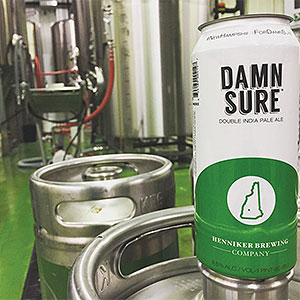
Also on tap will be Company, a Belgian Quad released at the brewery’s anniversary party last year as part of the Off the Grid series. It’s brewed using house toasted cherrywood aged in white rum from Flag Hill Distillery in Lee and features notes of banana, rum, marzipan and cherry. The party will feature 2016 Company as well as the first tapping of 2017 Company.
“Company is one of the beers that people really look out for,” Maiola said. “It will be cool to have the 2016 and 2017 Company side by side, because people notice that the cherry flavor gets stronger as it ages.”
Other notable beers on the lineup include the brewery’s winter seasonal The Roast, a stout brewed with a blend of locally roasted gourmet coffee beans; the popular Russian imperial stout King Misanthrope; and the last keg in the state of 2016 Ora, which is a Belgian-style golden ale.
River Road Tavern will also be partnering with Henniker Brewing to offer food pairings with some of the beers. The pairings will include Damn Sure with grilled pork chop, couscous, pear sauce, shredded green apple and blue cheese; 2017 Company with a charcuterie plate; Amber Apparition amber ale with wild mushroom arancini; and a vanilla bean ice cream float made with Working Man’s Porter English style dark ale.
Lastly, people at the party will have the chance to meet all eight members of Henniker Brewing’s staff, including the brewery’s founder Dave Currier and head brewer Devin Bush.
“[Bush] is always interested in talking with people and getting their feedback on the beers,” Maiola said. “He has a lot of experience, so it’s also a good opportunity for homebrewers to meet and talk with him and ask him questions about brewing.”
Although the party is a free, drop-in event, Maiola said there was a two- to three-hour wait at the peak of the anniversary party last year, so people should arrive toward the beginning of the event to ensure that they don’t miss out on the beers before they’re gone.
“We were pleasantly shocked with the turnout last year. It’s a great reflection of the enthusiasm of the people who support us,” he said, “but it does mean that the tavern fills up quick, so definitely get there early to snag a spot.”
Four Years of Great Beers & Good Company
Where: River Road Tavern, 193 S. River Road, Bedford
When: Friday, Jan. 13, 6 p.m.
Cost: Free admission
Contact: 428-3579, hennikerbrewing.com
A World Of Wining & Dining
A World of Wining & Dining
Inn Offers Global Wine Dinners & Cooking Classes
Written By Angie Sykeny (asykeny@hippopress.com)
Images: Stock Photo
You can experience wines and cuisines from around the world or learn to make your own globally inspired meal at the new wine dinner parties and cooking classes offered at Colby Hill Inn in Henniker.
The inn’s Wines of the World series is held on the first Thursday of every month and includes five- or six-course menus centered around the cuisines of various wine regions and paired with wines from those regions. The Global Cooking with Local Ingredients classes are held one Monday a month year round and include hands-on instruction for preparing three- or four-course dinners based on cuisines from the same regions featured in each month’s wine dinners.
The wine dinners and classes come as part of the inn’s new ownership under Jeff Brechbühl and Chef Bruce Barnes.
“Since we took over last February, we’ve had a lot of interest from people about cooking classes,” Brechbühl said. “There were already some classes here before we took ownership, but they were sparsely attended and only held at certain times of the year, so we wanted to make our own mark and do classes all year with a regional focus.”
The dinners and classes coincide with the concept for the inn’s restaurant, The Grazing Room, which is to marry globally inspired cuisine with locally sourced farm-to-table ingredients. Additionally, the menus for the classes often mirror what is on that month’s menu in The Grazing Room, so participants have the unique opportunity to learn how to prepare some of the dishes featured in the restaurant.
Wine regions highlighted throughout the year will include the Mediterranean, the Iberian Peninsula, Australia and New Zealand, Italy, France, South Africa, Patagonia and Switzerland, as well as wine regions in the U.S., including Virginia and Maryland, the Pacific Northwest, California and New England.

Barnes develops the menus for each wine dinner and cooking class himself, drawing inspiration from his culinary background.
“Having worked [as a chef] at the World Bank in D.C. for nine years, I was exposed to many cultures, and prior to that, I’ve always had an interest in global cuisines,” he said.
Each cooking class begins with wine and cheese served in the parlor, where Barnes gives participants an overview of what the class will entail. Then, everyone heads to the kitchen, where they can continue to drink wine and prepare a series of dishes under Barnes’ instruction. When cooking is complete, everyone moves to the restaurant dining room, which is closed to the general public on class nights, to enjoy the dishes they made, along with wine pairings selected by Barnes. Class sizes are kept small — around eight participants — to ensure that everyone gets individual attention. Private cooking classes for groups are also available.
“People who come usually don’t have a lot of [culinary] experience but they definitely have an interest in learning more,” Brechbuhl said. “They’ll learn a lot of food facts and food history and those sorts of things, too. Bruce really makes it interesting and makes it a conversation.”
Most people sign up for individual classes that interest them rather than attending them all consecutively. For the wine dinners, however, Brechbuhl said he encourages people to think of them as a “tour” of the wine regions of the world, and to attend multiple dinners if they can to get the full experience.
Guests can even earn a stamp in a “passport” for every dinner they go to and may receive special prizes for “staying on the tour.”
“We’re hoping the wine dinners will encourage people to join us regularly throughout the year,” Brechbuhl said. “We’re trying to get away from being the kind of place that people only come to once a year for their anniversary.”
Each wine dinner begins with a welcome hour in the parlor, where guests can enjoy an amuse bouche and aperitif or sparkling wine while Barnes gives an overview of the wines and foods being featured. Then, everyone moves to the dining room, where three or four tasting-size courses and a dessert are served with wine. With the arrival of each course, Barnes discusses the wine that’s paired with it.
“We’re bringing in wines that some people never thought of trying, and we’re exposing them to other options so that they don’t always have to go with the same California chardonnay or Australian sauvignon blanc,” Barnes said, “and I think people can learn to appreciate new wines a lot more once the wines are paired properly with food.”
Colby Hill Inn Wine Dinners & Cooking Classes
The inn is at 33 The Oaks St., Henniker. For more information or to register, call 428-3281 or visit colbyhillinn.com.
Wines of the World dinners are held the first Thursday of every month at 6:15 p.m. Next dinner is Jan. 19. $65 per person.
Global Cooking with Local Ingredients classes are held one Monday every month at 5:30 p.m. Next class is Jan. 16. $115 per person.
January’s featured wine region is Austria and Eastern Europe. See website for the full 2017 schedule.
Weekly Music Review
Weekly Music Review
While We're Here & More
Written By Eric Saeger (news@hippopress.com)
Images: Album Art
Catie Curtis, While We’re Here (self-released)

Like so many other famous folk-rockers who peaked before hip-hop took over everything, Curtis is without major label support these days, this new record having been financed through Kickstarter. She’s still based in Boston, recently separated from her wife of 17 years but apparently not too devastated by it, or at least not in the mood to rehash it to death, let alone re-examine the slings and arrows she suffered after coming out in her hometown of Saco, Maine, so many years ago, songwriting fodder she’s already used. Yes, her keyboard-driven passages can get mawkish (“The Dying Side”) and she’s sounding a bit old to be resurrecting the Tracy Chapman/Paula Cole era, which, thankfully, she doesn’t attempt too often here. No, mostly it’s simple, cheerful pastel Americana about comings and goings, redolent of Mary Chapin Carpenter (who seems to like her a lot) if anything. Some nice bluegrass feel on the strummy “Please Explain”; some Sheryl Crow flavor to the title track.
Grade: A-
Feelies, In Between (BarNone Records)

Arguably most famous for their 1988 college-jangle-indie single “Away,” this New Jersey four-or-fivesome-depending-on-the-year has splintered off a large number of side projects and bands over their 40 years of on-and-off activity, all usually pointed at the same general audience as the main band: repressed crook-leg-dancers who prefer bands whose singers only got the job by picking the shortest straw — a kinder, gentler ascendant of grunge. In this, their sixth proper album, neither the recipe nor the ingredients have changed much, except that now the stubborn, driving jangle doesn’t come off as youthful, more like models for the tunes on A Mighty Wind. “Turn Back Time” is dishwasher-safe twee; “Stay the Course” reads like Wire without any effects pedals, and “Pass the Time” revisits the varying-tempo shtick they pulled 35 years ago on “Sooner or Later” but with a decided lack of urgency. All that being said, the songs are a bit infectious as always — they’ve certainly not lost that ability.
Grade: A
Life's Short, Read A Book
Life's Short, Read A Book
Will Schwalbe on Books For Living
Written By Kelly Sennott (ksennott@hippopress.com)
Images: Courtesy Photo
To author Will Schwalbe, it’s not at all dramatic to say books can save lives.
“When you read broadly, and when you discover that author or character who speaks to you or knows your thoughts, it’s like you’re not alone, and that’s an incredible thing to discover,” Schwalbe said via phone last week. “And that really saves lives.”
Schwalbe has a whole list of titles that impacted his life — which is the premise of his most recent project, Books for Living.
The book, published in late December by Knopf Publishing Group, contains 26 essays about 26 books that helped Schwalbe make sense of the world. The idea for it started during the tour for his 2012 memoir, The End of Your Life Book Club, which told of the books he and his mother read together while she was dying. At these events, he talked about the memoir, but often conversations gravitated toward general reading — he asked what attendees were reading and vice versa.
“I started to see the way books changed their lives and helped them engage in life,” Schwalbe said. “I wanted to explain the phenomenon on why readers are so passionate about books.”

Schwalbe began research by rereading 100 of the most memorable books he’s read, which helped him narrow the list down to 50. He wrote essays about each at his home bar, above which hangs a sign: Who cares? This helped him narrow the field to 26.
“When I finished a chapter, that’s the question I asked myself. Sometimes I wrote a whole chapter and thought, ‘Not even I care!’ Even though this has a lot of memoir in it, I really tried to write about books that speak to readers in different ways. These are not my 26 favorite books. These are 26 books that I think teach powerful lessons,” he said.
He talks about the book and some of those titles — which range from Stuart Little and The Odyssey to The Girl on the Train and What I Talk About When I Talk About Running — at The Music Hall Loft Thursday, Jan. 19, at 7 p.m.
Schwalbe said he learned a lot rereading these books and remembering his experiences with them.
“One thing I realized is that we’re not the same person when we read a book [a second time]. We’re not even the same person when we get to the end of a book. Funny little things would jump out at me,” he said. “Some of the books you read the first time don’t hit you until later.”
For instance, what struck him the second time reading What I Talk About When I Talk About Running by Haruki Murakami was a paragraph about naps. When he reread The Little Prince by Antoine de Saint-Exupéry, it reminded him of a friend who died in high school.
Gift from the Sea by Anne Morrow Lindbergh taught him the importance of recharging; he compares it to Marie Kondo’s The Life-Changing Magic of Tidying Up, except that it’s about your soul instead of your home. The Girl on the Train by Paula Hawkins has lessons about trust, he said.
Readers will revel in a small taste of New Hampshire; some essays look back at Schwalbe’s time at St. Paul’s in Concord, which he attended as a teen. His chapter on The Odyssey by Homer offers a glimpse of one of his favorite teachers, George Tracy, who taught Greek, and his chapter on Giovanni’s Room is about Miss Locke, the school librarian who used to leave him books on the library cart.
Schwalbe’s day job is in book publishing, mostly cookbooks, but he typically devours one to two additional books a week for pleasure. He hopes Books for Living inspires people to think about their own reading lives and come up with their own lists — or better yet, just spend more time with a book in hand.
“One of the big things in the book. … is to show how books can help reset our lives and priorities,” he said. “A lot of people are in this habit of checking email the minute they wake up. If you check email the minute you wake up, why not just wake up an hour earlier, stay in bed and read a book for an hour, then check emails and get on with your day?”
It’s different from doing something like running or writing first thing, he said.
“It’s hard to go running. It’s hard to write. A lot of things are hard to do in the morning. But picking up a book you’re enjoying — that’s not something that’s hard. Life’s short. Why not start the day with something fun?” he said.
Meet Will Schwalbe
Where: The Music Hall Loft, 131 Congress St., Portsmouth
When: Thursday, Jan. 19, at 7 p.m.
Admission: $40, includes reserved seat, book copy, book signing meet-and-greet, bar beverage
Contact: 436-2400, themusichall.org