

FEATURED HEADLINES
Food: Grow Your Beer *
FEATURED FOOD - * COVER STORY *
Grow Your Beer
The History of Hops & How to Cultivate Your Own
Written By Ryan Lessard (news@hippopress.com)
Images: Courtesy Photos
Increasingly, beer brewers, homebrewers and farmers in New Hampshire are getting their hands dirty by cultivating hops to be used in locally made brews.
“What we’d like to see is a hop greenery of New Hampshire going on, both on the private side, with people having it in their gardens, and on the professional side with breweries interested in growing some of their own hops,” said Berthold “Bert” Bingel, owner of Bert’s Better Beers in Hooksett. “I think that’s one of these things that’s going to be growing over the next few years in New Hampshire, people growing their own hops or at least growing hops in order to supplement what they have to buy on the open market.”
A critical ingredient in modern beer, the hop plant was once a cash crop for New England farmers but for the past 150 years has been largely absent from the state’s agricultural scene. Now, it’s making a resurgence thanks to the growing popularity of craft beer, homebrewing and the local food movement.
Hops: A Primer
The hop plant (humulus lupulus) is a native of Europe imported to the U.S. during colonial times. It grows as vines known as bines from pencil-sized roots called rhizomes. It’s easier to clone the females of the plant by cutting off root stems than it is to propagate the species by seed. Growers can also buy crowns, which are already-planted rhizomes. After about three years, the bines mature enough to grow a good harvest of hops, which are green cones that can be used to essentially season beer. Each winter, the bines die off and are chopped down while the perennial roots hibernate, to grow new bines the following spring.
The beer making process begins with steeping grains in hot water where enzymes are deployed to break down the starches into simple sugars in a process called mashing. When that’s done, the sugar-filled liquid, called the wort, is boiled and sanitized before it can begin the fermentation process. It’s during that boil that a brewer will add hops.
A beer’s relative hoppiness is an expression of how much hop flavor (both its bitterness and aroma) is conveyed.
Some hops are selected for their bitterness, others for their aromatic qualities. The relative bitterness of a hop can be measured by its percentage of alpha acids. The Chinook variety, for instance, has a high alpha acid range usually, which makes it ideal for bittering, while Citra is good for adding more fruity notes.
Michael Hauptly-Pierce at Litherman’s Limited Brewery in Concord said many varieties serve both purposes, and another: acting as a natural preservative.
“The hops play a couple of different roles in beer. The oldest one … would be as an antibacterial agent in the beer, preventing spoilage from pathogens. At the same time, [they’re] offsetting the sweetness of the malt to sort of balance the flavor out,” Hauptly-Pierce said.
The key ingredient needed from hops is the yellow powder called lupulin, according to Thom Neel, brewer at Candia Road Brewing Co. in Manchester.
“The lupulin powder is what gives you that flavor and aroma,” Neel said.
As with grapes for wine, some folks believe the soil in which hops are grown affects the flavor and characteristics of the plant significantly, a concept called terroir. The terroir of hops in Canterbury can be vastly different than that in Oregon, according to Canterbury Aleworks owner Steve Allman. But this is a matter of some debate; others are skeptical that the difference is all that noticeable.
In order to prolong shelf life, hops are dried with a device called an oast, which is similar to a food dehydrator. It can range in size from a stack of drawers to a full room. Allman said you can also get by with a jury-rigged system involving a window screen and an electric heater.
But large-scale harvesting and pelletizing requires agricultural equipment that isn’t easily available in the region. No one seems to own a pelletizer in the state. The closest pelletizer is likely at Aroostook Hops in Westfield, Maine, which bought it last year and is not ready to sell its service to other growers yet. (A group of people started an Indiegogo campaign to try to start a hop processing facility in the state in 2014 but failed to reach their fundraising goal.)
Allman noted a harvester based in Vermont, Mike Noyes of Wicked Bines Farm, who can bring his equipment to a local hop farm.
Hop History
Rich Stadnik, owner of Pup’s Cider Co. and Houndstooth Brewing Co. in Greenfield, has done some research on the history of hop-growing in New England. He said the plant first arrived from England on ships and it was planted in central Massachusetts (places like Groton and Fitchburg) and the Merrimack Valley area of present-day New Hampshire.
“It just became the hot crop for a while that everybody was growing,” Stadnik said.
The first hop yard in Greenfield was planted in 1791, according to Stadnik. He said much of the hop farming at the time could be traced along present-day Route 101 from the Wilton and Lyndeborough area up through Greenfield to Bedford and maybe a bit in Merrimack.
“I found that, in Bedford, there was a major hops growing area there as well,” Stadnik said.
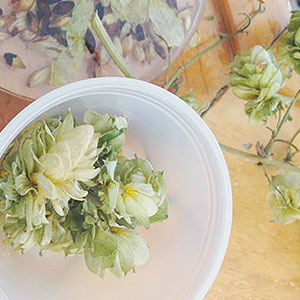
In fact, both Bedford’s and Greenfield’s records boast having the largest hop growing operations in the state.
According to the book The History of the Town of Lyndeborough, New Hampshire by Dennis Donovan and Jacob Andrews Woodward, there were many hop yards in town up to about 1860.
A hill that had later come to be known as Hop-Yard Hill had a hop yard on both sides. One was operated by Deacon William Jones (1789 - 1865), who was said to have grown hops extensively. He had a hop press on his property that was later demolished.
In the late 18th century, it made good economic sense to grow hops in New England.
“Hops were commanding really good money on the boat to England, even though they were crap hops. By England’s definition, they really stank,” Stadnik said.
For the most part, Stadnik said, American hops exported to English breweries were used early in the boil so their flavor wouldn’t be conveyed as heavily.
By the 1830s and 1840s, Stadnik said, the market began to be flooded by local hop growers and the price began to nosedive. Soon after, the farms moved westward, where land was cheaper and more vast and the soil was better. They appeared in upstate New York, then in midwestern states like Nebraska and Kansas, until finally settling on the West Coast. By the late 19th century, Britain was using between 25 and 50 percent American hops in its brews, most of which came from California and Oregon.
In 2016, 75 percent of the hop production in the U.S. happened in Washington, according to the U.S. Department of Agriculture. Erik Wochholz, a historian at the Strawbery Banke Museum in Portsmouth, said hop growing in the seacoast area happened in smaller operations, mostly centered around a brewery run by Frank Jones in the 19th century.
Today, you can find wild hops all over, including on Appledore Island. The Strawbery Banke Museum operates a hop garden to show how it was used for medicinal purposes and about 50 to 100 hop plants are growing in the Thomas Bailey Aldrich Memorial Garden. The cones are for local brewers to make historical cask brews like lemongrass, sage or elderberry beers.
Rhizomes will be donated to hop farmers, Wochholz said.
The first hops to be cultivated in Europe are called Noble hops today. They include varieties like Hallertauer, named after the global center of hop production, Hallertau, Germany.
Hop Yards
Throwback Brewery in North Hampton, Tuckerman Brewing Co. in Conway, Canterbury Aleworks in Canterbury and The Flying Goose Brew Pub & Grille in New London all have hop yards on their properties.
Throwback, which will be enjoying its first full harvest this spring, has about 500 hop plants in a half-acre yard. Flying Goose has more than 100 hop plants in about a quarter of an acre, and Tuckerman Brewing planted between 150 and 200 hop plants in a roughly quarter-acre yard. According to the Northeast Hops Alliance, a nonprofit membership organization based in Madison County, New York, that is pushing for more hop growers in the Northeast, there are seven members in New Hampshire, four of whom joined in 2016. They include a couple breweries (one is Throwback) and a few homebrewers growing 40 to 60 plants in 1/20 of an acre.
Canterbury Aleworks has about three quarters of an acre growing about 180 hop plants (double spaced).
“I think most of the growing in New Hampshire is just on the sort of postage stamp acre operations,” said Allman. He said there are a number of benefits for brewers to grow their own hops.
“It’s part of agro-tourism, it’s part of the destination concept, it’s part of how to get different flavors. It’s how to get control of that particular ingredient a little bit more, which can be pretty volatile in the open market,” Allman said.
With few exceptions, locally harvested hops would be used mostly for so-called wet hop or whole hop brews, which incorporates whole hop cones, freshly harvested. A wet hop ale, unlike beer made from commercially available dried and pelletized hops, is old-school and only available as a short-lived seasonal special.
“We had really nice, juicy, round stone-fruity flavors in our wet-hopped IPA last fall. People were digging that. And that was just a mix of different things we pulled out of the yard,” Allman said.
While the number of hop yards in the state is growing and existing yards are gradually expanding in size, there are still not enough to accommodate the regular demand of a larger-scale brewer like Smuttynose
Brewing in Hampton (Allman estimates they would burn through the entire New England supply in just two months), but microscopic operations like Allman’s, which uses a single-barrel system, can soon get by using just his own hops if he wanted to, assuming he has a good harvest. He would still import some hops for certain recipes that call for hop varieties he doesn’t have. But after using what he has, he could ideally sell the surplus to another local brewery interested in local ingredients.
“That’s always going to be a value as far as that goes because the locavore movement is very big. People are very interested in [local sourcing] on all levels,” Bingel said.
Rick Marley, the brew master (or braumeister, as he prefers to be called) at Flying Goose, said the brewery crowdsources its harvesting by hosting a hop harvest party around late August or early September. The brewery supplies a feast of sandwiches and beer, and families can bring their children to help hand-pick the hops from the long bines.
“They kinda look like dancing hula ladies when the wind blows,” Marley said of the full-grown bines.
Marley then takes the hops and produces a beer called the Full Blown Home Grown, which uses all local malts and hops.
“Last year’s iteration was kind of a light pub-style wheat ale,” Marley said.
While most commercial hop growers are local breweries, some local farmers are starting to grow the crop and sell it to interested brewers.
Julion Parker, a farmer getting started at Millcreek Dairy in Chester, was originally planning to grow blueberries. But after some research, he decided to start growing hops instead.
“Generally, if you can grow them, you can sell them,” Parker said. “A lot of brewers are very interested in buying hops locally in the Northeast region.”
So far, Parker has ordered about 80 plants for just over a quarter of an acre, but eventually he hopes to fill out the plot with about 150 to 200 plants. He will start planting them this spring. In the long run, after Parker moves on from his incubator program at Millcreek, he hopes to buy upward of 100 acres of his own farm and dedicate three acres to hop-growing. Annette Lee at Throwback said growing their own hops and buying hops from local growers such as Aroostook Hops in Maine is part of their company’s ethos, which celebrates the history of farm-to-beer brewing.
“That’s what we’re all about here at Throwback,” Lee said. “Our name comes from sort of this nod to pre-Prohibition brewing where brewers used what was around them to make their beer.”
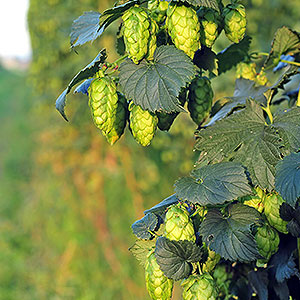
Each hop yard involves erecting tall posts, often 16 feet tall with rows of strings for the bines to grow along. Lee said to build a hop yard of any significant scale, one should be prepared to make a big up-front investment. She said for each acre of standard hop yard (rows are usually spaced 36 inches apart) it costs about $10,000 worth of trellis materials and land preparation.
It’s not likely that a brewery, however focused it is on local sourcing, will completely forego importing some varieties of hops. Primarily, that’s because recipes may call for varieties that are proprietary brands such as Citra, Simcoe and Amarillo. No one is allowed to grow those in New Hampshire since out-of-state companies own the rights to the plant’s genome.
Still, it takes a lot of hops to brew beer, so the state’s “postage stamp” hop yards can be quickly depleted.
Marley said he harvested 58 pounds of hops from his yard last year, enough to brew one batch of beer, which was seven barrels or 217 gallons.
Hauptly-Pierce made a tinier run of beer from the 40 ounces of hops he collected from his home garden.
“It was enough to do about five gallons of an IPA, as a dry hop,” Hauptly-Pierce said.
Allman said different beers require different amounts of hops.
“A German pilsener, you might be using anywhere from a quarter or maybe a half a pound [of hops] per barrel, per 31 gallons of beer. On the other hand, for a big, super-crazy IPA, you might be using three or more pounds per barrel of beer,” Allman said.
And different varieties of hops yield better harvests than others. It’s been Allman’s experience that a Hallertauer plant will get him about 1.5 pounds of hops, whereas Cascade will yield 2.5 to 3 pounds.
Hop Hobbyists
On the smaller scale, brewers, home brewers, gardeners and other hobbyists have taken to planting hops on their home properties.
“I’ve been involved in growing hops now for about 15 years. I started off growing just a couple of styles, particularly Hallertauer, in my backyard,” Bingel said. “It was very successful. It took about three years but then I started getting more hops than I knew what to do with.”
He’s had his hops used in some locally made beers such as Brother Berthold (named after Bingel) by Swift Current Brewing Co. in Manchester. He thinks one of the best-performing hop plants on his property is a Willamette.
Bingel planted his rhizomes at the base of his patio and trained them to grow up and over as a canopy. Originally, he got into it for his own home-brewing hobby.
“I do a lot of freestyle brewing [with] whatever I have on hand,” Bingel said. “Just see what comes out. But that’s half the fun of it, just experimenting.”
Using a mix of different hop varieties in a brew is more the rule than the exception for commercially available beer, he said. The same is often true with home brews.
Hauptly-Pierce started with some rhizomes from Bingley and now has 10 hop plants growing at his Manchester home.
Tom Albright, the owner of Out.Haus Ales in Northwood, grows 11 hop plants (10 varieties) on his home property. He used the hops in 2014 to create his first New Hampshire Harvest ale.
Rouleen Williams of Salisbury is no brewer, but she loves craft beer. Williams grows 32 plants across eight varieties in a 1/8-acre plot.
“Brewers Gold and Nugget are the heaviest producers,” Williams said.
Williams, who has a background in farming, went a bit further than most home gardeners by building an eight-row trellis from small trees she cut down from the woods on her property. She has an irrigation system and experimented with chickens to protect her plants from Japanese beetles. That lasted a few years until local predators starting eating the chickens.
“I used a tomato cage around each plant to get it started,” Williams said.
She has shared her hops with local brewers in the past. One such brewer is Thom Neel at Candia Road Brewing Co. Combining them with the harvest from 60 Chinook bines at his home, Neel makes a New
Hampshire Harvest ale using most of Williams’ hops, which totals about 20 to 30 pounds.
“It’s an American pale ale made exclusively with New Hampshire-grown hops,” Neel said.
He adapts the recipe to whatever hop varieties are available each year. And Williams said it sells out within weeks.
“It’s really fun to have a product that’s grown right in New Hampshire and have it be turned into beer that’s consumed in New Hampshire. It’s really very gratifying,” Williams said.
Hop Hunters
A lot of local hop growers are in search of the holy grail of hops — a “holdout from days of yore,” as Allman calls it.
Since hops are such a tenacious species of plant, even farmland that cleared away the crop still has remnants to this day.
“If you go to Strawbery Banke, there’s hop vines there from like a hundred years ago,” Annette Lee at Throwback said. “You can find them. I’ve seen them on the roadsides.”

Lee also had some wild hops growing in her old backyard in Rye.
For folks like Allman, Marley and Stadnik, half the fun of growing hops is trying to discover a new local species.
“If somebody can find a strain of hops that was very desireable and was commercially available and would do well here, they could probably make a killing with it,” Hauptly-Pierce said.
Allman found what he terms “heirloom” hop plants in Canterbury, Barnstead and Loudon.
“One of my hopes is that we’ll find some local heirloom hops variety that’s been growing sort of wild since pre-Prohibition that might actually be a cool hop that might have some good flavors to it,” Allman said.
Stadnik has collected about 20 rhizomes from wild hops around the state.
“It becomes a challenge today to find those things,” Stadnik said.
He even found some hops growing in the old Fletcher Farm property of Greenfield, where hops were historically grown, along some old rock walls. Today the owners of the farm grow a couple hop plants up the side of their barn for home brewing.
This spring, Marley plans to get some rhizomes from a wild hop plant growing at a blackberry farm in New London that he says has a nice aroma.
“I tend to collect these weird, wild hops,” Marley said.
He found some Manitoban hops at his sister’s property in Campton, another wild hop in Sutton, and about three years ago he traded growlers of beer for a chance to collect some hops on the seacoast that date back 150 to 200 years.
Hoping to keep the seacoast location a secret, Marley declined to name the town, but he said the site is widely believed to be New England’s first hop field.
“They’re some old English cultivar, I would imagine,” Marley said.
Get Involved
The best thing about hops is just about anyone with some land can grow them. For one thing, since hops grow vertically or in any direction the bines are trained to go, they don’t require as much surface area as grain.
“Hops are pretty easy to grow. They’re essentially a weed. All you need is well-drained soil, good exposure to the sun and a little bit of room to grow things vertically and you can grow hops,” Bingel said.
To start off, you need to get your hands on some rhizomes. If you know someone who grows hops, you can ask them to share a few from their own garden. Rhizomes can also be ordered online for $2 to $4 apiece from out-of-state farms. Suppliers include Gorst Valley Hops in Wisconsin, Great Lakes Hops in Michigan, Aroostook Hops in Westfield, Maine, and The Hop Yard in Portland, Maine.
Candia Road Brewing sells home-brewing supplies and often has a sort of trading library for rhizomes so growers can try varieties they don’t have yet.
“You dig a shallow hole, they don’t have to be super deep,” Hauptly-Pierce said. “They like water but they don’t like to swim in it.”
Then you’ve got to make sure there is some kind of apparatus for the bines to climb up, like a trellis, archway or pergola. Hauptly-Pierce has a post in the ground next to his house and hooks in his eave that he weaves twine through. He said the twine should have enough nap to it so that the bine has something to grab onto.
Given the right conditions, hops will grow fast. At their peak, Bingel said, they can grow as much as six or eight inches per day.
Come winter, the bines die off and you have to trim them to make room for next season. But the root structure remains alive. In fact, the roots grow so rapidly Bingel said he has to dig the plant up every year to cull the roots, which leaves him with additional rhizomes he can share with his friends. He said he’s probably shared hundreds of rhizomes over the past several years that have since become hop gardens across the state.
The biggest culprits for hurting hops are downy mildew and Japanese beetles. If spring is too damp and warm, mildew is more likely. In lieu of pesticides, you can try having chickens roam the ground beneath your hops so they eat the beetles, but you want to make sure they can’t reach the hop cones themselves.
Hops Resources
For buying hops: buyhoprhizomes.com, freshops.com, thehopyard.com, aroostookhops.com, gorstvalleyhops.com, greatlakeshops.com
Aroma
It’s not always about being the most bitter beer. There are countless varieties of beer; some are dark and chocolaty, others are light and citrusy. Having the right kind of hop can provide you with certain smokey, floral or fruity aromas.
Cascade, Columbia, Crystal, East Kent Golding, Fuggle, Glacier, Hall. Gold, Hall. Mittelfruh, Hall. Tradition, Late Cluster, Liberty, Mt. Hood, Perle, Saazer, Saazer 36, Spalter, Sterling, Teamaker, Tolhurst, TriplePearl , Tettnanger, Vanguard, Willamette
Bittering
Since beer, like wine, is made from fermenting sugars from a plant (in this case grains), the end result would be very sweet if it was not balanced by a bitter ingredient. For many beer enthusiasts, bitter is better and how a hop’s unique characteristics lend a beer a certain kind of bitterness can make or break a beer.
Brewer’s Gold, Bullion, Centennial, Chinook, Comet, Galena, Hall. Magnum, Horizon, Newport, Northern Brewer, Nugget, Olympic
Source: Northeast Hop Alliance
Steve’s Heirloom Finds
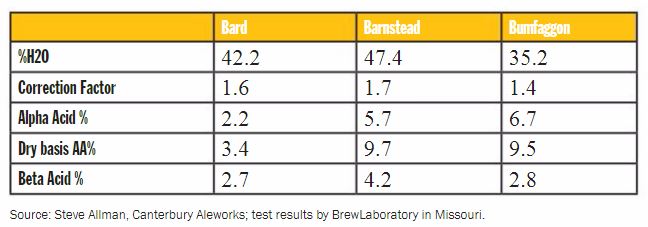
Steve Allman at Canterbury Aleworks found three local varieties growing wild and gave them each names:
Bard - found in Canterbury
Barnstead - found in Barnstead
Bumfaggon - found in Loudon
But he hasn’t been able to use them in a brew yet. That’s because every brewer must adjust their recipes to the specific lab results of a particular crop of hops, even with familiar varieties. A Centennial crop one year can have a certain alpha acid percentage while the same variety could be different the next year, and that will determine how many hops will be needed in the boil.
Here are the lab results for Allman’s heirloom hops.
News: Organized Crime Strike
FEATURED NEWS
Organized Crime Strike
FED Program Changing Police Work to Curb Drug Trafficking
Written By Ryan Lessard (news@hippopress.com)
Images: Stock Photo
Major drug trafficking organizations have increased the supply of heroin and fentanyl into the state in the past two years. In response, New Hampshire’s Organized Crime Drug Enforcement Task Force has created a heroin strike force to crack down on the drug dealing infrastructure.
From The Top Down
The goal of a drug trafficking investigation is to connect the dots from the addicts and overdose victims all the way up to the source.
“We want to take some of the bigger cases and expand them as far as we possibly can, and that can’t always be done by a local [police] drug group or drug task force. In fact, sometimes that’s what hurt us,” said Drug Enforcement Administration Assistant Special Agent in Charge Jon DeLena, the head of the strike force.
And in order to do that best, the OCDETF (pronounced Oh-seh-def) heroin strike force pools the resources of federal investigators from agencies like the DEA (which leads the team), ATF and FBI as well as local police officers and state troopers.
The organized crime team has been around for more than 20 years, according to Assistant U.S. Attorney Jennifer Davis, the lead prosecutor of cases built by the task force. The force received additional federal funding and manpower in late 2015 with commitments secured by then-U.S. Sen. Kelly Ayotte.

At the time, Ayotte said the strike force was meant to “supplement and strengthen ongoing interdiction and prosecution efforts by allowing the U.S. Attorney’s Office and law enforcement to work directly together to pursue federal prosecution of high level drug traffickers.”
DeLena said too often police departments even as large as Manchester’s don’t have the resources, manpower or the ability to cross jurisdictional lines to trace the drug supply back to the major operators, most of whom are based in northern Massachusetts. And since these high level drug rings are working with guns and sizeable fortunes, the inter-agency team can pursue more serious charges.
“What we’re able to do … is hit these organizations even harder with things like complex financial investigations, which often result in financial charges and convictions. Those can add substantial time federally to a prison sentence,” Davis said.
U.S. Attorney Emily Gray Rice said that while local police are rounding up low-level dealers through programs like Granite Hammer, the state is also doing more to curb the drug supply closer to its source.
“Law enforcement involves a lot of acronyms but I think what’s important for the public to know is that in New Hampshire, federal, state and local law enforcement truly is firing on all cylinders on this issue,” Rice said.
Manchester Police Chief Nick Willard said one of the major benefits of the heroin strike force is it’s freed up resources in his and other police departments to focus more on the low-level dealers and quality-of-life issues the drug crisis tends to stir up.
Finding The Source
DeLena said the heroin and fentanyl coming into New Hampshire is delivered locally by drug rings with ties to the kingpins in the Dominican Republic and is manufactured and shipped by the Sinaloa Cartel in Mexico.
“Through investigations, we’ve been able to determine that the Dominican-based Drug Trafficking Organizations have a tremendous stronghold on northern Massachusetts,” DeLena said.
About two years ago, investigators and prosecutors started seeing a shift in the economic model deployed by the drug traffickers operating out of Massachusetts. The quantity of drugs had ballooned and suppliers began fronting drugs for free to Granite Staters who were looking to sell them for profit or to help feed their own addiction with part of the proceeds, DeLena said.
“As inhospitable as we are making it here, the drug trafficking organizations are doing a tremendous job at the customer service industry down there. They have collectively made a decision to treat people well,” DeLena said. “This isn’t the crack cocaine days where maybe half the time you’re going down, you’re going to get robbed. … That’s not happening down there. They’re welcoming people down there. In fact, they’ve said, ‘we’re fronting dope.’ They’re giving samples … they’re trying to encourage people to get down there.”
So now, instead of a Lawrence-based supplier driving up to New Hampshire to sell their wholesale goods, local people are driving down to Massachusetts to pick up their supply there, according to DeLena.
“If you drove your car with New Hampshire plates to Lawrence right now and stopped at a stop sign, in all likelihood somebody will be throwing a sample of fentanyl into your car with a phone number wrapped around it,” Davis said.
Since fentanyl is 50 times more potent than heroin, a kilo of fentanyl is tantamount to 50 kilos of heroin.
All of this is adding up to more clusters of overdoses in New Hampshire, Davis said.
Arts: Not Your Grandma's Paper Cutting
FEATURED ARTS
Not Your Grandma's Paper Cutting
“Deep Cuts” Gives the Form a Modern Spin
Written ByKelly Sennott (ksennott@hippopress.com)
Images: Courtesy Photo
“Deep Cuts: Contemporary Paper Cutting” rejects the idea we’re moving into a paperless world.
Everything within the multi-room exhibition, on view at the Currier Museum of Art through May 21, is constructed via paper, from Mark Wagner’s dollar-bill broom to Randy Garber’s installation featuring player piano scrolls and boxes.
“When you think about it, most artists start on paper. Even if you’re a sculptor, you’re probably sketching something before you start putting your hands on clay,” said the museum’s assistant curator,

Samantha Cataldo, during a walk-through of the gallery days before the opening. “For us at the Currier, we wanted to do something that was new and different, that our audiences wouldn’t have seen before.
Cut paper is not something you come across a lot, but there are obviously a lot of artists doing this.”
Paper-cutting’s origins are in China, Europe and the Middle East, but the 36 artists who’ve created 41 pieces for this show tackle paper-cutting in modern ways, from technique and style to theme and intent, turning this centuries-old practice upside down. It’s easy to appreciate the intricacy and labor required to make these objects, especially if you made paper snowflakes in grade school.
“There’s an entry point for everyone, because you’ve probably done something like this before,” Cataldo said.
“Deep Cuts” technically starts at the museum’s entrance, where visitors can add cut-out shapes from junk mail to a community collage, and it continues through two gallery rooms following several themes.
One segment contains art made from maps — like Nikki Rosato’s portrait bust of her partner, which is constructed from cut-up highway strips. Another looks at money and consumerism, exemplified in Mark
Wagner’s “Very Expensive Push Broom,” which contains $80 worth of bristles, shaped from sliced $1 bills.
Many pieces are sculpted from old books or papers. August Ventimiglia’s “Borrowed Lines, from Huckleberry Finn” is a collage made up of the underlines found in a secondhand Mark Twain book. Stefana
McClure’s “Manner of Death: Natural” is a knitted blanket made from autopsy and death reports of detainees held in Iraq and Afghanistan American prison facilities.
“This is very unsavory information, and she’s totally transformed it into these knitted forms,” Cataldo said. “There are some things in the show that you have to get really close to before you realize what it is. …
Everything is really beautiful and really amazing to look at, but there’s always just a little more behind it.”
With Lisa Nilsson’s work, it’s the technique you notice first; she made her pink, purple and white piece by quilling, which involves rolling and shaping narrow strips of paper. It was first practiced by nuns during the Renaissance and later taken up by 18th-century women to pass the time. You may not recognize the design until you read the side panel. (It’s a male pelvis.)
Yuken Teruya’s “Tory Burch” is made from shopping bags that feature tiny cut trees dangling from the inside, and Li Hongbo’s “Rainbow” contains colorful accordion art. Unfolded, they take abstract, beautiful shapes. Folded, they resemble guns.
“It’s an interesting play because it changes how you think about it,” Cataldo said. “Folded up, it’s a menacing object. Unfolded, it’s beautiful.”
Upcoming “Deep Cuts” Programs
Music: Third Time Charm
FEATURED MUSIC
Third Time Charm
Anna Madsen Readies Tupelo Release Show
Written By Michael Witthaus (music@hippopress.com)
Images: Courtesy Photo
When Anna Madsen set out with a sheaf full of songs to find a record producer, Pittsfield’s Rocking Horse Studio looked good in part because it was reachable on back roads. Driving to Boston terrified the new Utah transplant; a farmhouse facility in rural New Hampshire provided the perfect opposite.
Madsen’s ensuing two-year creative journey would ultimately cross the Atlantic Ocean to find her singing on the BBC and working with members of progressive rock royalty such as Genesis, Fairport Convention and Dream Theatre. These artists were drawn to her register-scaling voice and lyrical talents. But Madsen’s strongest champion turned out to be Rocking Horse owner Brian Coombes.
After meeting by happenstance, the two would become a creative team, though Coombes was quick to clarify what that means in a recent sit-down at his studio.
“I’m the junior writer,” he said, “here to make sure we’re fulfilling her vision.”
The veteran producer brings a mad-scientist fervor to his role, tenaciously shaping Madsen’s work to perfection.
Twice, the effort led to reshaping and refining earlier songs. Madsen’s latest CD, Whisper, will be released March 3 and celebrated with a Tupelo Music Hall release show two days later. It’s her most fully realized effort, with four brilliant new songs. Six of the record’s tracks, however, began either on Madsen’s debut EP Palm Reader or on the 2016 LP Efflorescence.
“It’s our third bite of the apple,” Coombes said.

Some songs are reinvented from the ground up, like “Devil’s Garden,” which went from dreamy to danceable and pushed Madsen’s vocals to the forefront. Others are augmented; “Palm Reader” adds a new Madsen lead vocal and drums from Dave Mattacks, a legend who’s performed with Paul McCartney, Nick Drake and others.
“It was the first song I ever recorded here,” Madsen said during a preview session at the studio. “I felt tentative, and as time went by I became more confident. I think that really comes across with the reworked version.”
Madsen’s songwriting skills have also grown, as the new material shows. “If You Run” has the lyrical economy of a great pop tune wrapped around a sinister tale of romantic duplicity.
“I’ve got a story, but it’s not a fairy tale,” she sings, while warning a friend away from the wrong man. “Paint the Town Red” is a Europop romp, and “Dead Daisies” tells a witty spinster’s tale with a sketchy narrator, who complains, “love and I don’t agree.”
“Fingerprints” is a gorgeous and revealing song, and one of Whisper’s best. Madsen wrote it after she went through a divorce last fall. Usually, she doesn’t get personal as a songwriter, instead preferring themes and stories to confession.
“I was angry, which is rare,” she said. “I don’t know what to do with those emotions. ... I never felt so much anger and hatred. I went from anger to sadness in like a day. I wrote the song and pretty much said all I needed to say.”
Madsen envisioned “Fingerprints” as a spare acoustic ballad until Coombes suggested a synthesizer progression he’d worked up.
“My starting points were ‘Time After Time,’ Genesis’s ‘Man on the Corner,’ ‘One More Night’ by Phil Collins,” he said.
Madsen agreed, though she remembered Cyndi Lauper’s song from the 1990s movie Strictly Ballroom, not the 1980s MTV hit.
The generation gap produced another funny moment. Coombes has a close bond with Anthony Phillips and Steve Hackett, and produced an album last year for Genesis roadie Dale Newman. He’s giddy at the thought of Tony Banks and Mike Rutherford hearing about Madsen when they meet up with Newman to play golf. Newman has booked him into Genesis’ storied Farm Studio later this spring when Madsen tours Europe.
Coombes, in other words, is a fan, but when the two met Phillips and Hackett for lunch last December, Madsen didn’t get it.
“I wasn’t starstruck,” she said. “I remember Phil Collins from Tarzan; I was 12 years old when that came out. It wasn’t until Ant Phillips mentioned he was uncle and godfather to Emma Watson that I freaked.”
Yes, that Emma Watson, of Hogwarts and Beauty & the Beast fame. Madsen was slightly tuned out when Phillips mentioned a niece and her audition for Harry Potter.
“I said, ‘Who are we talking about?’ Then I wanted to scream with glee,” she said. “He got the reaction he was waiting for when he said that.”
The UK is providing a healthy fan base for Madsen. Whisper’s first single, “Black Dress,” made Spotify’s Top 100, and the song charted on British iTunes. A music video, with a Pretty Woman meets 50 Shades of Gray script written by Madsen, hit YouTube in mid-January. Follow-up British television appearances are set when she returns, part of a tour that includes France, Spain and Wales.
With luck, Madsen may even land a spot on a Royal Armistice Day show happening this fall in London.
“They really liked ‘Soldier Song’ from Anna’s first album,” Coombes said. “We’re hoping to find a special guest to sing it with her, one with a big enough name to put her on the bill.”
“That’s on my bucket list — to perform for the Queen,” Madsen said.
Fortunately, success means if it does happen, she won’t have to drive in the thick of London traffic. A cab — or a limousine — should suffice.
See Anna Madsen
Film: Get Out
FEATURED FILM
Film Review
Get Out (R)
Written By Amy Diaz (adiaz@hippopress.com)
Images: Movie Screenshot
A man’s trip to meet his girlfriend’s parents quickly gets creepy in Get Out, a smart, funny horror film written and directed by Jordan Peele of Key & Peele fame.
Chris Washington (Daniel Kaluuya) is nervous about meeting girlfriend Rose Armitage’s (Allison Williams) family, all the more so when she tells him she hasn’t mentioned to her white parents that Chris is black. She tells him not to worry, that though her dad might go on at length about how much he likes President Obama, her mom (Catherine Keener) and dad (Bradley Whitford) are nice people and not racists.
Awkward Obama praise, however, is only a small part of the weirdness Chris encounters when he arrives at the Armitages’ secluded country home. Even Rose’s brother Jeremy (Caleb Landry Jones), who appears to be a menacing psychopath, isn’t the weirdest part of the visit. The Armitages’ groundskeeper Walter (Marcus Henderson) and housekeeper Georgina (Betty Gabriel), both African-American, behave oddly. Chris thinks at first that they may be disapproving of his relationship with Rose, but as time goes on he starts to suspect something stranger, especially after he meets Logan (Lakeith Stanfield).

An African-American of about Chris’s age, Logan appears to be in a relationship with a much older white woman who is friends with Rose’s parents. At an uncomfortable party hosted by the Armitages, Chris is at first happy to see Logan but his strange behavior deepens Chris’s suspicions, especially after a camera flash makes Logan suddenly grab Chris and shout “get out!” The movie’s very earliest scenes clue us in on what Chris only suspects, which is that “get out” is not a threat but a desperate warning.
What’s the big scary thing at the center of Get Out? Racism! Specifically, how race shades so many different kinds of interactions and ways that people relate to each other. There is the straightforward-seeming racism of a brief encounter Chris has with a police officer on the way to the Armitages’ house. There is the different kind of racially charged reaction that Chris expects (and receives) when he meets the Armitage family. There is the passively menacing response of the smiling gray-haired couples at the Armitages’ party. Then there are Chris’s own perceptions, what he thinks is behind the behavior of
Rose’s brother, why he suspects the Armitages’ staff might not like him. Race, all the twisty ways that it alters people’s perceptions and all the baggage that can come with interracial interactions in America, serves to amp up the tension and menace in Get Out.
It also serves as sort of a clever distraction for a much weirder but still race related plot twist.
Without giving away too much, the movie heads off somewhere unexpected in a way that allows for some amped up hysteria (and even notes of camp, in the best possible way) at the end of the movie. What appears to be one thing turns out to be a much stranger kind of horror but still a sharp commentary on what it can mean to deny the humanity of a group of people.
All of this is exceptionally well-constructed, with the movie playing with perception and preconceived ideas as well as giving the viewer the ability to figure some things out for themselves.
In addition to being smart, Get Out is also funny, as you would expect from Peele. Kaluuya does a good job playing the straight man to the weirdness around him but with considerably more normal reactions that most of your horror movie protagonists. He mixes his “I’m sure it’s nothing” with “something’s going on here.” The meeting with the Armitages is inherently awkward, and so he rolls with the oddness, even as all these individual nothings are clearly adding up in his mind to something.
We also get humor from scenes with Rod Williams (Lil Rel Howery), Chris’s friend and the person watching his dog while he’s away. Rod is much quicker to be suspicious that Chris is in trouble and his character’s payoff is perfect.
Get Out is a deeply enjoyable horror film that sticks the landing in a way so many in its genre don’t.
Grade: A
Pop: Derry’s First Poet Laureate
FEATURED POP
Derry’s First Poet Laureate
Robert Crawford Chosen by DPL & Town Council
Written By Kelly Sennott (ksennott@hippopress.com)
Images: Stock Photo
Robert Crawford’s goal as Derry’s first poet laureate is to make the art form more mainstream in town — no easy task.
“Some people would rather do almost anything — have a root canal — over reading or writing poetry,” Crawford said, laughing, via phone last week. “If I could do anything, I’d like to make poetry more popular again, and show that poetry can be a powerful and inspiring art form.”
Staff at the Derry Public Library selected Crawford for his writing (his books include Too Much Explanation Can Ruin a Man and The Empty Chair) and his work establishing the Frost Farm Poetry Conference and the Hyla Brook Poets writing workshop and reading series at Robert Frost Farm. The Derry Town Council endorsed this decision Jan. 24.

Library Director Cara Barlow conceptualized the position about a year ago, though initially she envisioned it as a DPL poet-in-residence.
“But as I started to think about it, it seemed to make more sense to have a poet laureate of the town, since poetry is such a big part of the Derry history and Derry community,” Barlow said. “The purpose of this program is to support the local reading and writing community, and also to bring some positive attention to the town of Derry.”
In the next two years, Crawford will work closely with the DPL to formulate programming at the library via an on-site office reserved for the poet laureate, from workshops and lectures to a poetry contest named after Derry’s first librarian, Rev. W. E. Gaskin. Barlow also hopes to create an appointment committee to choose the next Derry poet laureate in two years, drawing applications from residents of
Pinkerton towns: Derry, Hampstead, Chester, Candia, Hooksett and Auburn.
It’s important to Barlow that the programming coming out of this effort be active. This was also her intention in starting Derry Author Fest, which celebrates its third year this May.
“I’m very interested in helping people learn how to pursue their interests outside of a social setting, and the public library’s a perfect place to do that,” Barlow said. “It’s important we’re not offering passive programming, but programming you can participate in. I wanted Author Fest to be a how-to event, not an event where you go and listen to an author do a reading. I wanted to help people increase their skills and make social connections that will help them. I think the programming we do with the poet laureate will be similar to that.”
And, in her opinion, Crawford is one of the best people to start things out.
“I’m not a poet, and I’ve never done anything like this before, and he has some connections with the poetry community,” Barlow said.
Crawford, a Chester resident, is a big player in Derry poetry organizations, but he came to the art form later in life. He moved to the area in 1994 in search of the simple life after working at the Pentagon.
Having grown up in Gilford, Crawford always dreamed of coming home and owning a white house with a wood stove, writing Tom Clancy-like novels. But it was less fun than he anticipated.
“I got so bored. Slowly, I became more interested in the words,” Crawford said. “The actual sound and rhythm and beauty of them put together.”
While working as an evening librarian at the Chester College of New England, he took out every book he could find on poetry. One of the most notable was Introduction to Poetry by X. J. Kennedy and Dana
Gioia, which was heavy on form and meter.
“At the time, I didn’t think anyone wrote that way anymore,” Crawford said. “The more I found out, the more I started to enjoy writing in meter and rhyme. That’s how I discovered Robert Frost.”
Of course, he’d known Frost’s work, having read “Stopping by Woods on a Snowy Evening” in school, but he felt a different appreciation after studying the craft. Or maybe it was just living in the same town where Frost did so much writing. Crawford became a trustee at the farm and co-established a few Derry poetry events and contests, mostly because he felt somebody should.
“When I first discovered that Robert Frost lived in Derry, one of the things that surprised me was there had been no … ongoing poetry activity associated with the farm. I thought it was a shame, because boy, that’s an amazing draw for poets, Robert Frost Farm,” Crawford said.
Poetry & Writing in Derry
Robert Frost Birthday Bash: With Rick Holmes Monday, March 20, from 6:30 to 8 p.m., at the library
Derry Author Fest: Saturday, May 6, times and details TBA; there will be a Hyla Brook Poets and Frost Farm Poetry Conference table at the event, at the Derry Public Library, 64 E. Broadway, Derry, free for all
Hyla Brook Poets: Reading series is at Robert Frost Farm typically June through September, visit robertfrostfarm.com/hyla
Frost Farm Poetry Conference: Friday, June 16, through Sunday, June 18, at Frost Farm $310 (includes food), aimed at writing/teaching metrical poetry, frostfarmpoetry.org
MORE HEADLINES
Scar Tissue
Scar Tissue
Relief for C-Section Pain Tested In New Study
Written By Ryan Lessard (news@hippopress.com)
Images: Stock Photo
Women who have been suffering chronic pain in the scar tissue left by cesarean sections are finding relief in massage, and a local physical therapist is looking for more patients to participate in a study that will scientifically measure the effectiveness of those massage techniques.
Jennifer Wasserman, an assistant professor in Franklin Pierce University’s Doctor of Physical Therapy program and a Ph.D. student, received a $10,000 grant to study the techniques’ effectiveness.
A couple years ago Wasserman and a group of students published the results of a small study on two women that measured and documented the pain relief the patients experienced after a few treatment sessions using what Wasserman called scar release techniques and myofascial release techniques, both forms of deep tissue massage.
Now Wasserman is working on her dissertation and, seeing a dearth of research on the topic, she has set out to do the nation’s first full-scale, multi-site, controlled clinical trial of these techniques on C-section scar tissue. The Women’s Health Section of the American Physical Therapy Association awarded the grant.

“They only give out one research grant a year, so I was honored to get it,” Wasserman said.
Besides Manchester, clinics in Washington, D.C., and Seattle, Washington, will also be participating. Wasserman needs between 30 and 36 women who have pain from C-sections they received at least three months ago and up to several years ago.
She has about 27 patients so far.
Patients will need to come to a total of seven half-hour sessions over the course of four months, but the grant allows Wasserman to give participating patients a $50 stipend upon completion. And there’s a good chance their pain will be relieved.
“Intuitively, we know this works. There’s actually been nothing published,” Wasserman said.
Wasserman didn’t want to deny anybody treatment, so instead of using a control group with a placebo, she is measuring patients’ pain upon their first visit and then waiting a month before testing again and starting treatment.
“That way, we can use them as their own controls to show, if they get nothing, what happens,” Wasserman said.
The scar pain is often caused by something called tissue adhesions. After abdominal surgery, it’s not uncommon for an organ to stick other organs or connective tissue it’s not accustomed to sticking to, and that lack of mobility causes pain when the patient moves. Untreated, that pain can last decades. The massage techniques are designed to dislodge some of the glued-together tissue and provide more flexibility.
Surgeons are already aware of the problem and have changed some of their techniques to better avoid scar tissue pain. Talcum powder from latex gloves that gets into the body has caused adhesions, so they’ve stopped using gloves with talcum powder. And there are some gel substances that can be applied to help prevent them while surgeons are sewing up.
Wasserman said 1.3 million C-sections are performed every year in the U.S. and studies have shown that 7 to 18 percent result in chronic scar pain. That’s between 91,000 and 234,000 new cases each year.
Wasserman’s motives are twofold: She wants to have published science that measures the relative effectiveness of two kinds of massage techniques, and she also wants to help women who have been living with this pain, sometimes for years.
“Most of the people that are coming in ... are saying they never knew there was anything that could be done,” Wasserman said.
If you have C-section pain and would like to participate in the study, you can contact Wasserman at csectionresearch@franklinpierce.edu or 731-5327.
Feel Good Show
Feel Good Show
Palace Theatre Gets Dancing With Hairspray
Written By Kelly Sennott (ksennott@hippopress.com)
Images: Courtesy Photo
Palace Theatre Artistic Director Carl Rajotte thinks Hairspray is exactly what theater audiences need right now.

Tuning In
Tuning In
Annual Antique Radio Show Moves to Nashua
Written By Matt Ingersol (listings@hippopress.com)
Images: Courtesy/Stock Photo
You never know what you might find at any of the New England Antique Radio Club’s shows — there are telegraphs and transistor radios and everything in between.
The club’s 48th annual flea market-style antique show — aptly called “Radio XLVIII” — is happening Sunday, March 5, from 8 a.m. to 1 p.m. at the event center of the Nashua Radisson, making its first appearance in the Gate City. (Two other events are planned for June 3 and Oct. 21, both at the Brookline Event Center.)
With nearly 100 New England area and Northeast vendors appearing each year to sell old radios, record players, amplifiers and more, the event is known as the largest antique radio and vintage electronics show on the East Coast. For the past 15 years, the March shows were held at the Westford Regency Inn & Conference Center in Massachusetts, but the club decided to move them to Nashua in search of a larger space.

“We don’t define [our shows] as being just about old radios,” said Bruce Phillips, owner of Radio Orphanage and NEARC president. “It’s not really a computer show either, though, so calling it a vintage electronics show sort of separates it that way. … We’ll have people who will have record players, some televisions, some amplifiers and other things as well.”
Phillips said collectors from all over New England and other states like New York, Pennsylvania and New Jersey will be at the event to sell and buy from others, but their antiques will also be on display.
“[The vendors] will be at the show to sell and talk about their radios and other things, and people can learn about who deals in the area and who can repair them for you,” he said. “We’ve been trying to attract younger people who perhaps grew up remembering the old antiques their families had back in the 1980s and before then as well.”
The event is even an opportunity for a history lesson when it comes to electronics, for younger kids raised on more advanced levels of technology, Phillips added.
“I love seeing people coming in with their 8- or 9-year old, giving them a transistor radio or a rotary dial and showing them how it works,” he said. “The honest reality is that most of our vendors are between 65 and 80 years old and they are ready to move [the antique collecting] on to somebody else, so we like seeing younger vendors coming in and picking some of these up as well.”
From 8 to 11 a.m., admission is $10 for one person and free for children under 18 and spouses. During the last two hours of the event, everyone gets in for free. Several antiques and other prizes will be drawn from a raffle each hour, beginning at 9:30 a.m. Your raffle entry comes with your admission ticket if you pay to get in during the morning, but Phillips said additional raffle tickets will be available for purchase.
Onsite parking will be available for the duration of the show for free. In addition, Phillips said the hotel will be providing coffee and lunch items in the event center for a small fee.
Rolling Out
Rolling Out
Prevail Martial Arts Hosts Charity Event
Written By Matt Ingersol (listings@hippopress.com)
Images: Courtesy Photo
If you’re new to martial arts, you can start with some basic instruction at the Brazilian Jiu-Jitsu Charity Roll-A-Thon.
The event is happening on Saturday, March 4, from 11 a.m. to 4 p.m. at Prevail Martial Arts and Fitness Center in Amherst and is open to the general public.
For a $10 fee, anyone is invited to the center for an open mat event, using all the equipment the center has to offer. Instructors at Prevail Martial Arts and other members of the martial arts community will be there to teach basic techniques to newcomers in the area of Brazilian Jiu-Jitsu.

“Anyone can come down to spend the day practicing and training, even if someone has little to no experience at all and wants to come see what it’s all about,” Richard Hubbard, owner and head instructor at Prevail, said. “We will have some very experienced instructors here whose specific roles will be to get beginners on the mat and to show them some techniques, and they’ll also have the opportunity to roll around a little or do some pad work.”
There will also be a potluck with open tables of food set out for the duration of the day. Hubbard added that there will be meditation sessions offered in the upstairs space of Prevail.
“You can come and stay for a half hour, or you can stay for the whole day, or leave and come back,” he said. “We’re going to track every person who donates either online or at the door, and at the end of the day, Prevail will be contributing a dollar per every person who donates.”
The Roll-A-Thon serves as a fundraiser for the Chiari and Syringomyelia Foundation. One hundred percent of the proceeds will benefit the organization, which advocates for research for and awareness of the disorders.
“One of my students actually has a chiari malformation, which is a pretty serious spinal malformation … and she was looking for something to turn her life around but was concerned that she wouldn’t be able to train,” Hubbard said. “She came to me and said she met some other people who were a part of the foundation. They wanted to do some type of fundraiser, and I thought it was a great idea.”
While the Roll-A-Thon is the first specific event of its kind held by Prevail, it is one of several annual events the center has hosted to benefit charity organizations. Other groups that have benefitted from the center’s fundraisers have included the Nashua Soup Kitchen, the Muscular Dystrophy Association, local animal shelters and more.
“We usually do at least two events like this every year and sort of have a rotating series of them,” Hubbard said. “I’m a very firm believer that martial arts are a vehicle for the development of an individual to be more productive and to play a larger role in the health of the community, so that’s why we do whatever we can to raise money.”
Heated Competition
Heated Competition
Food Network Chef Hosts Cooking Challenge for NH Chefs
Written By Angie Sykeny (asykeny@hippopress.com)
Images: Courtesy Photo
Foodies and fans of competitive cooking shows can get a taste of a live chef competition and experience the action up close at the New Hampshire Food Bank’s second annual Steel Chef Challenge, happening Monday, March 6, at the Radisson Hotel in Manchester.
Modeled after Food Network programs like Chopped and Iron Chef, the Steel Chef Challenge invites four local chefs to face off in a timed cooking challenge in front of a live audience. Celebrity chef Robert Irvine from the Food Network’s Restaurant: Impossible, Restaurant Express and Dinner: Impossible will host the event and prepare, with the help of his team, a gourmet meal to be served to the guests as they watch the competition.
“We’ve always wanted to do an Iron Chef-type event,” said New Hampshire Food Bank Director of Development Nancy Mellitt. “For sponsors and supporters of the food bank, for foodies interested in cooking and for fans of Robert Irvine and the Food Network, it’s a good time for a good cause.”
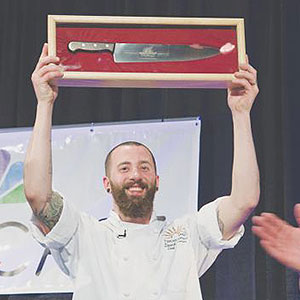
For the challenge, the stage in the Radisson’s Armory Ballroom will be transformed into a simple kitchen with some essential appliances and a cooking station for each chef. The chefs will have 20 minutes to create a dish using a set of secret ingredients revealed by Irvine as well as a main meat selected by the audience. Contestants will also have access to a basic selection of produce and spices that they can add to their dish if they choose.
“Last year, the secret ingredients were Lucky Charms, Coke and pickled pigs’ feet, so it will be interesting to see what we have this year,” Mellitt said. “It’s fun to see the chefs’ creativity and how they all come up with different dishes and prepare a dish with no recipe.”
During the competition, guests will be served a three-course meal designed and prepared by Irvine and his team with the help of a few non-competing local chefs.
The top chef will be chosen by a judges panel consisting of WMUR anchor Erin Fehlau, wine specialist for Martignetti Companies of New Hampshire Craig Pierce and owner of Michael Timothy’s Dining
Group restaurants Michael Buckley. The judges will taste and evaluate each dish based on flavor, texture, presentation and creativity in utilizing the secret ingredients. The winner will be announced at the end of the night and awarded a Steel Chef engraved chef’s knife.
The chefs chosen to compete this year include Jason Seavey, executive chef at Havenwood Heritage Heights in Concord; Tony Bomba, chef at Lago Restaurant in Meredith; Evan Hennessey, chef and co-owner of Stages at One Washington in Dover; and Bryan Leary, executive chef at the Inn at Pleasant Lake in New London.
A total of 14 chefs applied; to qualify, applicants must be active, professional-level chefs currently employed at a New Hampshire establishment. The committee charged with choosing the four chefs conducted a series of phone and in-person interviews, looking for chefs who exhibit a high level of culinary creativity, a vibrant personality and excellent stage presence.
“I know it was very difficult for [the committee] to whittle it down to just four people,” Mellitt said. “There are so many talented chefs in New Hampshire.”
For general updates about the event and profiles of this year’s competing chefs, follow the hashtag #SteelChef on social media.
Vegan Beginning
Vegan Beginning
Workshop Covers Tips, Recipes for Plant-Based Eating
Written By Angie Sykeny (asykeny@hippopress.com)
Images: Courtesy Photo
Local vegan chef Christine Fletcher has set out to redefine veganism and encourage people to view it not as a mere label but as a mentality.
“Sometimes people jump back when they hear ‘vegan,’ but it’s not about eliminating whole sections of the grocery store,” she said. “It’s more of a direction. It’s about having a sense of awareness about where food comes from and how our choices impact the world around us.”
On Friday, March 10, at Ohana Yoga in Contoocook, Fletcher will present an introductory workshop on vegan cuisine, focusing not on the restrictions, but on the possibilities of eating a plant-based diet.
The workshop will include dialogue about the benefits of eating vegan, both for personal health and for the environment; how to choose foods that work in harmony with your body; ways to support local farms and utilize the local produce that’s available this time of year; how to prepare balanced and delicious plant-based meals and how to modify your favorite meals to make them vegan without sacrificing taste or nutrition.
Fletcher said the workshop isn’t geared only toward people committing to veganism, but also toward people looking to incorporate more produce into their diet.
“Not everyone can be totally vegan; for some people it’s not healthy for them,” she said. “But we’ll talk about how to make small changes in that direction and how to reframe a plate so that vegetables are the star of the show and it’s not all dependent on animal products.”
Fletcher will give a cooking demonstration of eight to 10 vegan recipes, such as vegan sushi, nut cheese, raw dessert and winter salads. Many of the recipes will highlight seasonal produce from local farms such as squash, onions and other root vegetables. After the demonstration, participants will have an opportunity to taste the dishes and will be given the recipes to take home.
The workshop will focus on quick and easy recipes that people with any level of cooking experience can make on their own.
“I’m all about shortcuts and prioritizing and practicality when it comes to cooking,” Fletcher said. “I want people to feel excited and empowered about being in the kitchen and being able to prepare the foods that make them feel good. That’s my root cause.”
Vegan Cuisine: An Introduction to Plant-based Seasonal Cooking
When: Friday, March 10, 5:30 to 8 p.m.
Where: Ohana Yoga, 44 Cedar St., Contoocook
Cost: $45
Visit: ohanayoganh.com/classes-workshops-events
No Bake Sweet Potato Pie with Coconut Whipped Cream
An easy, no-bake vegan dessert recipe, courtesy of Christine Fletcher
Crust:
- 1 cup shredded coconut
- 1 cup nuts
- 10 figs/dates
- 2 to 3 tablespoons maple syrup
- 1 tablespoon pumpkin pie spice
Filling:
- 2 large sweet potatoes, baked in skins
- 2 tablespoons coconut oil
- Fat from 1 can coconut milk
- 2 tablespoons pumpkin pie spice
- 1 thumb-sized piece of ginger
- 1 tablespoon flaxseed meal
- ¼ cup maple syrup
For the crust, pulse all ingredients in the food processor until bound. Press into pie pan. Combine filling ingredients in food processor, blend until smooth. Pour into crust and chill in fridge until set.
Coconut Whipped Cream:
- 2 cans of coconut milk, chilled — scoop the fat from the top and save the water for another recipe
- 1 tablespoon vanilla extract
- Maple syrup to taste
Whisk coconut milk until all fat solids are dissolved. Add vanilla and maple syrup to taste. Spread on top of the pie and serve.
Sips From The Heart
Sips From The Heart
Tasting Features Over 100 Wines at Wine Glass Seminar
Written By Angie Sykeny (asykeny@hippopress.com)
Images: Stock Photo
More than 100 wine varieties from vineyards around the world will be available for sipping at Concord Hospital’s Heart of the Grape Wine Tasting Benefit.
The 12th annual tasting takes place Friday, March 3, at the Grappone Conference Center in Concord.
“It seems to be enjoyed by many,” event coordinator Jessica Bailey said. “It’s a great atmosphere where people who are new to wine can get their feet wet, and it’s good for the people who are really into wine.
They always compliment us on the wine selection.”
Upon arriving, guests will be provided with a glass to use for sampling as they make their way around the expo-style tasting.
Wine tables will be lined up around the perimeter of the ballroom, each manned by a distribution rep who will be pouring the samples and answering any questions the guests may have about the wine. At the center of the room, there will be tables with charcuterie, cheese and cracker spreads.

There will not be an option to order wines on the spot, but guests will be given a program with the full list of featured wines so they can make notes of the wines they like, and each wine table will have info cards that make it easy to locate or order that wine at a New Hampshire Liquor & Wine Outlet store.
In addition to the wines and light hors d’oeuvres, the tasting will have tables from several local restaurants, including Granite Restaurant & Bar, The Common Man, O Steaks & Seafood, Granite State Candy Shoppe and Firefly American Bistro & Bar.
“In the past they’ve brought things like mac and cheese and crab cakes,” Bailey said. “It’s usually one of their appetizers or something that’s a staple on their menu that people can easily eat on the go.”
Those looking to get more out of the tasting can opt for the VIP experience, which includes admission to the tasting one hour early, exclusive access to higher-end wines and a complimentary Riedel wine glass to take home.
For an even more VIP experience, guests can purchase tickets for the Grape Expectations Wine Tasting where a rep from Riedel wine glass company will talk about how glassware affects the wine tasting experience and how to choose the best glassware for different kinds of wines. Participants will get to taste wine from various styles of Riedel glasses and take a full set of the glasses home.
“It’s really to help people learn why there are so many types of wine glasses,” Bailey said. “They’ll get to see how, if they drink a wine out of a plastic cup and then drink it from a nice Chardonnay glass, there is a significant difference.”
Proceeds from the tasting will benefit the patients of Concord Hospital’s Breast Care Center.
Weekly Music Review
Weekly Review
Tinariwen & More
Written By Eric Saeger (news@hippopress.com)
Images: Album Artwork
Tinariwen, Elwan (Anti- Records)

This world-rock band is from Mali, a landlocked country in West Africa that’s had a good amount of political turmoil. Owing to the constant string of crises in that country over the decades, bandleader-guitarist Ibrahim Ag Alhabib is always in on-again off-again status for touring, a long story in itself, but regardless of that, he and his crew keep their musical heads held high, finding positivity among the ruins and making raw 1960s-B- movie-blues out of it. Their niche is eloquently and correctly noted as “desert blues,” a label that does nail it; the tunes generally involve Alhabib croaking over a mixture of his rawboned, scratchy electric guitar and the staunch percussive workings of his eight cohorts, most of whom brandish standard rock instruments, with the occasional calabash thrown in for good measure. A bullet description would be “music for bombing around in a cushionless Jeep in the Sahara” — yeah, it’s that cool..
Grade: A+
Eisley, I’m Only Dreaming (Equal Vision Records)

One could get cynical over the relatively minor degree of nepotism that launched this Partridge Family-esque indie-bubblegum group into the lower stratosphere, but it’s a reach. If anything, it might be fair to suspect the DuPree parents of forcing these kids to take on the role of house band at their parents’ part-time rock venue. Right, it’s not this space’s function to question parental motives nor even the record industry’s underbelly for that matter, but in this case I must confess being slightly mystified that the band’s uneventful single “Smarter” ever charted as high as it did. By the same token, at least it wasn’t your typical Avril Lavigne-ish explosion of musical clown-confetti where every bar was trying to be a Broadway show-stopper — it was more like a Ke$ha B-side. This new LP has some fine stuff, beginning with “Always Wrong,” an ambitious cruiser that finds common ground between Echosmith and Natalie Merchant. “Defeatist” is awesome too, a little trip-hop injected into the ’80s and ’90s quirk-chick vibe. The melodies are terrific here, way above most records that stump for the soccer mom vote