

FEATURED HEADLINES
Food: Farm Fresh *
FEATURED FOOD - * COVER STORY *
Farm Fresh
Your Guide to Local Farms, Markets & Farmstands
Written By Hippo Staff (news@hippopress.com)
Images: Stock Photos
Community Supported Agriculture programs provide a weekly allotment of a variety of foods — typically in-season produce, but also meats, eggs and dairy products — that come directly from a local farm. “[CSAs] give … members the freshest, healthiest food they could possibly eat, short of growing it themselves,” said Anthony Graham of the Temple-Wilton Community Farm, which has the longest continuously operating CSA program in the United States.
“You know who your farmer is, and as a member you’re welcome to come and see the animals, to walk around the farm and to know that this farm is doing what it says it’s doing.” Graham said CSA members are supporting local farmers by giving them a steady financial base — and using a CSA is cost-effective for members, too.
“If you’re really using your farm [for its CSA], you’re getting a deal,” he said.

“You go down to [the supermarket] and buy only organic, and walk out with two bags, just see what your bill looks like. It’s going to be over $100.” For most farms that have spring season CSAs, sessions have already started, but many will take new members and prorate the cost for the remaining weeks. Sign-ups for summer sessions are currently underway at most farms.
“[CSAs] have definitely grown as a phenomenon over the last 20 years,” said Gail McWilliam Jellie, director of agricultural development for the New Hampshire Department of Agriculture, Markets & Food. Part of that growth has meant offering more products. While a majority of CSAs started with produce only, she said, “many farms that have had the resources to do so have [started to offer] more diverse products.”
How CSAs Work
In most cases, a CSA customer pays a farm a certain amount up front to receive products during that farm’s growing season. Farms typically sell shares of their product in durations that can last anywhere from six to 20 or more weeks, according to
Jill Hall, director of programs at Seacoast Eat Local. Most farms have CSA growing seasons in the spring and summer; some have additional seasons in the winter, and some have them year-round.
“Generally speaking, the pickup options for CSAs have to do with the farm’s infrastructure,” Hall said.
“They might have boxed or pickup shares, but they may also have farm credit programs or pickup options at farm stands. … Every farm is an individual business with its own business plan, so they’ll model their program around what’s going to work for their business.”
What you get for each CSA varies by farm and which program you choose, Hall said. With some you’ll get a pre-packed box with the same foods each week. With others, you’ll get different items in a pre-packed box that is dependent on the growing season. Charmingfare Farm in Candia, for example, currently has a variety of summer shares available for sign-ups that begin the week of May 24 and continue through early October. As part of its vegetable share ($625 for 20 weeks) you’ll get a several different fruits and vegetables depending on the time of the growing season, from kale, lettuce and other herbs in the early summer months to beets, broccoli, potatoes and more in the late summer to early fall.
“We try to be in tune with our shareholders,” said Linda Ellis of Charmingfare Farm. “At the end of the year, we might ask them if there is anything specific they would like us to grow more of. People are looking for value in CSAs and they are also looking for the value of eating local, so we want to make sure they are getting their money’s worth.”
Other programs allow you to physically visit the farm and pick up whatever you want that they are offering, or to go to a designated pick-up location to fill your own box. And then there’s the farm credit program, which is essentially like a gift card you get for the farm that has a balance on it, and you use it to buy whatever you want at the farm, at a small discount (say, 5 percent), until the balance runs out. Non-veggie CSAs programs vary as well. Meat CSAs often offer shares by the pound either per week or per month. For eggs, a dozen at a time is common, either per week or per month. And for milk, it can be by the pint, quart or gallon
How to Choose a CSA
Different product options for CSA shares — including those that include vegetables only, meat only or a variety of food groups — allow customers to address their specific dietary needs, according to Amy Haller of Brookford Farm in Canterbury. Brookford has several different signup options, including a “whole-diet base share” with vegetables, dairy, beef, pork and eggs. But shares of just beef or pork, or just vegetables, are also available.
“Most people, when they are choosing a CSA, they try to steer things toward different lifestyles, because there is a wide variety of eaters out there,” Haller said. “It depends on what their diet is. … You’re getting a good amount of meat [with the meat share], so meat certainly has to be a large part of your diet.”
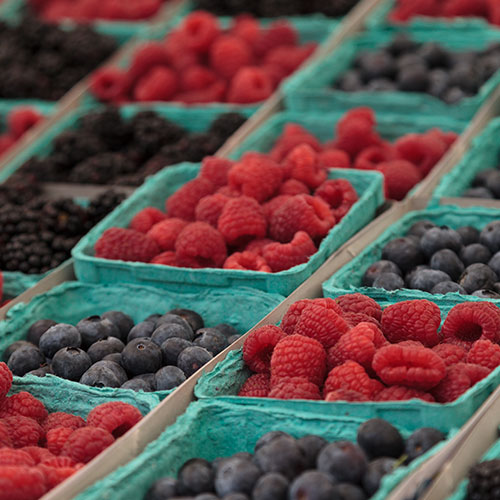
Charmingfare Farm has CSA shares for livestock, pasture eggs and vegetables. Ellis said vegetable shares are typically the most common for first-time customers, but after experiencing how that works, they might move on to buying a specific kind of meat per pound.
“It really is about what the families’ structure is in their own homes on how they purchase the foods they consume,” Ellis said.
Why you want to sign up for a CSA in the first place might also help you determine which one to go with, according to Hall.
“That could be anything from a motivated philosophical ideology about how their food is grown, or it could be more about trying to help small businesses, or there could be a convenience factor,” she said. “I think for a lot of people, the location of a farm with a CSA [relative] to their home is the most primary, but most people do have the sense that they want to know and understand where their food is grown, and especially if they have young children, they might use a CSA to help educate them on where their food comes from.”
Farms that offer different pickup locations can be good options for people who don’t live close by. Brookford Farm, for example, has more than a dozen locations across the state where you can register to pick up its CSA products, from Nashua to as far north as Plymouth. The farm also offers several share options for each of its three CSA seasons, and different payment options.
“The unique thing about these CSA programs is that while you’ll find that most of them have pay-up-front structures, ours have different types of payment plans available,” Haller said. “So you can choose to either pay in full up front or make monthly payments. … Some people might make a down payment if the start of the season is a few months out and then pay another portion halfway through, so you can split it up.”
If you’re looking for variety, some farms belong to cooperative CSA programs. For example, six Concord-area farms participate in Local Harvest CSA through a variety of vegetable shares and some livestock shares during the spring, summer and fall. A membership with Local Harvest, then, would yield food from any of these farms: Kearsarge Gore Farm in Warner, Blue Ox Farm in Enfield, Good Earth Farm in Weare, Vegetable Ranch in Warner, Middle Branch Farm in New Boston and Stoneridge Farm in Bradford.
CSA Guide
Here are some of southern New Hampshire’s farms that are offering CSA programs for the spring and summer. If you know of any other local CSAs, email us at food@hippopress.com and we may feature it in an upcoming issue.
Barrett Hill Farm (450 Fitchburg Road, Mason, 878-4022, barretthillfarm.com) offers a 15-week CSA program with four different package options that include a variety of fruits and vegetables. Prices start at $250 for the season, which runs from mid-June through the fall.
Benedikt Dairy (97 Shirley Hill Road, Goffstown, 801-6839, benediktdairy.com) has a rolling 20-week CSA membership with sign-ups available at any time of the year. Products include raw milk, whipped cream, aged cheese, yogurt and soy-free eggs. Prices range from $100 to $200 for 20 weeks, depending on the product and amounts. Two pickup locations are at Normanton Farm (226 Charles Bancroft Highway, Litchfield) and Tuckaway Farm (59 Randall Road, Lee).
Brasen Hill Farm (71 Warren Road, Barrington, 868-2001, brasenhillfarm.com) has both boxed and market CSA shares for vegetables that run from early June through late October. Three different shares are available, and the cost ranges from $225 to $650 for the season, depending on the size. Pickups are available at the farm, at Umami (Route 4, Northwood), and at Calef’s Country Store (606 Route 9, Barrington) at varying dates and times.
Brookford Farm (250 West Road, Canterbury, 742-4084, brookfordfarm.com) has several seasonal CSAs throughout the year. Spring CSA programs run for 12 weeks, from March 13 through June 4. The summer CSA program runs for 20 weeks, from June 5 through Oct. 22. Several different shares are available for the spring program, including a vegetable share for $300, a meat-based share for $437 and a whole-diet base share for $987. Prices are prorated to reflect the number of remaining weeks in the session. Pickup locations are in Amherst, Canterbury, Concord, Deerfield, Dover, Epsom, Exeter, Hampstead, Hollis, Manchester, Nashua and Salem.
Charmingfare Farm (774 High St., Candia, 483-5623, visitthefarm.com) offers a variety of CSA share programs, including for vegetables, beef, pork, lamb, goat, turkey, chicken and eggs. Programs run from late May through early October, depending on the type of share. Vegetable shares are $650 and last for 20 weeks. Livestock shares are by the pound and vary in cost. Egg shares are $110 for 20 weeks, with a dozen eggs per week. Pickups are at the farm on Wednesdays, from 4 to 7 p.m.
Country Dreams Farm (855 Brookline Road, Mason, 966-7427, countrydreamsfarmnh.com) is offering a 14-week CSA program that will run from late June through mid-October this season. Three shares of fresh vegetables are available, including a half share for $250, a small share for $450 and a large share for $650. Pickup locations start in June at the Nashua Farmer’s Market (65 Main St.) on Sundays from 10 a.m. to 2 p.m. and Wednesdays from 4 to 7 p.m.; at the Manchester Community Market (48 Concord St.) on Thursdays from 3 to 6:30p.m.; and at the Milford Farmer’s Market (19 Elm St.) on Saturdays from 10 a.m. to 1 p.m.
Dirty Girl CSA (22 Buxton School Road, Weare, 326-8729, dirtygirlcsa.com) offers 10- and 15-week shares, both beginning in June. Products include eggs and 35 types of vegetables. Prices range from $200 to $600, depending on the size of the share. Pickups are at the Nashua Farmer’s Market (65 Main St.) on Wednesdays from 3:30 to 7 p.m. and on Sundays from 10 a.m. to 2 p.m.
Dog Rose Farm (41 Birch Hill Road, Lee, 207-751-1302, dogrosefarm.com) has an 18-week CSA share program for heirloom and common variety organic vegetables, which runs from June through October. Three payment options are available for the season; prices range from $275 to $550, depending on the size and type of share. Pickups are available at the farm on Tuesdays from 2 to 6:30 p.m. beginning June 20.
Fresh Start Farms (New American Farmers Cooperative, 434 Lake Ave., second floor, Manchester, 296-0443, freshstartfarmsnh.org) offers a 12-week summer CSA membership that begins in June. Eighteen-week full-season shares and six-week fall shares are also available. Products include a variety of vegetables grown by members of the New American Farmers Cooperative. The cost ranges from $130 to $650, depending on the size and type of share. Pickup locations are in Bedford, Derry, Londonderry, Manchester, Merrimack, Newmarket and Salem.
Holland Farm (269 Osgood Road, Milford, 673-0667, hollandfarmcsa.com) offers three different CSA memberships, ranging in cost from $225 to $540, depending on the size of the share. A variety of vegetables, eggs, raw goat milk, goat cheese and more are available. Members can come once a week to the farm to pick up their shares, June 20 through mid-September. Pickup hours are Tuesday through Friday from 10 a.m. to 6 p.m., and Saturday from 10 a.m. to 5 p.m.
Lewis Farm, Greenhouse & Compost (192 Silk Farm Road, Concord, 228- 6230, lewisfarmconcord.com) has a 10-week spring CSA share program for vegetables that runs from mid-April through June, and a summer program from late June through September. Spring shares are $250 for the whole session ($25/week) and pickups are available at the farm on Tuesdays from 11 a.m. to 7 p.m. Information for the summer CSA programs TBA.
Local Harvest CSA (274 Pleasant St., Concord, 731-5955, localharvestnh.com) is a CSA cooperative program with products made from Kearsarge Gore Farm (173 Gore Road, Warner), Stoneridge Farm (330 Cressy Road, Bradford), Middle Branch Farm (280 W. Colburn Road, New Boston), Vegetable Ranch (443 Kearsarge Mountain Road, Warner), Blue Ox Farm (842 Shaker Hill Road, Enfield) and Good Earth Farm (52 Poor Farm Road, Weare). Spring vegetable shares run from May 24 through June 7, and summer shares from June 14 through Oct. 12. The cost ranges from $85 to $270, depending on the size of the share. Pickups are at Unitarian Universalist Church (274 Pleasant St., Concord), Zin-Zen Yoga (126 S. River Road, Bedford), Cole Gardens (430 Loudon Road, Concord), Bert’s Better Beers (1100 Hooksett Road, Hooksett) and The Clean Take (55 N. Main St., Concord).
McLeod Bros. Orchards (749 N. River Road, Milford, 673-3544, mcleodorchards.com) offers a 16-week CSA share program for vegetables that begins in June. An eight-week program for apples only is also available. The cost is $400 for the full season and $200 for the apple season shares. Pickups are available at the farm stand on Thursdays from 3 to 6 p.m.
Mildred’s Drumlin Farm (314 Lee Hook Road, Lee, 292-5949, mildredsdrumlinfarm.com) has an 18-week CSA share season that runs from early June through early October. Members receive eight to 10 items in a boxed share each week, including a variety of vegetables, strawberries, blueberries, herbs and more. Single shares are $360 and double shares are $670. Pickups are available on Wednesdays after 3 p.m.
Miles Smith Farm (56 Whitehouse Road, Loudon, 783-5159, milessmithfarm.com) offers a variety of shares, including grassfed beef, eggs, dairy, lamb, pasteurized pork and more. Most sessions run for 13 weeks but a few of them can be at custom lengths. The cost ranges from $84 to $215, depending on the type and length of each share. Pickups are available at the farm either weekly or monthly depending on the share.

Oasis Springs Farm (79 W. Groton Road, Nashua, 930- 1294, oasisspringsfarm.com) has a 12-week CSA spring share that began March 13 and continues through May 19; it includes lettuce, greens, herbs and more. The cost is $180 for the 12 weeks, or $15 per weekly share, and pickups are available on Mondays from 7 a.m. to 5:30 p.m. at Great Harvest Bread (4 Sunapee St., Nashua) and Wednesdays from 4 to 6 p.m. at the YMCA of Greater Nashua (24 Stadium Drive, Nashua)
Red Manse Farm (5 Pittsfield Road, Loudon, 435-9943, redmansefarm.com) offers a 17-week CSA share program of fresh produce that runs from June 6 through Sept. 28. The cost is $490 and pickups are available on Tuesdays, from 4:30 to 6 p.m. at Log Cabin Tack (270 Londonderry Turnpike, Hooksett) Thursdays from 4 to 6 p.m. at Sunflower Natural Foods (390 S. Main St., No. 1, Laconia).
Stout Oak Farm (83 Middle Road, Brentwood, stoutoakfarm@gmail.com, stoutoakfarm.com) is offering a variety of CSA share options for 2017, including a vegetable share, a fresh greens box, and a farm store credit program. The cost of the weekly vegetable share is $550 for 18 weeks, beginning in early June; pickup days are Tuesday from 2 to 6 p.m. and Saturday from 9 a.m. to noon. The cost of the fresh greens box is $72 for four weeks or $270 for 16 weeks, beginning June 2; pickup days are Friday from 3 to 6 p.m. and Saturday from 9 a.m. to noon. The costs of the farm store credit programs range from $100 to $500 per season, depending on the type.
Temple-Wilton Community Farm (195 Isaac Frye Highway, Wilton, 654-6082, twcfarm.com) has the longest continuously operated CSA program in the country and was one of the first to implement direct-to-consumer options for products. The cost varies each season, which runs from June 1 to May 31 of the following year, and is determined by the farm’s budget and operating expenses. The average is about $125 per month, which covers all of the produce plus up to four gallons of
milk. There is currently a waiting list to sign up for the next CSA season.
Terra Organics (198 Tyler Road, Contoocook, 491-4039, squareup.com/market/terraorganicsnh) offers a six-week spring greens CSA share program that runs from early May through June. The boxed share includes lettuce, spinach, turnips, mustards and more and costs $150. Pickups are available on varying days in Henniker, Concord and Contoocook. See website for more details.
Vernon Family Farm (301 Piscassic Road, Newfields, 340-4321, vernonfamilyfarm.com) has a unique CSA share program that allows you to choose the amount you want to invest, what you want to buy and when you want to buy it. Each share lasts for six months after the date you sign up and there is no carryover of funds. Products available as part of the shares include chicken, vegetables, dried flowers, and oyster and white cap mushrooms.
Willoughby Farm of Kensington (16 Shaws Hill Road, Kensington, 772-5538, willoughbyfarm.com) offers an 18-week CSA share of fresh produce for $400, which runs from June through October. Delivery information TBA.
Wilson Farm (144 Charles Bancroft Highway, Litchfield, 882-5551, wilsonfarm.com) has vegetable, fish and cut-flower CSA shares available for signups now, which begin in either June or July depending on the type. A small produce share runs 18 weeks from June 6 to Oct. 5 and is $450. A large produce share runs the same amount of time and is $675. A fish share runs from June 13 to Sept. 21 and is $260. A flower share runs from July 11 to Sept. 14 and is $100. Pickups are available at either the farm stand in Litchfield or the farm store in Lexington, Mass.
Work Song Farm (124 Beech Hill Road, Hopkinton, 219-0297, worksongfarm.com) offers a 20-week CSA share program that runs from June 8 through Oct. 22. Full shares of $600 and half shares of $360 of fresh produce are available. Customers get lettuce, cucumbers and other staples, and have opportunities to pick their own product for their share, such as a bag of spinach versus a bag of kale. Pickups are Wednesdays from 4 to 7 p.m. at the farm, or Saturdays at the farm or at the Contoocook Farmer’s Market (896 Main St.).
News: Pioneering Heart Procedure
FEATURED NEWS
Pioneering Heart Procedure
CMC 1st in the World to Implant Heart Device in New Population of Patients
Written By Ryan Lessard (news@hippopress.com)
Images: Stock Photo
In February, Catholic Medical Center in Manchester became the first hospital in the world to implant a stroke-preventing heart implant in a new population of patients.
CMC spokesperson Lauren Collins-Cline said the device, called a Watchman, was launched in 2015 and invented to serve people diagnosed with non-valvular atrial fibrillation (AFib) who can’t tolerate blood thinners like coumadin. Essentially, it blocks off a pocket in the heart called the left atrial appendage.
“It looks a little bit like a mesh balloon,” Collins-Cline said.
Non-valvular AFib is a neurological disorder that causes the valve to that pocket to open and close irregularly. That leads to blood pooling in the atrial appendage, which leads to clotting, which leads to a stroke if a blood clot comes loose.
“Traditionally [with] these patients, in order to help prevent stroke, we … still recommend anticoagulants,” said Dr. Jamie Kim at CMC.
The initial clinical study of this device, developed by Boston Scientific, required blood thinners be temporarily prescribed after the surgery, so the first population of patients who could use the device were those who could tolerate using those drugs for a short period of time.

But that left out the group that could potentially benefit the most from the Watchman: people who, due to various physiological issues, can’t risk using blood thinners at all.
The reason for that, Kim said, was an abundance of caution. When a foreign body is implanted into an organ, blood has a tendency to clot on the device, at least for the first 45 days, before a layer of human tissue grows around it. So, without blood thinners, the Watchman runs the risk, in the early days, of causing or accelerating the very problem it’s meant to prevent: strokes.
In the current study, patients are given a less powerful regimen of drugs that are meant to help prevent clotting.
“We know with stents, that risk is mitigated by aspirin and Plavix,” Kim said.
Patients in the new study will use those drugs instead of coumadin for the first three months after surgery, and neurologists will be added to an already diverse team of specialists involved in the procedure to monitor for strokes or minor strokes.
Kim said there was a small study in Europe looking at how the device works without blood thinners and researchers saw positive results. This study involves 100 centers in several countries. CMC is a leader in the project, helping to train other centers in the procedure. Kim performed the first procedure on a female patient in February.
Since then, CMC has stayed ahead of the pack in procedures performed to date.
Kim says one of the reasons CMC was able to do this is the diverse team required, which includes an implanting physician, imaging specialist, anesthesiologist and back-up cardiac surgeon.
“Not every center is equipped with all those different disciplines to provide this service,” Kim said.
The CMC team has come up with best practices to streamline the process and can perform up to four or five of these procedures in a single day. Most centers can only do two or three in a day.
Ultimately, researchers hope to have at least 888 patients enrolled in the clinical study, which includes a control group of people who will not receive the device. As part of a push to get more female patients involved, since they’re traditionally underrepresented in cardiac device trials, the study stipulated 35 percent of the subjects be female.
Arts: Bringing Musicals Back
FEATURED ARTS
Bringing Musicals Back
Central Students Go Big with Fame
Written By Kelly Sennott (ksennott@hippopress.com)
Images: Stock Photo
This weekend, Manchester High School Central presents Fame — its biggest show in years.
The musical, produced by the Maskers Drama Club and Central Community Players, hits the stage Friday, March 24, and Saturday, March 25. It’s based on the 1980 film of the same name and centers on students from New York City’s High School of Performing Arts, who all dream of making it big someday.
Director Dan Pelletier said they chose Fame because of its accessibility (it didn’t require intensive props or sets), its ability to accommodate a large cast and, of course, its relatability to high school students. Who can speak better on the issues and pressures teenagers face than people living it?
“We thought the play offered a variety of different types of roles and that it would allow us to give students the best chance to succeed,” Pelletier said via phone, just over a week before showtime.
Even so, the production has required a great deal of work for everyone involved. Many cast members, even the eldest, have very little musical theater experience. Some have performed in small middle school shows or with local youth companies, but for most, it’s all new.

Central used to have two student drama clubs. Maskers traditionally produced student-run plays, while the Central Community Players tackled musicals with the help of adult advisors. But about a decade ago, the latter group disbanded, and musicals disappeared at Central until 2015, when the school hired Pelletier to direct Is There Life After High School? followed by Godspell in 2016.
For dance- and music-heavy Fame, rehearsals began in December — a bit early for a late March production, but Pelletier wanted to give kids time to learn the lines, music and choreography, and the medium itself.
“We’re basically re-introducing musical theater to the school, and I wanted to move at a pace that allowed us to give them a foundation for acting and dance and musical theater,” Pelletier said.
The kids aren’t complaining; they’re happy to have the extra time.
“For the majority of the people here, this is their first show and their first time dancing. This is a new thing for a lot of us,” said Lydon Philbrook, who plays Schlomo Metzenbaum, a violinist.
Every day from 3 to 5 p.m., cast and crew members can be found practicing in the auditorium or hanging posters around the school. Between rehearsals, they’re making costumes with the help of parents who lived in the ’80s and a Pinterest board loaded with ideas. (Emma Sarette, who plays dancer and singer Mabel Washington, said she was altering her mom’s maroon leotard from the ’80s.)
Students, parents and grandparents built the set the weekend before the musical’s premiere, and local companies like the Nashua Actorsingers and Seacoast Repertory Theatre lent costumes and equipment.
The messages and themes in Fame hit home for many of the actors involved.
“I think the things I connect with most are the relationships and the pressure. The pressure is unbelievable for these students. And all of us have experienced pressure, whether it’s school or family or something else,” said Dustin Blake, who plays Joe Vegas, during a recent rehearsal.
And then there’s the uncertainty of what comes next, which hits harder for the upperclassmen, who are applying to colleges and deciding what they want to do and how they’re going to get there.
Pelletier thinks Fame presents the most difficult acting challenge for Central students thus far. The stories may be relatable, but the musical spans years, and so actors need to show growth in their characters.
“We get to see some of these characters over the course of four years,” Pelletier said. “The biggest difficulty with the show is figuring out how we can show they’re not the same at the beginning of the play as they are at the end of the play. For some of the younger members of the cast who might be freshmen or sophomores, they might not have had the opportunity yet to experience that growth.”
Music: A Musical Journey
FEATURED MUSIC
A Musical Journey
Irish Experience Explored in Songs of Migration
Written By Michael Witthaus (music@hippopress.com)
Images: Courtesy Photo
Jordan Tirrell-Wysocki has become New Hampshire’s go-to fiddle player, from his early days with rootsy Jamantics to session work with a diverse array of acts like pop rockers Pat & the Hats, ethereal chanteuse Anna Madsen and protest collective Extremists for Peace.
His musical comfort zone, though, has long been Celtic music. He made his first album of traditional music at age 14, and his most recent collection of Irish songs is 2015’s Return to the Castle. The fiddler hosts a weekly Irish Night at Stone Church with Jim Prendergast and is a frequent guest member of Seacoast Celtic stalwarts Great Bay Sailor. Over the recent St. Patrick’s Day, Tirrell-Wysocki traveled the length of the state playing sets.
Though he wasn’t born into it, the music of Ireland has long called to him.
“There is a power and an emotion to it, both on the sad and joyful pieces,” Tirrell-Wysocki said in a recent phone interview. “From a really early age, that’s the music that was calling to me.”
In February, Tirrell-Wysocki joined the New Hampshire Humanities Council to present Songs of Emigration, an hour long program that explores the role of music in the Irish immigrant experience. The recurring presentation stops March 26 at Manchester’s Millyard Museum. On both fiddle and guitar, he plays songs and puts them in historical context, describing the emotions behind them — why the new settlers left, and what greeted them upon arrival.
Tirrell-Wysocki feels the time is right for such an endeavor.
“The dialog we’re having now in our country is about immigration,” he said. “A look back at history can tell us about the experience of different ethnic groups coming here. In this case, we’re exploring the Irish story and all the struggles they faced. What better way to do that than through music, which is the way the Irish have told their stories and preserved their culture for generations?”

It’s not just American emigration; one song, for example, deals with a native of County Clare now working in a London factory and missing his home. Another describes a man drafted to fight in the Civil War (on the Union side) immediately upon arriving in the United States.
Though it does span a century of migration from Ireland, the program whets the appetite for more.
“I selected a handful of my favorite immigration songs — a very small slice,” Tirrell-Wysocki said. “I can’t possibly hope to give a comprehensive history or examples of all the songs out there, because it makes up such a huge part of the irish music repertoire.”
The idea is to spark a dialogue that lasts beyond the presentation,
“It’s not a concert,” he said. “This is a chance to think and talk a little bit more about the music and maybe learn a little bit more about where these songs are coming from and what they might have meant to the people that were singing them originally.”
Songs of Emigration is part of the New Hampshire Humanities catalog, and Tirrell-Wysocki hopes to travel all over the state in the coming months with it. So far, he’s done it twice, in New Boston and Atkinson; one day after his Manchester talk, he’ll take the presentation to Bath.
“I have one in May and several more coming up in the fall,” he said. “I’m excited to see where it goes from here. … It’s a huge honor to be in the company of the great speakers and performers who are also on the roster.”
Work with his trio continues, with more outdoor concerts scheduled as the weather warms up. In the summer, a residency at an Irish pub in Bar Harbor, Maine, will enter its fifth year.
“Somehow all the little pieces come together in just the right way,” he said. “I’ve been very lucky, and it’s keeping the schedule pretty full.”
On the family front, Tirrell-Wysocki suspects he might be passing down the musical gene as he watches his 18-month-old daughter.
“My plan is not to push it or force it but I will definitely encourage her if she shows an inclination, and she seems to,” he said. “She comes to a lot of my concerts and loves to dance and sing and make up songs. So I’m excited to see where that goes.”
Film: Beauty & The Beast
FEATURED FILM
Film Review
Beauty & The Beast (PG)
Written By Amy Diaz (adiaz@hippopress.com)
Images: Movie Screenshot
Emma Watson’s Belle and Dan Stevens’ Beast have their “tale as old as time” romance in Beauty and the Beast, another in the continuing live-action-ication of the Disney cartoons.
Belle is a bookworm with a desire to see the world but the small town she lives in with her father, Maurice (Kevin Kline), doesn’t appreciate her nerdiness. Nor does local jock-bro Gaston (Luke Evans) seem to understand that her lack of interest in becoming his wife is not going to change.
But Maurice understands his daughter’s urges for a life with a wider scope. When he is imprisoned for stealing a rose from a terrible Beast in a hidden castle, Maurice urges Belle to leave him and live her life. Instead, she promises her father she will escape and switches places with him.
She quickly learns that this castle, long hidden from and forgotten by the world, isn’t just the ruin it appears. It is enchanted and populated by a host of servants turned animate inanimate objects.
A talking teacup, Chip (voice of Nathan Mack), is the young son of the talking teapot, Mrs. Potts (voice of Emma Thompson). A mechanical clock, Cogsworth (voice of Ian McKellan), runs the house, that is when Lumière (voice of Ewan McGregor), the candlestick, isn’t putting in place his own schemes, such as the one to get Belle out of the dungeon and into a fancy guest bedroom. There, he and his lady love, the feather duster Plumette (voice of Gugu Mbatha-Raw); an opera singer turned wardrobe, Lady Garderobe (Audra McDonald), and a host of other household goods give Belle the royal treatment. The horned and hairy Beast, after all, was once a human prince who was turned into a not-always-convincing I’m guessing partially CGI beast because he was, essentially, a jerk and an enchantress (Hattie Morahan) cursed him and his castle to teach him about the evils of superficiality.
Now the Beast and his staff of home goods hope that Belle will be the one to break the spell (the Beast must learn to love and be loved in return) and everybody can go back to their human lives.
Naturally, Belle and the Beast start out at odds, with the Beast unwilling to be kind to the woman his staff-objects believe is his last chance to break the curse and Belle attempting to escape. But after a moment of mutual aid, Belle and the Beast start to form a friendship and, with the urging of Lumière and company, possibly something more. Will reciprocal love bloom before the last petal falls off the enchanted rose that serves as the Beast’s True Love countdown clock?

“Be Our Guest” and “Something There” were, I thought, the best of the movie’s musical moments, both songs that heavily feature the household staff. Generally speaking, the lives and loves of the candlestick, feather duster, teapot, etc., were far more interesting to me than the central love story. They have friendships, romances, obligations and a common goal of beating a curse. Whenever Lumière opines about his desire to be with Plumette or Mrs. Potts worries about her very breakable child who isn’t getting the chance to grow up, the movie feels full of genuine emotion. The special effects here didn’t wow me — this isn’t The Jungle Book — but the object-people have a liveliness to them and a warmth that makes them enjoyable to watch.
The liveliness of these CGI characters is greater than the humans (and the human-digital-something hybrid that is the Beast). Which isn’t to say that Watson and Stevens aren’t fine, they are. Fine. Acceptable. But their characters are oddly underdrawn. We learn almost nothing about the Beast’s hopes and dreams other than his hope to not always be a beast. After early scenes that show us Belle inventing a washing machine and teaching a child to read, we don’t really get to see her doing things — say, inventing ways for the clock to butler better or researching loopholes for curse-breaking.
She and the Beast fall in love because the story needs them to fall in love, but we don’t really see what inspires that other than the staff desperately pushing them together.
As not-quite-there as Belle, the Beast and their coupledom felt, Gaston felt all wrong. I get why this faithful remake of a beloved musical couldn’t dump a character with his own song, but he is unnecessary and adds an unneeded layer of darkness to the movie. Gaston is not the fun, glam or snarky villain that Disney often employs to balance the earnestness of its leads.
Whatever he was like as a cartoon, in flesh and blood Gaston just comes off as menacing. I feel like Josh Gad’s LeFou, Gaston’s sidekick, is the movie’s acknowledgment of this; he gets the funny lines and the knowing looks and is the only thing keeping the Gaston scenes from Lifetime stalker movie territory. If you need a whole character to dampen the creep-factor of another guy, maybe just don’t have that guy. A better “villain” would have been prejudice itself. The Beast is being punished for basing people’s worth on their physical appearance and now he’s treated like a Beast because of his appearance. Setting up prejudice as a villain would also have the benefit of tying in with Belle’s desire to break free from a socially rigid environment.
In short, humans, live-action humans, are what I didn’t so much like about this live-action Beauty and the Beast. The live action looks good enough, but I feel like it stripped some of the fairy-tale-ness out of this story. Everything with the objects feels earned in a way the human emotions do not and the charm of their characters might be enough to save the film for you, particularly if nostalgia makes you predisposed to love it. If not, the lack of a really winning love story at the movie’s center might be too much for even the world’s most charming candlestick to overcome.
Grade: B-
Pop: Granite State of Mind
FEATURED POP
Granite State of Mind
Made in NH Expo Returns for 22nd Year
Written By Matt Ingersol (listings@hippopress.com)
Images: Courtesy Photo
Anything you can think of can be found at the annual Made in NH Try it & Buy it Expo if it comes from somewhere in the Granite State, from food and drinks to paintings by local artists and books by local authors.
The 22nd annual event is happening at the Expo Center of the Radisson Hotel in Manchester over three days, on Friday, March 24, from 1 to 8 p.m., on Saturday, March 25, from 10 a.m. to 8 p.m., and on Sunday, March 26, from 10 a.m. to 4 p.m.
“Our mission when we started the expo was to celebrate all New Hampshire businesses, from the tiniest micro-businesses in the state to the much larger,” said Heidi Copeland, publisher of Business NH Magazine, which organizes the event each year. “So we look at this as an opportunity to showcase all of the things that are manufactured here in New Hampshire in one place.”

About 140 local exhibitors are expected to attend all three days of the expo, and visitors can expect a wide variety, Copeland said. All exhibitors must either make a product or provide a service in New Hampshire.
“What’s unique about the expo is the ‘Try it and Buy it’ aspect of it,” she said. “People can bring their appetite and pick up food along the way.”
But you’ll find more than just food and drinks over the course of the three days of the expo. WMUR News 9 will be bringing a green screen, for example, for kids and adults to learn about how television news is produced. Local painters and authors will also be there to showcase their paintings and books, like K.M. Doherty of Dover and Richard L. Hatin of Hooksett.
Copeland said other exhibitors appearing at this year’s expo include the Mill Fudge Factory in Bristol, the Coca-Cola Bottling Co. of Northern New England in Londonderry, Canobie Lake Park in Salem, and dozens of others that include restaurants, breweries, bakeries, private medical practices, pet stores, jewelry stores and much more.
New to this year’s expo will be a Libation Station featuring several local wineries, including Fulchino Vineyard in Hollis, Hobbs Tavern & Brewing Co. in West Ossipee, Hermit Woods Winery in Meredith, Summit Winery in Westmoreland, Appolo Vineyards in Derry and Moonlight Meadery in Londonderry.
Live entertainment is also planned during all three days of the expo.
“We’ll have Irish step dancers, we’ll have a jazz singer and we’ll have a magician come in and do some magic shows for the kids,” Copeland said.
She added that the list of vendors changes every year with new exhibitors.
“We usually have a turnover rate [for vendors] of about 35 percent,” she said. “We do a lot of promotion and reaching out to different organizations. … Sometimes people will come to the expo and just check it out for the first year and then sign up as an exhibitor for the second year. … It’s kind of a two-pronged thing in that we want to provide great entertainment to the public while also introducing them to a business in the state they may not know about.”
MORE HEADLINES
Identifying Animal Disease
Identifying Animal Disease
State Vet Lab Takes Big Leap Forward with New Equipment
Written By Ryan Lessard (news@hippopress.com)
Images: Courtesy Photo
A new state-of-the-art device acquired by the state Veterinary Diagnostic Lab is helping to identify diseases in animals within hours instead of days — which means a quicker response to prevent a potential outbreak.
The Matrix Assisted Laser Desorption Ionization Time of Flight Spectrometer is now being used by the lab for regular disease surveillance of livestock, which is a critical way to prevent public health outbreaks, since the majority of infectious diseases in humans possess the ability to jump from animals to humans, according to lab Managing Director Robert Gibson.
While most examples of these animal-hopping diseases are viruses (think bird flu, swine flu), some high profile bacteria such as salmonella, E. coli and listeria can be caught early by the lab’s testing equipment, preventing potential foodborne illnesses.
The device is able to scan for bacterial and fungal organisms, but not viruses.
Gibson said they’ve used the equipment so far as part of their routine testing at dairy farms.
“Cows can get mastitis [inflammation of the udder] and it’s important to be able to identify the organisms that cause the infection … so they can treat the cow or get the cow out of the milking plant,” Gibson said.
Using the traditional method of identifying organisms, a lab worker had to first grow a microbial specimen, which takes about 18 hours, then spend the next several days mixing the sample with various compounds to see how it would react.
“You would be doing a battery of tests to see how that organism responds and based on those physiological responses you would use that to identify the organism, whether it be E. coli or salmonella, for example,” Gibson said. “In the old reactions, you’re looking for color changes. … You’re looking for visible reactions, which can sometimes also be subjective … and difficult to read.”
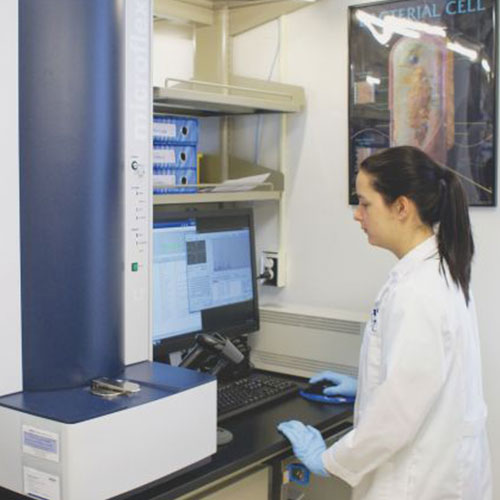
Now, the length of time it takes to identify a microorganism is just the 18 hours it takes to grow the sample.
Once it’s ready, a lab worker inserts the sample into the device, and it produces an immediate identification with a certainty score.
It does this by measuring the microscopic weight and movements of the proteins and comparing these to known characteristics in a microbiological database.
“That creates this profile. It’s kind of like a unique fingerprint,” Gibson said.
The new system is so efficient, Gibson said, that the lab can perform significantly more diagnostic tests each year now. Meanwhile, the cost of running the lab is about the same since the upfront cost and maintenance cost of the device balances out the savings in labor and other materials that are no longer needed.
Most of the $200,000 instrument was paid for by the New Hampshire Agricultural Experimentation Station. The lab also received a donation of $50,000 from a private donor.
Getting Sappy
Getting Sappy
Subheadline
Written By Angie Sykeny (asykeny@hippopress.com)
Images: Courtesy Photo
You can watch maple syrup being made and try maple treats like sugar-on-snow during the 21st annual New Hampshire Maple Weekend, happening Saturday, March 25, and Sunday, March 26. Nearly 100 sugar houses all over the state will be open to the public and offering tours, demonstrations, tastings, family activities and more.
Jim Fadden, president of the New Hampshire Maple Producers Association, said that Maple Weekend provides a unique opportunity to visit sugar houses, which often have irregular hours based on the weather.
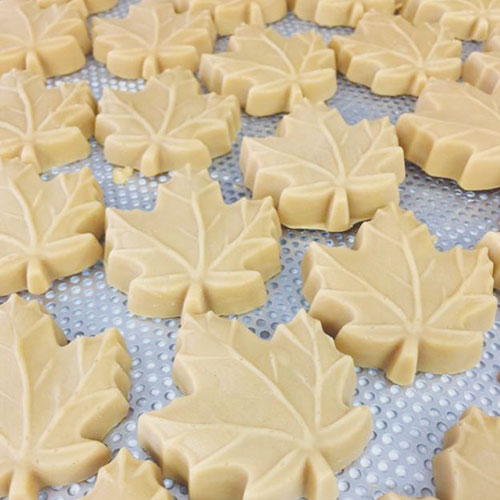
“Weather is very important to the production of maple syrup, so it’s difficult for them to be open for tours and things on demand,” he said. “However, Maple Weekend means that they’re going to be open, for sure. If the weather doesn’t work, we’ll stage the boiling demonstration. You won’t be disappointed if you drive to one.”
Most sugar houses will offer tours and demonstrations of various stages of the maple production process, as well as samples of their maple syrup and other maple products like maple candies, maple coffees and more. Many will also have prepared breakfast, lunch and snack items like homemade donuts, maple buns and biscuits, maple hot dogs, maple cotton candy and maple ice cream sundaes. One of the most anticipated maple treats at Maple Weekend, Fadden said, is sugar-on-snow.
“It’s maple syrup cooked down and ladled [on] top of snow or chipped ice so that it forms a taffy,” he said. “It takes time and effort to prepare, so it’s not something that’s readily available every day at the sugar house. It’s a real treat.”
Other sugar houses will offer visits with live farm animals, horse-drawn wagon rides and pony rides, live music, raffles and prizes, hands-on activities and more. In addition to the sugar house events, many restaurants will be featuring maple-inspired menu specials, and some inns and hotels will have special Maple Weekend lodging packages.
“It’s a statewide tradition,” Fadden said. “The Northeast is pretty much the maple realm of the world. It doesn’t happen anywhere else like it does here, so it’s a unique experience.”
Experience Maple Weekend
Here are some of the local sugar houses doing special tours, tastings and other activities for Maple Weekend. For more information and the full list of participating sugar houses statewide, visit nhmapleproducers.com.
• Brookview Sugarhouse (154 Gage Road, Wilton, 654-7961; Saturday and Sunday, 10 a.m. to 4 p.m.) Boiling demos, free coffee, homemade donuts, and maple products for sale.
• Charmingfare Farm (774 High St., Candia, 483-5623; Saturday, 10 a.m. to 8 p.m., and Sunday, 10 a.m. to 4 p.m.) Maple tapping, sugar house tours, tastings, syrup for sale, live music Saturday night and more.
• Cody’s Sap House (445 Francestown Road, New Boston, 487-2708; Saturday and Sunday, 9 a.m. to 4 p.m.) Free cookies, brownies and syrup samples, and syrup and maple butter for sale.
• Crow Valley Farm (1038 Hopkinton Road, Hopkinton, 224-7520; Saturday, 10 a.m. to 4 p.m.) Syrup and waffles and maple milk samples, and syrup for sale.
• Dill Family Farm (45 Griffin Road, Deerfield, 475-3798; Saturday and Sunday, 9 a.m. to 5 p.m.) Syrup samples and talks with producers.
• Folsom’s Sugar House (130 Candia Road, Chester, 370-0908; Saturday, 10 a.m. to 5 p.m., and Sunday, 10 a.m. to 4 p.m.) Maple samples, demos and tours, maple products for sale, maple ice cream sundaes and more.
• Grant Family Pond View Maples (224 Mount Dearborn Road, Weare, 396-2800; Saturday and Sunday, 10 a.m. to 4 p.m.) Free maple chili, popcorn, cotton candy, coffee, cold drinks and maple butter biscuits, and live music Saturday.
• Hillcroft Farm (266 South Hill Road, New Boston, 487-5047; Saturday and Sunday, 9 a.m. to 4 p.m.) Coffee, maple milk and other maple treats available.
• Kaison’s Sugar House (75 Forest Road, Weare, 660-6019; Saturday and Sunday, 10 a.m. to 4 p.m.) Homemade donuts, maple hot dogs, syrup samples, maple products for sale and “Cow Train” rides.
• Maple Butternut Farm (184 Francestown Road, New Boston, 487-5508; Saturday and Sunday, 9 a.m. to 4 p.m.) Free coffee and donuts, syrup samples and sugar house demos.
• The Maple Guys (311 Cram Hill Road, Lyndeborough, 654-2415; Saturday and Sunday, 11 a.m. to 4 p.m.) Sugar house tours, tapping demonstrations, live music, sugar-on-snow, maple hot dogs, cotton candy, baked goods and other maple products for sale.
• Maple Ridge Sugar House (268 Loudon Ridge Road, Loudon, 470-7574; Saturday, 9 a.m. to 5 p.m., and Sunday, 9 a.m. to 4 p.m.) Sugar house and woods tours, donut machine and cotton candy machine, maple samples, farm animals and talks with 4-H students.
• Mapletree Farm (105 Oak Hill Road, Concord, 224-0820; Saturday and Sunday, 10 a.m. to 4 p.m.) Maple orchard tour, boiling demos, sugar-on-snow, syrup and maple cream samples, and maple cotton candy demos Saturday.
• Mtn-Gold Maple Mill (55 Cram Hill Road, Lyndeborough, 654-7260; Saturday and Sunday, 9 a.m.) Maple-frosted cupcakes and maple coffee samples and maple products for sale.
• Mt. Crumpit Farm (207 Lull Road, New Boston, 325-5900; Saturday and Sunday, 8 a.m. to 4 p.m.) Maple samples and discussion about syrup production.
• Peaceful Acres Farm (110 Chester Road, Raymond, 706-2221; Saturday and Sunday, 10 a.m. to 4 p.m.) Boiling demonstrations and syrup available.
• Pearl & Sons Farm (409 Loudon Ridge Road, Loudon, 435-6587; Saturday, 9 a.m. to 4 p.m., and Sunday, 11 a.m. to 4 p.m.) Sugar house tours, syrup and maple candy samples, maple products for sale, boiling demonstrations from noon to 3 p.m., and kids’ pony rides from 11 a.m. to noon and 1 to 2 p.m., for $5.
• Peterson Sugar House (28 Peabody Row, Londonderry, 437-1523; Saturday and Sunday, noon to 5 p.m.) Maple tasting, tours, maple ice cream demo and syrup for sale.
• Red Roof Maples (7064 Pleasant St. Ext., Loudon, 724-5768; Saturday, 9 a.m. to 4 p.m., and Sunday, 11 a.m. to 4 p.m.) Sugar house tours, syrup and ice cream with syrup samples, and maple products for sale.
• Ridgeland Farm (736 Loudon Ridge Road, Loudon, 520-4337; Saturday and Sunday, 9 a.m. to 5 p.m.) Sugar house tours and demonstrations, sugar bush tours, free coffee, farm animals, and homemade maple buns, cookies, fudge and other maple products for sale.
• Sunnyside Maples, Inc. (1089 Route 106, Loudon, 783-9961; Saturday and Sunday, 8 a.m. to 4 p.m.) Boiling demonstrations, syrup samples, maple frappes and ice cream sundaes, live music and more.
• Tamarack Farm (115 Asby Road, Canterbury, 783-9226; Saturday and Sunday, 10 a.m. to 3 p.m.) Syrup tastings, sugar-on-snow and horse/pony rides 10 a.m. to noon and 1 to 3 p.m.
• Treats Sugarhouse (3 Hop Kiln Road, Bow, 774-2160; Saturday, 10 a.m. to 5 p.m., and Sunday, 11 a.m. to 5 p.m.) Sugar house tours, demonstrations and syrup tasting.
One Of A Kind Barrels
One Of A Kind Barrels
NH Rolls Out Exclusive Barrel-aged Tequilas
Written By Angie Sykeny (asykeny@hippopress.com)
Images: Courtesy Photo
Ambassadors from three of Mexico’s top distilleries will be visiting the Granite State for the first time to introduce a new series of premium barrel-aged tequilas. Nine different barrels from Casa Noble, Patrón and Herradura brands have been hand-selected exclusively for New Hampshire by the New Hampshire Liquor Commission and will be featured at several special events with the ambassadors on Monday, March 27, and Wednesday, March 29, at New Hampshire Liquor & Wine Outlets in Salem, Londonderry and Nashua.
“Consumers seem to be trending toward higher-end and exclusive items,” said Mark Roy, NHLC spirits marketing and sales specialist. “We’ve done barrel buys for single malt
Scotches and tons for bourbon and whiskey, but none for tequila in this price range and the premium category.”
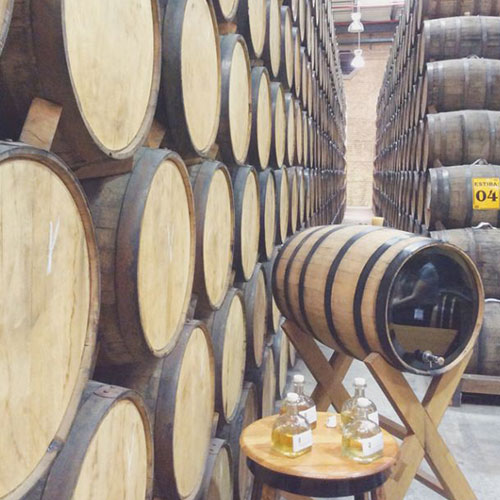
The barrels include a Casa Noble Joven, Reposado and Extra Anejo; three kinds of Patron Anejo and one Reposado; and two kinds of Herradura Double Reposado. According to the NHLC, Joven tequilas are typically bottled immediately or within 60 days of distillation. Reposado tequilas are aged between two months and one year, and Anejo tequilas are aged between one and three years. “Extra” or “double” means there was additional aging; for example, Casa Noble Extra Anejo was aged for five years, and the Herradura Double
Reposado tequilas were aged for 11 months in one barrel and for another 30 days in a different kind of barrel.
Roy worked with each producer directly to choose barrels that were unique and high-quality and would appeal to New Hampshire consumers.
“We went through and tasted multiple barrels and looked for specific flavor profiles we thought people would enjoy on different levels,” he said. “Each has a distinct taste, so it’s really an exclusive item. Once these barrels are gone, they can’t be replicated again.”
Three renowned brand ambassadors — Dave Yan of Casa Noble, Chris Spake of Patrón and Kevin Vanegas of Herradura — will take part in special events surrounding the tequilas, including tastings, meet-and-greets and bottle signings, demos and educational seminars. They’ll talk with customers about the distilling and aging process and point out variations in the flavor profiles of each of their brand’s featured tequilas.
“It’s a chance to become more involved with these brands and learn about their history and meet with the producers, and consumers really react to that,” Roy said. “It’s like meeting your favorite band. They’re the rock stars when it comes to liquor in New Hampshire.”
Bottles of all tequilas will be available for purchase at all of the special events and will hit shelves at select New Hampshire Liquor & Wine Outlet stores in early April.
NHLC Tequila Series
For more information, visit liquorandwineoutlets.com
• Educational seminar/tasting with Chris Spake of Patron Monday, March 27, 6 to 8 p.m., Outlet No. 50, Willow Spring Plaza, 294 Daniel Webster Highway, Nashua. Tickets are $10 at nhliquorwine.ticketleap.com. Call 888-0271.
• Tasting/demo with Dave Yan of Casa Noble Wednesday, March 29, noon to 2 p.m., Outlet No. 34, 92 Cluff Crossing Road, Salem. Admission is free. Call 898-5243.
• Tasting/demo with Dave Yan of Casa Noble Wednesday, March 29, 3 to 5 p.m., No. 74, Market Basket Plaza, 34 Nashua Road, Londonderry. Admission is free. Call 432-0270.
• Educational seminar/tasting with Kevin Vanegas of Herradura Wednesday, March 29, 6 to 8 p.m., at Outlet No. 50, Willow Spring Plaza, 294 Daniel Webster Highway, Nashua. Tickets are $10 at nhliquorwine.ticketleap.com. Call 888-0271.
Find a Tequila
Exclusive tequilas will be available for purchase at the following New Hampshire Liquor & Wine Outlet locations in early April.
• No. 34, 92 Cluff Crossing Road, Salem
• No. 50, Willow Spring Plaza, 294 Daniel Webster Highway, Nashua
• No. 66, I-93 North, Hooksett,
• No. 67, 25 Springer Road, Hooksett
• No. 69, 25 Coliseum Ave., Nashua
• No. 73, I-95 South, Hampton
• No. 76, I-95 North, North Hampton
Artist Affirmations
Artist Affirmations
Sakellarios, Cummings on Making & Selling Work
Written By Kelly Sennott (ksennott@hippopress.com)
Images: Courtesy Photo
Monique Sakellarios is a painter first and foremost, but when it comes to running Maison de l’Art, she’s like a scout, always on the lookout for the next great New Hampshire artist.
Her tiny Nashua gallery tucked away on East Pearl Street is like a “Parisian boutique with New Hampshire prices,” in her words; every square inch of wallspace is covered by her and her artists’ paintings, prints and mixed media pieces. She knows the story behind each one.
“When I start talking about my artists, I can’t stop,” said Sakellarios during a recent interview at the gallery. “Anything I carry in here, I have to love it. If I love it, I’ll sell it.”
Her latest recruit is Michael Cummings, who owns Crosby Bakery a couple doors down. She’d been inside the shop many times to buy sandwiches, cookies or coffee, but learned about a year ago from one of her regular customers (and one of his employees) that Cummings is also an artisan wood turner. When he’s not baking, he’s making bowls, cups and spoons from cherry, maple, white birch, American hornbeam and sycamore trees.

“He first said to me, ‘I’m not interested in selling it. I give it away,’” Sakellarios said. “But I said, it’s quite rewarding to sell. It’s not the money. It’s the appreciation. When people are ready to part with their money for something you do, that means they really love it.”
Cummings likes working with his hands; he’s been baking from scratch the past 50 years, and his house is filled with his own shelves, cabinets and hutches. He learned to turn at
Merrimack High School adult education courses in 2012 and became hooked.
Perhaps it was in his blood; his uncle, Norman Stevens, is the author of three books featuring artisan-made wooden spoons and has an enormous collection. Cummings is particularly fascinated by the trance he enters while making a bowl.
“You’re in your own world. You don’t think about anything else. You’re 100 percent devoted to what you’re doing,” Cummings said. “The bowl is inside the wood. …They’ll dictate to you what they’re going to look like when they’re done. If you try to fight it, they’re not going to come out that good.”
He geeks out whenever he finds wood he knows will transform into fantastic pieces — like a burl that grow on the side of trees (“You never know what you’re going to get inside!”) or spalted wood, which contains coloration caused by fungi.
“Sycamore is the most boring wood. It’s just plain old white. But this is spalted,” Cummings said, picking up a bowl lined with dark spots and stripes. “I get goosebumps just talking about it. I’m not kidding.”
Sakellarios has since sold four of Cummings’ pieces, and she expects she’ll sell many more. She’s like a cheerleader for her artists, encouraging good work and pushing them to make more. About 95 percent of them are from Greater Nashua.
“Look at this one! How interesting that is,” Sakellarios said, plucking a wooden bowl from the gallery window and holding it up against the light. “Isn’t it gorgeous? You can see the light through the wood. … I’m not a wood collector. But I can see the beauty in this. And talking to him makes me appreciate it even more, because I understand a little more about it.”
Sakellarios would like Cummings to carve full-time once he retires, and he would too; until then, his days are packed, running a business, spending time with grandchildren, raising chickens and pigeons and gardening. His next step is to try to get juried into the League of New Hampshire Craftsmen.
But he had to admit, Sakellarios was right; it’s affirming, to sell your work and leave your mark.
“Sometimes my students don’t want to sell something because they’re attached to it. I tell them, ‘You’re going to do better! Don’t get attached!’ I’m not attached to my work. I always think that what I do next is going to be better,” Sakellarios said. “We’re all going to die someday, but my paintings are not going to die. Your bowls are not going to die. The more people who have them, the more immortal you are. Think about it.”
Weekly Music Review
Weekly Review
Sono Oto & More
Written By Eric Saeger (news@hippopress.com)
Images: Album Artwork
Sono Oto, Inheritance (self-released))

Sometimes evolution requires an unpleasant push or two. People kept asking 35-year-old New York-based composer Mark Henry Phillips if he made music anymore, even after he’d successfully moved into the field of sound design (he’s done a bunch of corporate commercials, a few TV-movie things, and the Serial and Homecoming podcasts), but it was the death of his dad in 2015 that forced him to finish this thing once and for all, a debut solo album of actual “song-songs.” The final result is an upbeat-chill soul-pop amalgam of Jamie Liddell, Beatles and Amos Lee that forks off into technical brilliance, Figurine-ish medium-tech and faraway Bon Iver choruses (“A Way to Stay Away,” the best on board here). Sounds like a lot to process, but it’s altogether a friendly, very pretty set of stuff; it’s good that he was finally able to get this off his chest.
Grade: A
Operator Music Band, Puzzlephonics I&II (New Professor Music)

I shouldn’t minimize the effort of this coed New York band’s debut by saying “Devo lives” in an Urkel voice, even if that very description might actually float someone’s boat. Fact is, the foundation is krautrock, and no, they don’t sing in funny nerd voices, and neither do they bury the listener in quirk for its own sake. The core consists of guitarist-singer Dara Hirsch and audio-tinkerer-singer Jared Hiller, and they do, as advertised, have an odd dynamic, with Hirsch’s jazz-chord-obsessed guitar often playing straight-man to Hiller’s wobbly, sometimes soaring-wingnut experimentation. All the way around, the sum feels like a record that came out in 1986, from the Scary Monsters-ish Bowie-isms of “Mr. Director” to the next-gen Joy Division of “Trauma.” Beyond that, though, is a fresh depth to the whole neo-80s approach, sounds and patterns that vibe-check underground record stores from both the past and present. Oh, and the tunes are very good.
Grade: A
Hollywood On Ice
Hollywood On Ice
Skating Club Presents “The Envelope, Please!”
Written By Kelly Sennott (ksennott@hippopress.com)
Images: Courtesy Photo
If you’re like the majority of Americans and weren’t invited to the 89th Academy Awards, you can get your Oscar fix at Southern New Hampshire Skating Club’s 52nd spring production, “The Envelope Please,” this weekend.
It hits the JFK Coliseum Saturday, March 25, at 1 and 7 p.m., and if all goes as planned, audiences will feel they’re watching the Oscars live, starting with the red carpet, when skaters arrive party-ready via an on-ice limo, and ending with the “results,” when a giant envelope and ensemble of gold statues take the ice.
SNHSC coach Teri Nordle takes a number of factors into consideration when designing a show. What’s the music availability? What’s the audience appeal? And how will the skaters, who range from pre-school age to 60, feel about it?
“One of the reasons I like this theme is it offers a lot of diversity,” she said, noting that the youngest can perform to music from their favorite animated features, while the elder skaters can take on the classics.

The production is segmented into several categories, including a salute to film classics (with homages to film greats, like Charlie Chaplin and Marilyn Monroe, and movies like Chicago and The Wizard of Oz); “Best Animated Feature” (featuring flicks like Toy Story, Finding Nemo, Shrek and Moana); “Lifetime Achievement” (looking particularly at Julie Andrews and John Williams through music from The Sound of Music, Mary Poppins, Raiders of the Lost Ark and Jurassic Park); and “Best Original Song” (featuring tunes like “Skyfall” from Skyfall and “My Heart Will Go On” from Titanic).
Planning is a months-long affair that starts during January rehearsals and continues with weekly practices and prop- and set-building sessions at the old St. Joseph auditorium.
The show’s backdrop will look like the Dolby Theatre, where the awards are held every year, centering around a large red curtain and jumbotron.
Nordle’s husband, Ken Lajoie, leads the production team, having studied art and grown up in a theater family, and her son Ryan Nordle helps with film editing. Club members need to put in a number of volunteer hours every winter, and parents typically help too, from painting and hammering to sewing and glueing.
This all-or-nothing attitude toward the spring show is typical for an SNHSC production. Last year, the rink became a bookstore and the skaters transformed into characters like
Harry Potter and Miss Trunchbull. Another year, audiences were transported to Universal Studios.
Finding new angles is difficult when you’ve been designing skating productions for decades, but it’s very important to Nordle.
“My goal is to try to produce something that audiences are going to enjoy and remember, and not to do the same thing over and over again,” Nordle said.
Kathleen Feeney, who skates in her 15th show this year (as Marilyn Monroe, with a blond wig and white dress), said it’s all worth the effort when she sees the club’s youngest skaters light up as they step out onto the ice under the spotlight.
For Mary Jo Libby, 18, the joy is in the skating and the performances — she’ll bring to life Maui from Moana, Genie from Aladdin and the Cowardly Lion from The Wizard of Oz — but also in the company she keeps on the ice.
“It feels like I’m skating with my family,” she said.