

FEATURED HEADLINES
Food: Eating Greek
FEATURED FOOD
Eating Greek
Greek Food Festival Returns to Nashua
Written By Angie Sykeny (asykeny@hippopress.com)
Images: Stock Photo
Seventeen hundred pounds of lamb, 5,500 stuffed grape leaves and 90 pans of baklava will be prepared for the annual Greek Food Festival hosted by Saint Philip Greek Orthodox Church in Nashua.
This year’s festival takes place Friday, May 19, and Saturday, May 20, and will feature a full menu of authentic Greek entrees and pastries, as well as Greek music, dancing and vendors.
“We usually serve anywhere from 6,000 to 8,000 people over the two days,” Jamie Pappas, festival co-chair, said. “Some people even come to both days.”
Entrees will be offered a la carte or as dinner plates with rice, green beans and salad. The selection will include chicken, lamb, pastichio (Greek version of lasagna), dolmathes (stuffed grape leaves), spanakopita (savory spinach pie) and meatballs.

Additionally, the menu will have gyros and a number of Greek pastries, such as baklava, galaktoboureko (custard pastry), finikia (cookie with nuts, cinnamon and honey), kourabiedes (shortbread cookie), kataifi (cheese pastry), koulourakia (sweet butter-based pastry), pumpkin pita (a Greek version of pumpkin pie made with phyllo dough) and tiropita (layered pastry with cheese and egg filling).
Top sellers are typically the pastries, especially baklava, and the spanakopita.
“The spanakopita always goes the quickest,” Pappas said. “That’s the one that we have to increase [production for] every year or we run out.”
Cooking operations began in January and will continue until the day of the festival. Most of the entree items are made in advance and frozen, while the pastries are made during the two to three weeks leading up to the festival.
While there are recipe standards for Greek food, there are also many variations that originate from different regions of Greece. Most of the recipes featured at the festival are tried-and-true family recipes from church members. Pappas said the same recipes have been used for years, and there are no plans to change them.
“If it’s not broke, don’t fix it. We don’t like to fuss around once we have a good thing,” she said. “People like the way we’re cooking things and the amount of spices we use, and we don’t want to change that on them.”
While there are restaurants that serve some Greek specialties, there are no restaurants in Nashua dedicated solely to Greek cuisine, Pappas said, so the festival provides a unique opportunity for people to order from a full menu of authentic Greek cuisine.
“People who like Greek food really look forward to this all year,” she said. “And so do the people who love ethnic food [in general] and want to try new things that they’ve never had.”
At the end of the day, Pappas said, it may not be the food itself that’s so appealing, but rather the culture and spirit in which the food is prepared.
“We take the time and the effort to make everything we sell, and there aren’t a lot of places anymore that make everything themselves,” she said. “We put a lot of love into it, and I think people recognize and appreciate that.”
News: Podcasting For Fun & Profit *
FEATURED NEWS - * COVER STORY *
Podcasting For Fun & Profit
10 NH-Based Podcasts for Your Listening Pleasure + How to Create Your Own Show
Written By Kelly Sennott (ksennott@hippopress.com)
Images: Stock Photos
One recent Thursday, a Derry Public Library study transformed into a recording studio for the 25th episode of Exeter children’s author Paul Durham’s podcast, Telling Lies to Children.
For that show, Durham was scheduled to interview local middle-grade writer Erin E. Moulton, who also works at the library but was off-hours that morning. They tiptoed by the front desk, tucked themselves away in the tiny room and shut the door. Durham turned on his computer, pulled out his microphone and, before pressing record, asked how to pronounce her name. She clarified and offered some history to the “Moulton” surname, too, inadvertently giving Durham fodder to start his show.
“I’m with Erin Moulton — Moulton meaning, ‘from the mule farm,’” Durham said, laughing. “Thanks for being on the show.”
For the next 40 minutes, they talked about the magic of that first novel (hers, Flutter, came to her while she was standing on her head in a yoga pose), the struggle of rejection and the importance of remaining “hopelessly optimistic.”
Podcasts — the name combines “iPod” and “broadcast” — are episodic audio series you can download onto your phone, computer or other devices. It’s kind of like the new blog, except you can do anything while enjoying one. Drive! Clean! Walk your dog! Cook! Pretend to work! (Just kidding, don’t actually do that.) And, now that the technology’s so inexpensive, they’re not that hard to create; you can record them anywhere — a closet, a basement, a library study room — and they can be about anything.
“Frankly, anybody can do a podcast,” said Durham, who’d never even burned a CD before starting his show. “There are podcasts everywhere, on topics from politics to long-form fiction.”
If you haven’t caught the podcast bug yet, you’re in luck. Podcasts have become increasingly mainstream since they became a thing just over a decade ago, according to internationalpodcastday.com (which is Sept. 30, if you were wondering). Formats range from one-person casts to heavily-produced shows involving sound effects, interviews and lots of editing. There are even fictionalized podcasts. Some radio stations offer shows or segments of their shows as podcasts, which you can access via iTunes or on the radio station website, and some are run independently.
Here are 10 New Hampshire-made podcasts tackling a variety of topics, from children’s literature to true crime, plus tips from these creators on how to put on your own show.
Kids’ Literature
Podcast: Telling Lies to Children, a 30- to 45-minute show on children’s literature featuring authors and children’s lit experts
Host: Paul Durham, an Exeter-based children’s author
New episodes: Once or twice a month
Exeter author Paul Durham began recording Telling Lies to Children — aimed at adults who “live and breathe” children’s literature — last August.
Each show starts with a bit from “In the Hall of the Mountain King,” composed by Edvard Grieg, and to date, Durham has interviewed fellow children’s authors, librarians, bookstore managers, literary agents and MFA directors, though episodes also include answers to readers’ questions and bring listeners to different places, like the Boston Public Library or the New Hampshire Children’s Librarians Fall Conference.
Durham is fairly new to the children’s literature world; he published his first novel, The Luck Uglies, a tween fantasy story, in 2014, after having spent the earlier part of his career working as a lawyer. He began listening to podcasts about two years ago, one of his favorites being The Joe Rogan Experience, hosted by comedian and retired martial artist Joe Rogan.
“He started his podcast as a way to hang out with all his comedian friends. He’d just have them all come over to his house, and they’d talk, and it seemed like they were having a great time,” Durham said.
He wanted to do with children’s literature what Rogan did with comedy.
“I’m sort of an introvert, and I met some cool people when I got into the publishing world. … I’m not really good at keeping in touch, but I didn’t want to just lose track of everyone, as I’m prone to do with people over time,” Durham said. “Authors are not nearly as funny as comedians, of course, but I thought [creating a podcast] would be a fun way to keep in touch with authors I’m friendly with. … And if there are librarians and media specialists and teachers who want to listen in, maybe they’d get turned on to a new author.”
He said Telling Lies to Children doesn’t sound as professional as an NPR podcast, but it’s more popular than he anticipated, averaging 180 unique listeners daily. And it did help him snag media interviews, and even small jobs — after his on-air interview with Cathryn Mercier, director of the Center for the Study of Children’s Literature at Simmons College, she invited him back to teach a workshop at the school.
After recording, Durham said he spends about two hours editing and posting episodes online and various podcast sites, like iTunes and stitcher.com. He participates in other social media forms, including Facebook, Twitter and Instagram, but thinks there’s a different sense of intimacy hearing someone talk off-the-cuff or in a casual podcast interview.
Moulton thinks it’s a nice resource for aspiring writers as well.
“It’s just talking about writing and the process of writing. And I think people like that, especially writers just starting out. They want to hear journey stories, and figure out how this works,” Moulton said.
Find Telling Lies to Children at pauldurhambooks.com/telling-lies-to-children
For the Love of Fish
Podcast: Fish Nerds, a 90-minute-ish podcast about everything to do with fish
Hosts: Clay Groves, a real-life fish nerd who lives in the White Mountains
New episodes: Every Monday
In 2011, real-life fish nerds Clay Groves and Dave Kellam sought to catch and eat every one of New Hampshire’s 48 species of freshwater fish. It took three years.
When they finished, their venture was chronicled in newspapers and magazines all over the state, and they even found an agent who tried to sell their story to a publishing house — with no luck. So, in 2014, they launched the podcast, Fish Nerds, inspired by the nickname they earned on a segment of New Hampshire Chronicle. Their goal: to get as many people paying attention to them as possible, all over the world, and then revisit the book down the line.
“We had failed to sell our book. Our publishing agent said we weren’t reaching outside New Hampshire enough,” Groves said via phone. “So with the podcast, New Hampshire was not our goal. Our goal was world domination!”
Groves said he’d listened to NPR podcasts before but no independent shows. They had no idea what they were doing.
“Content-wise, our first shows were very funny, but the quality was terrible. We used the mikes on our computers, which is the worst thing you can do,” Groves said.

Early episodes were hosted by both Kellam and Groves, but today Groves runs the podcast with about 16 other correspondents from all over the world — biologists, fishermen, chefs — who help produce tiny segments, from interviews to news bits, that Groves pastes in before releasing the show each week. Show topics include fishing tips, fish news, cooking fish, cultures impacted by fish, plus science and conservation issues involving fish. It even has a fish-themed book club under its umbrella (and now, publishing houses are sending them books to review).
Today, the show sees 5,000 downloads a month, with more than 50,000 downloads total and 155 episodes. One of Groves’ favorites is “Mako My Day,” No. 43, which recorded his and Kellam’s mako shark fishing trip in Maine.
“The cool thing about podcasts is there are no rules. I don’t have to do an hour-long show. I could do a 10-minute show. I could do a 6-minute show,” Groves said. “It gives you a lot of freedom.”
Groves, who lives in Conway and used to work as a science teacher and at Amoskeag Fishways, is excited about a recent invitation to the Sustainable Seafood Festival at Virginia Beach, which occurs at the end of May.
“I’m getting five vacation days because of my podcast! I get to hang out backstage in an aquarium with nerds like me. I’m really excited about it,” he said.
Key to the Fish Nerds success is a high level of engagement with listeners and people in the fish industry.
“We go to where our listeners are. If there’s a fishing event, then we go there and talk to people. We do a lot of social media and keep reaching out, inviting people to be part of our show,” said Groves, who keeps at it for the love of fish. “My wife gets tired of me talking about fish all the time, and this gives me a place to talk about fish.”
Find Fish Nerds at fishnerds.com
Geek Out On Knitting
Podcast: NH Knits, which is about 30 to 45 minutes and is all about knitting, with musings from the host plus interviews with sheep farmers and mill owners.
Host: Corinne Tomlinson, a.k.a. Claire, an Upper Valley knitting enthusiast and owner of the online yarn shop, The Woolly Thistle New episodes: About twice a month
Corinne Tomlinson started NH Knits almost three years ago.
“I had been knitting for about three years at that point. I was obsessively reading blog posts and listening to knitting podcasts,” said Tomlinson, who goes by Claire on the podcast.
“I was constantly talking to my husband about it, bless him, but he wasn’t really getting it.”
So, in September 2014, she purchased a microphone at RadioShack, plugged it into her computer and hit record.
“I was just talking to the wind. And it was strangely freeing, not talking to anybody, but just talking about what I wanted to talk about,” she said. “No one was saying, ‘Oh, enough already!’ I could just go and go and go. I had to edit it down a lot, but you learn that as you go.”
Tomlinson learned to knit as a girl growing up in Scotland, but she stopped for some time to do other things — like get married, adopt children, move to the United States. But with all these life changes, she sometimes found herself very anxious and in need of a stress-reliever —which is why she turned back to knitting.
“It helped — the ritual of the repetitive motion of knitting. And then you have something at the end of it!” Tomlinson said, adding that knitting is not just for old ladies anymore — you can find modern, beautiful designs online, and tailor them to fit your tastes.
Tomlinson, who lives in the Upper Valley, didn’t think anyone would listen to her podcast, but she underestimated the knitting community, which has a strong online presence, full of knitters as obsessed as she, and today sees about 2,000 listeners per episode. She’s personally a big fan other knitting-themed podcasts like The Knitmore Girls and Knitting Pipeline, plus ravelry.com, which is like a social media site and database of yarn patterns for knitters.
Her episodes are typically 30 to 45 minutes, discussing what’s on her needles, what’s off her needles and what new designs have caught her eye. Some include interviews with New Hampshire and Vermont farmers and mill owners, and others feature her chickens (the “Coop Cast”) and updates on the Woolly Thistle, her online, Britain-produced yarn business that grew out of her podcast a year ago.
“The U.K. has a long and solid history of yarn production. I grew up with sheep everywhere. … I’m getting [the yarn] from farmers or mills and can sometimes even identify the sheep it comes from, and people love that,” said Tomlinson. “For me, it’s about being part of a thriving community of knitters. And yes, my business came out of it, and the business is doing really well. I might not have thought to do it had I not been podcasting first.”
Find NH Knits at thewoollythistle.com
In the Restaurant Business?
Podcast: Restaurant Unstoppable, which is usually an hour and 20 minutes and includes interviews with restaurant owners on how to make it in the industry
Host: Eric Cacciatore, a Seacoast hospitality enthusiast who’s worked in restaurants his whole life
New episodes: Mondays and Thursdays
Are you feeling unstoppable?
This is the first question Eric Cacciatore asks restaurant owners and experts during interviews on Restaurant Unstoppable, a podcast he started almost four years ago. To date, the show comprises 330 episodes and has seen more than 300,000 total downloads, with about 3,000 per episode and 30,000 per month.
His goal is to empower restaurant owners by sharing advice and success stories from fellow professionals.
Cacciatore came up with the idea about four years ago in a Great Bay Community College marketing course, when his professor asked the class what podcasts they listened to.
Nobody raised a hand. Their homework assignment: start listening to three.
When he was a kid, Cacciatore’s parents owned a restaurant, and Cacciatore continued to work in them throughout high school and college. Cacciatore was moved by personal growth and entrepreneurial podcasts but couldn’t find any specifically about the restaurant or hospitality industry.
But he felt there should be; running a restaurant is hard. There’s so much more to it than making good food.
“The entrepreneurial myth is that if you’re good at making pies, you should make a pie shop. But you need to consider all the other variables,” he said.
Episodes span an hour and 20 minutes, and most contain interviews with successful restaurant professionals discussing things like how they broke into the industr, when they decided to make it a career and what they did in order to get where they are today.
Cacciatore has interviewed people from all over the world but most have been people from the States, New Hampshire especially. Local featured personalities include Evan Mallett from Black Trumpet, Matt Louis from Moxy Restaurant, Evan Hennessey from Stages at One Washington and Edward Aloise from Republic Cafe.
Restaurant Unstoppable‘s success has relied on its structure, honesty and mission.
“The podcast is about the future of the industry, about sharing knowledge to make it better, and to lift it up,” said Cacciatore, who at the time of his interview was preparing to pack up and take the podcast on the road, first to moderate a panel at the Foodable.io festival in Chicago in late May. “You need an overarching mission, a purpose, a vision of where you want to be. Start with the end in mind, where you want to go. Then figure out what you have to do to get there.”
Find Restaurant Unstoppable at restaurantunstoppable.com
Learn Some Tunes
Podcast: 10 Minute Jazz Lesson, which contains intermediate-level music lessons
Host: Nick Mainella, a Seacoast-based musician and music teacher
New episodes: Every Thursday
Nick Mainella, founder of 10 Minute Jazz Lesson, was a big fan of podcasts before he began recording his own in his home studio in February 2016.
Mainella, a Seacoast resident and professional saxophonist, spends a lot of time traveling, either to teach (at private residences or schools, like Timberlane Regional High School or Pinkerton Academy), or to perform, often with his band, The Soggy Po’Boys. Some of his favorites to listen to during the commute include Bill Burr’s Monday Morning Podcast, Dan Carlin’s Hardcore History and James Newcomb’s MusicPreneur.
But while looking for new shows, he realized there weren’t many on music education, particularly jazz education.
“If you go on YouTube and type in ‘jazz lesson,’ there will be about 2 million videos showing up,” said Mainella, who also has a background in audio engineering, and already owned most of the equipment he’d need for a podcast. “The advantage is that with a podcast, you can listen in your car. … I quickly realized there was a niche market for this kind of stuff, and I had people from all over the world listening to it, almost right from the get-go.”
Episodes of 10 Minute Jazz Lesson usually span 10 to 15 minutes and involve jazz lessons and demonstrations, mostly on saxophone, sometimes piano. It’s challenging, giving instructions via audio recordings, as so much of teaching involves a dialogue between teacher and student, but he’s found lots of listeners, about 2,000 per episode.
“I found the biggest demographic that listens to my show is a middle-aged adult student who is trying to play jazz as more of a hobby,” he said. “Those are the people who aren’t necessarily going to sign up and take a private lesson every week, but they’re still seeking a formal means of music education.”
Because of the podcast, he’s picked up students worldwide, whom he teaches via video chat.
“It’s a recent development in the music world — you don’t have to be in the same place as the person you want to study with. I’ve been getting a lot of emails from people from all corners of the world. It’s been great to expand my network a little bit,” he said.
Find 10 Minute Jazz Lesson at 10minutejazzlesson.com
Calling all Shakespeare Nerds
Podcast: No Holds Bard, a pop culture podcast for Shakespeare nerds or people who want to learn about Shakespeare, typically between 30 and 60 minutes
Hosts: Dan Beaulieu and Kevin Condardo
New episodes: Every Tuesday
More than 400 years have passed since Shakespeare’s death, and people still haven’t run out of things to say about the bard, his stories or his characters.
Certainly, Dan Beaulieu and Kevin Condardo thought of ultra Shakespeare geeks like themselves when conceptualizing No Holds Bard, the Shakespeare-themed podcast that blossomed from Seven Stages Shakespeare Co. in Portsmouth, where Beaulieu is co-founder and artistic director, Condardo the managing director. But they also wanted it to be accessible for people who aren’t die-hard fanatics.
“You don’t need to like Shakespeare to like the podcast. But hopefully you might like him more [after listening] than when you started,” Beaulieu said via phone.
The duo met at UNH and had been arguing over bizarre Shakespeare-themed ideas for more than a decade when they started casting at the suggestion of a friend.
“As a company, we were trying to expand our programming, and we wanted to reach not just our audience on the Seacoast but a more global audience. This was a way we could collaborate with other companies when we joined the Shakespeare Theatre Association,” Beaulieu said. “One of our friends said to us that we don’t have faces for TV — we have faces for podcasts.”
They spent six months devising No Holds Bard, and today, they package their show as “the Shakespeare podcast Shakespeare would have listened to.” The first episode was recorded in the spring of 2015.
One of their inspirations was WEEI FM, Sports Radio 93.7, where they love listening about the Boston Red Sox; as a result, sports are frequently woven into the show. “All-Shakespeare Girls Professional Baseball,” a recent episode, looks at which of Shakespeare’s female characters would be the most fearsome ball players.
Most episodes are between 30 and 60 minutes and feature regular segments. “Word of the week” contains a strange or confusing Shakespearean word. “Homework” offers answers to Shakespeare homework questions, typically found online. Another segment answers questions that intersect Shakespeare with the present day. (Which Shakespeare character would be most excited about legalized same-sex marriage in the United States? Which character would you most like to go on a date with?)
Episodes also discuss news surrounding Shakespeare (a teacher was found guilty of attempting to seduce a 16-year-old student by buying her beer at an art museum and quoting Shakespeare!), and once a month, they produce a “So You’re Going to See Shakespeare” episode, a 30-minute crash course on a Shakespeare play, kind of like SparkNotes in audio form. On occasion, they’ve welcomed guests, like Mya Gosling, creator of Good Tickle Brain: A Mostly Shakespeare Webcomic.
The podcast recently celebrated its 100th episode, and today has seen more than 28,000 total downloads in 2016, boasting almost 1,000 subscribers. For beginner podcasters, Beaulieu recommends investing in high-quality microphones and taking time to determine your show so that it’s different and new, even if it is about something that’s been talked about for centuries, like Shakespeare.
Find No Holds Bard at 7stagesshakespeare.org
Beer Connoisseur
Podcast: The Tap Handle Show, with beer tastings, interviews with beer people and beer musings
Hosts: Michael Hauptly-Pierce and Seth Simonian, who both own NH beer businesses
New episodes: Every Thursday
Whether you like to make beer, drink beer, or just listen to people talk about beer, Michael Hauptly-Pierce and Seth Simonian have you covered on The Tap Handle Show.
Both are professional beer-lovers. Hauptly-Pierce owns Lithermans Limited Brewery in Concord, which celebrates its first anniversary this spring, and Simonian is founder of Hop Head United, an organization dedicated to helping craft brewers better their marketing, and The Flight Center, a craft beer lounge in Nashua.
Their podcast is all about beer and features interviews with brewers and beer folk, beer tastings and brewing advice.
The Tap Handle Show started with Tim Roberts, founder of Success Through Referrals, which also has a podcast part of its business. Roberts felt there was a market for a regional craft beer podcast, and recruited Hauptly-Pierce to join him on the venture. The idea was for it to be like a comedy podcast that happened to be about beer, focused on consumers, not producers. The first show happened in February 2014.
“I did feel like we could do something different from what was being done. There are some national podcasts out there about beer. Some tend to be very sponsorship-heavy. Others are very information-heavy, and you have to be a black-belt beer geek to understand what’s going on,” said Hauptly-Pierce, who grew up near California’s wine country and was a home brewer for years before starting his business. “I try not to drown people in concepts, in things they’re not familiar with. We usually try to make it really accessible for people who don’t have any brewing experience.”
Today, The Tap Handle Show is run by Hauptly-Pierce and Simonian (Roberts had to leave due to time constraints). Topics include manufacturing, distribution, beer-related news, beer personalities and beer recommendations. One of Hauptly-Pierce’s favorite episodes is No. 35, featured John and Jen Kimmich, who run The Alchemist in Vermont, most famous for its Heady Topper.
Hauptly-Pierce’s advice for beginners: “Make sure you have the ability to record sound as crystal clear as you can. People have very little patience for [bad] sound. And I think social media is invaluable. People who listen to podcasts are also people involved in social media as well,” he said.
Find The Tap Handle Show at thetaphandleshow.com
For All Your Death Questions
Podcast: Deathcast, which answers all kinds of questions you might have had about death
Host: Kelsey Eriksson, a Hopkinton resident who used to work in the funeral industry
New episodes: Every month or two
We’re all going to die someday.
It’s an uncomfortable truth. And because it’s so uncomfortable, lots of people avoid talking about death and all its mysteries — but everyone has questions.
Hopkinton resident Kelsey Eriksson knows this because she used to work in the funeral industry, and people asked her death questions all the time. She decided to create the podcast after reading Smoke Gets in Your Eyes: And Other Lessons from the Crematory by Caitlin Doughty, about the secretive culture of those who cared for the deceased.
“I’ve always been fascinated by death and the death care industry. After reading more about it, I wanted to share some of that weirdness with other people,” Eriksson said via phone.
She began her podcast, Deathcast, last summer, which to date comprises about 20 episodes and tackles topics like, how does cremation work, and what are the other options? Or, what’s the deal with the right to die debate? One episode referenced Carrie Fisher’s wish to be cremated and held in an urn that looked like a giant Prozac pill, which led to a discussion of what your ideal ash-storing container might look like.
The show’s not meant to be grim but educational, with content created via research and on-air interviews. The hope is that, by talking about death, it helps muffle the fear or relieve the grieving.
“A lot of people were interested in the idea of trying to take back their own ideas of how death should look after they die, or after their loved ones die,” said Eriksson, who encouraged listeners to email her feedback or questions. “You’ve got questions? That’s fine. We’ve all got questions about death. It’s a big mystery. I’m here to answer some of them.”
The podcast, which sees about 8,000 downloads monthly, is part of Rebecca Lavoie and Kevin Flynn’s Partners in Crime Media company, which offers independent podcasters access to their recording studio, plus consultation on editorial, audio, editing, etc. Eriksson has enjoyed creating the podcast because it made her realize new career goals, having recently set up an internship with NHPR.
“I just realized how much I really enjoy radio podcasting. I owe that to the podcast — I’ve found something I enjoy,” she said.
Find Deathcast at deathcastpod.com
Funny Cast
Podcast: Here’s What Happened to Me, a funny podcast about being a comedian and a human being
Hosts: Local comedians Mike Koutrobis and Kyle Crawford
New episodes: Usually every two weeks
Comedians were some of the first people to pick up on podcasting.
Which shouldn’t be surprising, because according to local comedians Mike Koutrobis and Kyle Crawford, the medium is perfect for evolving jokes and developing followers. They began recording their podcast, Here’s What Happened to Me (a name inspired by a regular phrase Koutrobis features in his routines), in May 2015.
They record almost every week, and their shows include interviews with other comedians, advice for prospective comedians, comedic rantings — about being a comedian, a human being — but most importantly, it acts as a platform for creating new material.
“Sometimes, you have an idea but don’t know where to go with it. We both bring up topics we want to create jokes about, and then we talk about it, back and forth,” said Koutrobis, who lives in Methuen, Mass., but grew up in New Hampshire.

Trying new jokes out on the air vs. in front of a crowd at an open mike night is also less nerve-wracking and time-consuming.
“When you think about [a joke] or write about it on paper, it doesn’t equate to a stage performance,” said Crawford, who lives in Plaistow. “It’s hard to get on stage every night, but this gives us a comfortable outlet.”
According to Koutrobis, “every comedian with a computer now has a podcast,” as they’re easy to record and get out there, particularly with laughable.com, a place to post and find comedy-specific podcasts. Podcasts also make comedians more marketable; Koutrobis said agents in comedy clubs now look at social media followers and posts when booking acts, because they want to know their comedians have followings and a means of promoting their upcoming gigs.
Koutrobis, who also works as a DJ, said it’s important to take the time to edit podcasts before posting them online. Make sure the sound is professional, maybe with music or sound effects. Crawford said it’s a nice way to live out his dream of being in radio.
“For me, the fantasy was always to be on the radio. I never thought I would be a comic. But podcasting seemed like a really easy way to go about that,” he said.
Find Here’s What Happened to Me at laughnewengland.com, or visit the Here’s What Happened to Me Facebook page; it’s also available on iTunes.
Love True Crime or Serial?
Podcast: Crime Writers On..., a pop culture show about true crime from a crime writer’s perspective, usually an hour and 15 minutes
Hosts: Real-life crime writers, including Rebecca Lavoie and Kevin Flynn, who are married, plus Toby Ball and Lara Bricker
New episodes: Weekly
When Kevin Flynn and Rebecca Lavoie started this podcast at the end of 2014, they called it Crime Writers on Serial, because it was structured as a discussion show about the mega-hit investigative journalist podcast Serial.
But Crime Writers On … has morphed into broader conversation about true crime, journalism and pop culture, hosted by local true crime writers Lavoie and Flynn (who are married and who wrote Notes on a Killing and Our Little Secret together), Toby Ball (business manager at the Crimes Against Children Research Center and the Family Research Library at UNH) and Lara Bricker (New Hampshire-based newspaper reporter), plus occasional guests.
Soon they began recording weekly and brought in popular TV shows like Making a Murderer and documentaries like The Staircase. Today the podcast boasts 7 million listeners.
Lavoie, a digital director at New Hampshire Public Radio, said that once they began recording in earnest, they worked strategically to build listener numbers via social media and other podcasters.
“We reached out in a big way to try to get people as guests on the show who are from other podcasts. Then they would talk about our podcast on their show,” Lavoie said.
Podcasts in general are growing enormously. According to Edison Research, in 2017, 112 million people listened to a podcast. Of them, 67 million listen monthly, 42 weekly. The average listener devours five shows a week. Flynn, a communications specialist who used to work as a television reporter, thinks these numbers have to do with the technological tools available now at low costs.
“It’s like self-publishing. Sometimes you can just tell by looking at the cover, this is not anything you want to spend time on. But there are self-published books that make it big — like 50 Shades of Gray or The Martian,” Flynn said. “If we were trying to produce a TV show … it wouldn’t look the same as it would as in a studio. But with a podcast, and just a little bit of talent, you can put together a product that sounds exactly the same as one created by a national corporation. … There’s been a paradigm shift. Successful podcasts are being put together in basements.”
The couple like podcasting so much, they started another, ... These Are Their Stories, inspired by the TV show Law & Order, and created a basement studio and company, Partners in Crime Media, which they look to expand by creating a network of independently produced podcasts.
Even as their show becomes popular, and there’s potential to make more money from it, they stick at their day jobs — because who knows how long the hype will last?
“Even M*A*S*H went off the air at some point. Dallas went off the air. This is entertainment. There is a lifespan to any show,” Flynn said. “We don’t know a year from now what our audience will be like. We’re just going to do it as long as we can.”
Find Crime Writers On at crimewriterson.com
Arts: Role of the Artist
FEATURED ARTS
Role of the Artist
NH Philharmonic Presents “Hindemith”
Written By Kelly Sennott (ksennott@hippopress.com)
Images: Stock Photo
The New Hampshire Philharmonic’s last concert of the season, “Hindemith,” features the Pinkerton Academy Choir at the Stockbridge Theatre on Saturday, May 20, at 7:30 p.m., and Sunday, May 21, at 2 p.m. It is the last concert under Thomas Quigley, Pinkerton Academy’s fine arts director who retires this spring, and the first with the Phil’s new executive director, Cathy Kaplan.
Music includes “Concerto for Two Flutes and Orchestra” by Albert Franz Doppler; John Rutter’s Requiem, performed with Pinkerton’s choir; and the concert’s showcase piece,
“Mathis der Maler Symphonie” by Paul Hindemith. The latter contains segments from Hindemith’s opera, Mathis der Maler, which the composer wrote during the Nazi regime and which was inspired by real-life painter Matthias Grünewald. While the musicians play, audiences will see large replicas of Grünewald’s paintings on stage.
“One of the remarkable things about the music is how you can clearly hear how Hindemith was clearly looking at these paintings and inspired by them to write music that reflects what the subject matter of the paintings is,” said the orchestra’s music director, Mark Latham, via phone.

He thinks the message of the story — about the role of the artist in society — is relatable to all members of the orchestra, and any artist in general.
“I think the artist in the U.S. struggles more just to make ends meet, and when they struggle … they question, is it all worth it? What is my contribution to my fellow humanity?” Latham said. “But [as an artist] the way you can best serve humanity is to go back and do what you do best. … Without novels, without paintings, without music, life would be pretty barren.”
The concert requires a 65-member orchestra, whose members range in age and experience, from teens to musicians who’ve been playing for 30 years. Kaplan is excited to work with the group, whose roots trace back to 1895.
“The Philharmonic has survived, despite the fact that support for arts organizations has suffered since 2007. They have persevered because they believe so strongly in their mission of bringing world-class music to the state,” said Kaplan, who was named executive director a couple weeks before this concert.
Kaplan worked in marketing at the Concord Community Music School for 15 years, and in 2013 she studied at the Harvard University Graduate School of Education and earned a degree in Arts in Education.
“One of the assignments we had for the end of the year was to write a short personal piece explaining or describing where we saw ourselves in five years. And the first line of my essay was, ‘In five years, I will be the executive director of an arts nonprofit in New Hampshire.’ That was four years ago. I had no idea what time would bring, but that’s been a goal of mine these past four years. And I’m thrilled the New Hampshire Philharmonic helped me realize [this goal],” she said.
Kaplan’s first priorities are to focus on fundraising, reignite the high school concerto competition, fill seats and raise the profile of the orchestra by advancing its website and marketing plan.
“In the last few days, when I’ve mentioned this new role to people, some of them said, ‘I haven’t heard about them in a while,’ or, ‘I didn’t know they were still around,’ which isn’t something I want to hear anymore!” she said. “It is a part-time position, but the goal will be to grow with fundraising and audience engagement and marketing … so it becomes a full-time position with a staff.”
Music: American Band
FEATURED MUSIC
American Band
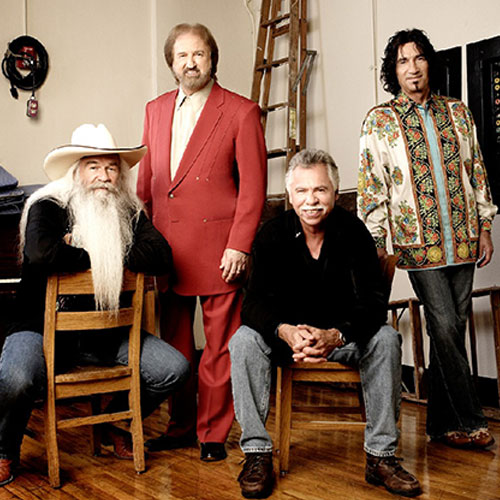
Oak Ridge Boys Celebrate 50 Years Together at Tupelo Show
Written By Michael Witthaus (music@hippopress.com)
Images: Courtesy Photo
Waves of red, white and blue emanate from the phone as Richard Sterban describes what fans can expect when the Oak Ridge Boys take the stage at New Tupelo Music Hall.
“The hits — ‘Elvira’ of course — and we’ll do a little gospel,” he said. “We’re patriotic guys, so we will do a few songs to honor the country that’s so important to us. … Most of all, it’s good country music; family entertainment, for Grandma and Grandpa all the way down to young kids.”
Sterban is the group’s bass vocalist — the “oom papa mow mow” chorus on “Elvira” is his — and from an early age, he wanted nothing more than to sing low. Prior to joining the Oak Ridge Boys, he toured the Northeast gospel circuit, then joined JD Sumner & the Stamps. The vocal group backed Elvis Presley on tour, and contributed to the sessions for the King’s last hit single, “Burning Love.”
Presley’s approach in the studio was unique.
“Elvis really did not know what he was going to record — an A&R man played him song after song, most of which he did not like,” Sterban said. “After what seemed like an eternity, he played ‘Burning Love’ and wow! All of a sudden Elvis said, ‘That’s it!’ — and he wanted to record that song.”
Sterban said the process “went down very, very easy,” though Presley was an “engineer’s nightmare. … He recorded like no one else I have ever seen; no isolation booth for him, no locked up in a little cubicle. He used a handheld microphone and walked around the studio. ... He recorded like he sang live on stage and that’s how it came up on the record.”
Sterban joined the Oak Ridge Boys in 1972, at a time when they were transitioning from gospel to country music, often to their fans’ consternation; mass walkouts during shows were common. It was a challenging time, and Sterban said Johnny Cash was a big reason the group carried on. Cash helped out financially, inviting the Oaks on tour, and often overpaying them; but Cash’s moral support meant more.
One night after a show in Las Vegas. Cash summoned them to his hotel suite.
“He told us, ‘This is going to be something, and I will support you, but you gotta believe in yourselves … give up, and you will never realize your dreams,’” Sterban said. “We walked out of that room with our heads held high. Johnny Cash thinks we’re going to make it, so we are going to make it. Sure enough, we found a way to do what he said [and] stay together.”
In short order, they found a business leader, Jim Halsey, who is still their manager, and producer Ron Chancey, so integral to their success that he’s referred to as “the fifth Oak Ridge Boy.” Chancey found their first hit, “Y’all Come Back Saloon.” and later heard a Texas honky-tonk band playing what would become their signature song,
“Elvira” was recorded by several artists, but the Dallas Frazier-written song didn’t break through until the Oaks turned into what Sterban called “one of the largest-selling singles ever recorded in Nashville.” This happened due to Chancey’s special touches, like having Sterban’s bass refrain more out front than on Frazier’s original and an earlier Kenny Rogers version.
In the studio, it felt like the smash that manager Halsey would go on about in pep talks.
“He’d always tell us, you’re three minutes away from being a major act; by that he meant a hit single,” Sterban said. “We felt like we had something special in our hands, and we did, but didn’t realize how special until the first time we performed the song in person.”
During a tour stop in Spokane, Washington, they dropped it into the middle of a set.
“The place went crazy; they wouldn’t have been happier if we gave them a million dollars,” Sterban said.
They played the song over and over; each time, the crowd begged to hear it again.
“We called the record label and told them, we gotta get this thing out, and we did. To this very day ... you can count on the fact when we come to town, we are going to do ‘Elvira’ — it is the law. Even in church, we’ve done it.”
Film: King Arthur: Legend of the Sword
FEATURED FILM
Film Review
King Arthur: Legend of the Sword (PG-13)
Written By Amy Diaz (adiaz@hippopress.com)
Images: Movie Screenshot
A pre-king Arthur finds Excalibur in King Arthur: Legend of the Sword, a very Guy Ritchie take on the Arthurian legend.
I feel I should mention at the outset that due to technical difficulties at the theater where I saw the movie, I missed the first five or so minutes of the movie. So maybe there was some combination of title cards and narration that made the movie magical. Maybe, but I doubt it.
Nevertheless, I was able to get Arthur’s backstory, which is that once upon a time in post-Roman-ish England, King Uther (Eric Bana) and his queen (Poppy Delevingne) are killed by Uther’s brother Vortigern (Jude Law), who also steals his crown. Though Vortigern tries to kill baby Arthur, he gets away and floats, Moses-style, down the river to Londinium, where he is pulled out and taken care of by some ladies from the local brothel.
In montage, we see Arthur grow up hard at the brothel, learning to fight, making money from odd jobs and petty crime and, after studying with the local kung fu master George (Tom Wu), protecting the ladies and generally becoming the big noise for his section of the city, protection- racket-wise. (Perhaps you’re thinking “I’m sorry, the kung fu what now?” but I’m going to suggest you just let that one ride because all things kung fu-related in this movie are silly fun.)

Greasing the palms of local law enforcement and muscling money out of local traders with his buddies Back Lack (Neil Maskell) and Wet Stick (Kingsley Ben-Adir) — and occasionally Back Lack’s young son Blue (Bleu Landau), who I guess is learning the hooligan trade — Arthur has a good life going until he accidentally roughs up the wrong Vikings. The king’s men come for him and he winds up on a boat with a bunch of other men his age. Seems that, also Moses-style, all the young men of the kingdom are being rounded up. Only instead of being killed they’re just being branded after they try the sword stuck in a stone outside the castle. Once they can’t move it, they get their “not-Arthur” mark and are on their way (or maybe are enslaved, I’m not sure).
Of course, Arthur finds that he can, in fact, wiggle sword from stone. Vortigern tries to execute him but men who have been waiting for the “lost king” — and a symbolic head to their “Never Vortigern” resistance — rescue him. Soon Arthur finds himself hiding out with a rag-tag group including Bedivere (Djimon Hounsou), Goosefat Bill (Aidan Gillen, a.k.a. Littlefinger) and a wizard lady called The Mage (Astrid Berges-Frisbey).
The least interesting part of this King Arthur story is anything to do with the Arthurian legend. All the sword-in-the-stone/Lady of the Lake stuff is very incidental to what makes this movie moderately amusing, which, not surprisingly for a Guy Ritchie-directed movie, is guys with nearly indecipherable accents planning or describing some kind of crime or caper. Also, the fighting, some of the fighting is fun — the hand-to-hand combat, the guys running down grimy Londinium alleys.
More Guy Ritchie-ing, less Arthuring is I guess where I come down. The legend, the sword — all this feels very subpar, like the ye olde England version of that spate of increasingly grade-B ancient Greece- and Rome-related movies that came out in the decade following The 300. But Hunnam is actually a fun action actor — and, yes, not hard on the eyes. I never watched Sons of Anarchy so I don’t have a deep background in his work, but from this I can see the makings of a solid action movie hero in the vein of Chris Hemsworth. The supporting characters and their anachronistic speech patterns are also fun. And, sure, Jude Law probably spends a little too much time in monologue mode, but Vortigern is a decent enough villain.
For what it is, which is a middling action movie with fancy camera work but that doesn’t take itself too seriously, King Arthur: Legend of the Sword isn’t bad. For a movie released during blockbuster season, this weekend-on-the-couch basic-cable fare is way out of its league.
Grade: C+
Pop: Inspiring New Home
FEATURED POP
Inspiring New Home
MacGregor on Moving to Concord & Wishbones
Written By Kelly Sennott (ksennott@hippopress.com)
Images: Courtesy Photo
Virginia MacGregor wrote Wishbones in a coffee shop near Wellington College in Berkshire, England, a place she found rich with inspiration.
“I know some people who love the silence of a study, and I need that sometimes, but [when writing] I actually need to be surrounded by life,” MacGregor said via phone last week, just after putting her youngest daughter down for a nap. “If you sit in a coffee shop long enough, you see families, children, grandparents. You’ll overhear them talking about everyday things. I always have one ear open.”

Since moving to Concord with her children and husband for his new theater job at St. Paul’s School this past July, she’s found new spots to write, like Live Juice, where she prefers the seat by the window overlooking Main Street, or the cafe at Gibson’s Bookstore, where she celebrates the release of her first young adult title, published by HarperCollins, on Tuesday, May 23, at 7 p.m.
Her novels include What Milo Saw, The Astonishing Return of Norah Wells and Before I Was Yours, and like those, Wishbones is rooted in family and addresses social issues. The young adult novel follows a 14-year-old girl named Feather who loves to swim and is trying to save her obese mother, who hasn’t left the house in years, by helping her become healthy again.
MacGregor, who grew up in Germany, France and England, was named after two women — Virginia Wade and Virginia Woolf — in the hopes she might aspire to writing or tennis greatness. After studying at Oxford, she taught at Wellington College, where she met her husband. About five years ago he encouraged her to fulfill her lifelong dream.
“He said, ‘You should try doing it full-time. You’ll regret not having given it a chance,’” she said.
Her goal is to write one adult and one young adult book every year, which she knows sounds “bonkers,” but it helps when your partner’s career is invested in storytelling as well.
“We’re very much in the storytelling business. … We both value the arts. When I’m reading a novel, he sees it as part of my job, instead of saying, ‘Why is she being indulgent and reading a novel?’” she said. “We have fantastic dinnertime conversations. He’s always the first to read my first draft and my last draft before it’s published.”
Every one of MacGregor’s books is a mixture of experience, research and imagination, she said, and for this one she interviewed doctors, diabetes specialists, social workers and a young student expert on the butterfly stroke, which her protagonist loves to swim. She also explored the psychology of food, which involved looking back at her time in high school, both as a student and as a teacher.
“Having grown up attending a very academic girls’ school in Oxford, I went through a stage of eating very little, and being very driven,” said MacGregor, explaining it wasn’t just about image, but also perfection. “Quite a few of us were on the spectrum of having eating disorders. We were always comparing [ourselves] to each other.”
MacGregor’s excited to share the story with her new friends in New Hampshire. It’s interesting, being an English woman living in the United States right now; having grown up in an age of political apathy, she finds it refreshing, how many young people around town seem to be politically engaged.
“Here in the theater department, there are lots of kids from minority backgrounds or who are gay, and they were hit hard by the changing political scene. I think they feel strong about art, drama, books and storytelling, and I feel strong about it as well,” MacGregor said. “I think, more than ever, people are turning to the arts to understand the world they’re living in. I think we writers and dramatists have a unique role to play, in helping people navigate the world and understand each other’s points of view.”
Wishbones Launch Party
Where: Gibson’s Bookstore, 45 S. Main St., Concord
When: Tuesday, May 23, at 7 p.m.
Contact: gibsonsbookstore.com, 224-0562, virginiamacgregor.com
MORE HEADLINES
A Little of Everything
A Little of Everything
Milford Town Tasting offers all Kinds of Samples
Written By Angie Sykeny (asykeny@hippopress.com)
Images: Stock Photo
Find out what’s cooking around Milford when the town’s annual tasting event, A Taste of Milford, returns on Friday, May 19. The event will feature 30 area restaurants, caterers and home food businesses serving food and drink samples at partnering shops and business storefronts in the downtown Milford Oval.
“Not everyone knows about all of the great businesses and restaurants in Milford,” said Wendy Hunt, executive director of the Milford Improvement Team, which organizes the event. “These aren’t just chain restaurants. These are privately owned businesses and they all specialize in something different, so it’s a unique destination for dining and shopping.”
A variety of food businesses will be represented, including Mexican, Italian and Chinese restaurants; classic American diners and pubs; bakeries and home bakers; markets and butcheries; cafes, ice cream shops, candy makers and more.

Many serve samples of their most popular or trademark menu items. Others serve samples of new items and seek feedback from tasters to help them determine whether to add the items to their regular menus. Additionally, some participating restaurants will be giving out coupons or running specials for desserts or drinks at their main locations after the event.
“We have the favorites every year, of course, but it’s not the same-old same-old. We encourage [the food vendors] to try out new dishes, so there’s a variety,” Hunt said. “If they have a new dish or a specialty that they want to do, this is an opportunity for them to introduce it to more than 700 people.”
Ballot boxes will be placed around the event where tasters can vote for their favorite samples to win in five categories: Best Beverage, Best Appetizer, Best Entree, Best Dessert and Best Overall Presentation. Winners in each category will be awarded A Taste of Milford plaques.
Hunt said that most people find themselves “stuffed” after eating about half of the samples, and that the best strategy for maneuvering the tasting is to map out beforehand a few different beverages, appetizers, entrees and desserts that you’d like to try.
“From the really nice entrees all the way down to chicken wings, there’s something for everyone,” Hunt said.
Scoring Goals
Scoring Goals
Pink in the Rink fundraiser Returns
Written By Matt Ingersol (listings@hippopress.com)
Images: Courtesy Photo
Watch hockey games and lace up your own skates at the Tri-Town Ice Arena in Hooksett on Sunday, May 21, when Pink in the Rink returns to raise money for breast cancer research.
The day will kick off with a youth hockey game from 11 a.m. to noon, featuring players from the New Hampshire Junior Monarchs roster, the Concord Capitals and other local youth hockey teams.

Public ice skating will follow from 12:10 to 1:15 p.m., and visitors will have the option to either bring their own skates or rent them at the arena.
The opening ceremony for the adult hockey game takes place at 1:45 p.m., and after that game, around 5:15 p.m., raffle drawings will begin.
Event organizer and founder Jason Choiniere started the Pink in the Rink foundation after initially holding a fundraising game as a partnership with the Manchester Monarchs.
“At the time, my best friend’s son’s mother was diagnosed with breast cancer and lost her life in 2013,” he said. “We did a memorial game for her and a couple of days later we started talking about wanting to do more to raise money.”
Choiniere worked to get local community members involved and held the first Pink in the Rink game independent of the Monarchs at the Tri-Town Ice Arena three years ago. More than $17,000 was raised through ticket sales, sponsorships and donations — more than five times the amount that had been raised from games with the Monarchs.
“We were shocked with how much money we raised, because we weren’t expecting anything close to that, so then I said, ‘We need to keep doing this,’” he said. “We donated most of the money to the American Cancer Society, and then they started pushing what we were doing, and then we contacted the state and did all that we needed to do to become 501(c)(3) certified.”
Last year’s event — which Choiniere said was the first to integrate public ice skating — raised close to $18,500. The goal for this year, he said, is to reach $20,000. All proceeds will go to the American Cancer Society.
“We’ve also gathered some people that have wanted to help out to create a board for the nonprofit, so we have seven people on the board with us now,” he said. “We’re all 100-percent volunteer and we do what we can to get the community involved as much as possible.”
He said that can include everything from local cancer survivors appearing for ceremonial puck drops prior to the games, to organizations donating prizes to be won from the raffles.
Dozens of items will be raffled off this year, with kids getting to pick the winning tickets.
“There’s all kinds of stuff big and small, so gift certificates and gift cards, hockey sticks and equipment, patio furniture, and even some autographed hockey jerseys and other signed sports paraphernalia that New England Picture [in Manchester] donates to us,” Choiniere said. “We’ll usually have one big raffle item and this year it’s going to be a Stanley Cup replica signed by Bobby Orr.”
Other organizations participating this year through raffle donations, sponsorships or ticket sales include Under Armour, Gallant Insurance in Bow, Merchants Auto in Hooksett, and Pento Auto Sales in Bow.
Weekly Music Review
Weekly Review
Black Lips & More
Written By Eric Saeger (news@hippopress.com)
Images: Album Artwork
Souvenir Driver, Souvenir Driver (High School Records)

Fourth full-length from this Portland, Oregon, bliss-pop foursome, of whom Blur’s Alex James is a fan. This is a bit more upbeat than their previous records, which isn’t to say it’s an upbeat record, just one that’s less of a downer, though not less full of gravitas. Leadoff tune “Swans” lazes out of the gate with a half-hearted guitar arpeggio that makes you think of Sonic Youth, singer Nate Wey employing a Smashing Pumpkins half-whisper, but the whole thing slowly builds, louder and louder, into a shoegaze-as-math crescendo that’s quite effective and agreeably melodic, all as Wey’s voice starts wigging out in full peal. “Sunsets,” as upbeat a tune as ever they’ve done, is a brisk dance skip-along that blends Joy Division and The xx, if you can picture that, which you could with half an effort. The best part is this band’s non-reliance on gimmickry for the sake of such — these dudes are like early M83 with a tolerance for radio.
Grade: A
Tribulance, The Aftermath of Lies (self-released)

Arizona metal quartet whose stated aim is a big-deal blend that leans toward thrash, but only as it applies to the core of established headliners, from Judas Priest, et al. to the more modern leanings of the Sevendust/Disturbed set. Making the sounds of Disturbed listenable to people who don’t watch wrestling was one thing that made me pick this out of the feed; my hope was that this might be a nu-metal act with musical panache to match their surprisingly palatable look (not that these guys do makeup and whatnot, but they’ve at least adopted a post-hip-hop/goth chic in their clothing that’s a huge improvement over all the other Baby Judas Priest bands, who must have access to a 1980s time machine in order to get all that spandex). Bottom line is that they get the job done, in spades: singer Michael Vidal turns from Halford to Hetfield on a dime over some pretty freaking respectable riffs that range from Sevendust to Megadeth, and in the meantime, none of it sucks. Mission accomplished, delighted to say
Grade: A
Big Weekend
Big Weekend
NHIA BFA Exhibition Opening, Graduation this Weekend
Written By Kelly Sennott (ksennott@hippopress.com)
Images: Courtesy Photo
It’s the biggest weekend of the year for New Hampshire Institute of Art seniors.
First, they showcase art they’ve been working on all year in the school’s annual BFA Exhibition, on view May 20 through May 27, with an opening reception Saturday, May 20, from 6 to 9 p.m. Less than 24 hours later, they graduate during the commencement ceremony at the Palace Theatre on Sunday, May 21, from 2 to 4 p.m., which features an address courtesy of National Endowment for the Arts Chairman Jane Chu.
Seniors have been working all year for this moment, and the general public can see the nearly 1,000 undergraduate works in a variety of media — paintings, illustrations, prints, ceramics, sculpture, graphic designs, photographs, comics and creative writing — in the school’s three Manchester galleries on Concord, Amherst and Lowell streets during regular gallery hours.
Some graduating seniors grew up nearby, and some, like Johnson Florvil, an illustration major from Florida, traveled far to study up here in New Hampshire. He’s worked hard to get to this point, having spent the better part of 2017 working on this collection, and his pieces, like so many others on view, are rich in meaning.

“[Professors] prepare you for your senior show, but you have to put in the work. And for me, that’s my first priority. I am far from home, and my parents are helping me pay for school, and so I’m putting in that work because I know how much it took for me to get here,” Florvil said during a recent interview at the school.
Florvil’s collection contains six digital illustrations representing what it means to be African-American today, divided into two three-piece series. “The Justice Series” comprises images reflecting his responses to current events involving race. One painting depicts an African-American man with a noose around his neck, and another shows one in chains.
The last pictures his interpretation of Lady Justice. “The African Series,” he said, means to celebrate his race and portrays African-Americans looking beautiful and strong.
For Florvil, it was strange, coming to New Hampshire in the wake of the Black Lives Matter movement and observing shootings and police brutality from a place much less diverse than his hometown.
“Moving here, it was like, OK, you’re definitely a minority. I stood out more,” said Florvil, who said he suddenly felt the need to be more cautious, trying not to look “intimidating” while walking down the street or shopping in the store. “I wanted to talk about race and some of the issues that have been going on in the media, especially the past few years I’ve been here. … There have been a lot of changes, and a lot of things that are being spoken about, and I felt like I wanted to touch upon them within my artwork.”
Florvil’s inspirations include Thomas Blackshear and J.C. Leyendecker, and he describes the work as having an art nouveau style. He chose the medium because of its ease of use and because he felt becoming adept in the digital realm would make him more employable in commercial art fields after college.
All art is available for purchase, with proceeds from the sale going directly to student artists. The show’s opening also includes munchies from food truck vendors and beer from craft brewers, plus wine, refreshments and hors d’oeuvres.
Trufflin'
Trufflin'
Researchers Shed Light on Secret Fungi
Written By Ryan Lessard (news@hippopress.com)
Images: Stock Photo
New species of truffles have been discovered, named and recorded in New Hampshire as researchers attempt to learn more about the fungi’s mysterious role in the forest ecosystem.
A truffle is a tuber that grows underground and spreads its spores by being eaten by forest-dwelling animals who sniff out the fruiting fungus, dig it up and spread the spores through their feces.

In French and other Mediterranean cultures, certain species of truffle are considered a high-end delicacy.
Ryan Stephens, a Ph.D. candidate at the University of New Hampshire, has been researching the diets of small mammals in New Hampshire forests and, knowing that involves truffles, began the first real crack at cataloguing the truffle species found here.
“When we first started, we didn’t even know if we were going to find any,” Stephens said.
Because truffles grow underground close to the surface, they are hidden like needles in a haystack. He and other researchers essentially raked up sections of forest in a grid and recorded whatever truffles they could find in the Bartlett Experimental Forest.
Since 2014, they found 14 species of truffle from more than 6,000 samples; six of those were not described in science and two were never before seen by humans.
Stephens said that while they are edible, they’re not exactly ready for the restaurant scene.
“I have tried a couple of them and they kind of taste like mushrooms,” Stephens said.
He described the odor of one of the newly documented species — named E. bartlettii after the Bartlett Experimental Forest — as being a cross between garlic and road tar.
One they named E. oreoides after the Oreo cookie because it shared the same dark-light-dark color pattern when cut in half and had a sweet odor.
The E. macrosporus gave off a citrusy odor when it started to decompose, according to Stephens.
While they may not be terribly tasty to humans, Stephens said, local small mammals like chipmunks, mice and voles love them.
“Maybe they have a more refined palate than I do, because they seem to like it a lot,” Stephens said.
Still, none of them are likely to be toxic, since truffles generally rely on mammals to eat them for the spores to spread.
The E. bartlettii and E. remickii (named after an undergrad who assisted in the research) are only known to be from New Hampshire, while the others they found are widely distributed throughout eastern North America.
Stephens said their findings are just scratching the surface. Based on studies of spores found in animal feces, he estimates there are more than 30 different species in New Hampshire.
He’s continuing his research into how important a role truffles play as a food source to small creatures that can sniff out the fungi and to the larger forest ecosystem.
Stephens’ preliminary hunch is that truffles play a much larger role than previously thought. He believes that after seeds and acorns become scarce, chipmunks and mice turn to truffles as a backup.
“So they’re almost like a reserve food source,” Stephens said.
The diversity of digested truffle found in chipmunk scat, for instance, more than doubles from early June to mid August, Stephens said.
Local environmental scientist Rick Van de Poll recommends you do not eat mushrooms, truffles or any other type of fungi you find in the outdoors without first identifying the species as edible from a reliable source.
Tracking Hepatitis C
Tracking Hepatitis C
NH Health Officials Playing Catch-Up
Written By Ryan Lessard (news@hippopress.com)
Images: Stock Photo
Since health officials began tracking new hepatitis C cases in the state in November, they’ve counted more than 100 — and they believe it’s only the tip of the iceberg.
Clinicians specializing in infectious diseases have previously told the Hippo that hepatitis C cases are exploding in the state, driven by intravenous drug use. It is seen alongside many other types of infections such as bacterial infections in the blood and heart valve infections that are fatal if untreated and sometimes require valve replacement surgery. Left untreated, hepatitis C can cause cirrhosis and liver cancer.
Reporting
The state Department of Health and Human Services received 194 total reports of suspected hepatitis C cases from November 2016 through March 2017. Of those, 108 have been confirmed, six of which are acute (recent) infections, according to DHHS spokesperson Jake Leon.
Beth Daly, the chief of the infectious disease control bureau at DHHS, said if they extrapolate the national rate of infection for a population the size of New Hampshire’s, one would expect at least 1,078 new infections each year.
So far, the reported numbers are not on track to reach that, since only a tenth of that number was counted in a five-month period, but Daly suspects the numbers are being underreported, which she said tends to happen early on when a new disease reporting requirement is implemented.
“We know we’re missing cases, already. We’re working with providers to get them to report them to us,” Daly said.
In fact, even 1,078 may be a low bar considering the drug crisis in New Hampshire is worse than in most other states, and hepatitis C is commonly spread by intravenous drug users sharing needles. Daly said the state is one of the three states with the highest overdose deaths per capita.
“We are one of the harder-hit states regarding the opioid epidemic,” Daly said.
And hepatitis C cases are unevenly distributed throughout the country. According to the Centers for Disease Control and Prevention, half the states that reported cases had rates below the national rate of .7 cases per 100,000 population while 16 of the 40 states reporting accounted for 76 percent of the total cases reported in 2014.
New Treatments
New Hampshire was the last state to make hepatitis C a reportable disease, according to Daly, so public health officials are playing catch-up in an effort to create a clearer picture of the problem.
Daly said the reason for the change was the emergence of new treatments that can cure the disease and interventions that can help prevent it from spreading.

One potential intervention strategy currently working its way through the legislature to be legalized is a needle exchange program, which would supply drug users with clean needles in exchange for used ones. Daly said she and others in the department have been supportive of such a measure and would refer users to a needle exchange program if it becomes legal.
Historically, the best available treatment had been an immune system booster that was very hard on patients, according to Benjamin Chan, the state epidemiologist.
“Up until recently, we did not have great treatment for hepatitis C virus infection,” Chan said.
But in just the past five years or so, antiviral medication has been available to treat hepatitis C, and potentially eradicate the disease from the body. Chan said the antiviral treatment takes about 12 weeks, after which time physicians monitor a patient to make sure the disease doesn’t rebound.
“These have proven to be very, very effective,” Chan said.
The efficacy depends on a number of factors such as past treatment, the genotype of the virus and whether the patient already has cirrhosis of the liver.
Of the 108 confirmed new cases in the state, four people have been treated and cured.
Preventing Outbreaks
Having new hepatitis C cases tracked on a regular basis (each new case must be reported within 72 hours) means public health officials will be able to detect any potential outbreaks.
Daly said it was a matter of luck that during its outbreak in 2012, Exeter Hospital was able to piece together the puzzle and report it to the state.
“If [Exeter Hospital] hadn’t recognized itself that it was an outbreak, we wouldn’t have detected that because hepatitis C wasn’t reportable,” Daly said.
She said it would take time before she was comfortable with the data they’ve collected, at least one year. Until then, the picture is too incomplete to draw any conclusions.
However, there is a small sign that the problem may be worse in New Hampshire than the national average. Daly said a state the size of New Hampshire would normally expect about nine acute cases reported every year. In just the first five months, they’ve already counted six.